

by Rev. Jeff Loseke
The mystery of the Resurrection is like nothing else in human history. While Jesus’ life, death, and Resurrection are all historical events that happened in time, there is  something about them that transcends time. There were many disciples of Jesus who followed Him throughout the course of His earthly ministry and became witnesses of the many miracles. They saw Him. We can only imagine how many people actually heard Jesus’ teachings, saw His wonders, or stood by as He walked the Way of the Cross. Countless numbers had some experience, some story to tell of Jesus’ life and death.
Jesus’ Resurrection, however, is different. No one was there to witness Him rise from the dead. No one was there to see Him break open the gates of hell for the just. No one was there to see Him roll the stone away and walk out of the tomb. No one at all. And yet, our entire faith hinges on the fact that Jesus did all these things. To paraphrase St. Paul: if Jesus had not risen from the dead, then our Christian life is lived in vain.
If you think about it, the only proof we have of Jesus’ Resurrection is an empty tomb, the absence of a body… that is to say, we have no proof at all. There is no hard evidence to look to to say that Jesus positively has risen from the dead. And that’s okay. Jesus’ Resurrection is not an event to be recorded in a history book. It is not something to be studied through the scientific method. The Resurrection of Jesus is a relational encounter that we have in faith. Even those who knew Him best, Mary Magdalene and His disciples (e.g., the two on the road to Emmaus) for instance, did not recognize Him right away. It was only when their eyes of faith were opened that they finally saw the Risen Jesus. The same was true for St. Paul. Never did he meet Jesus while He was alive. His conversion happened on the road to Damascus when He encountered the Risen Jesus spiritually. This gives us great hope today. We are no different from St. Paul and Jesus’ other disciples: through our faith, we too can come to know the Risen One. If you want to see Him, if you want to know that He is risen from the dead, then you begin by believing. Like the Resurrection itself, this faith of ours transcends time and carries us beyond this world into the kingdom yet to come!
The Reverend Jeffery S. Loseke is a Priest of the Archdiocese of Omaha and is currently the pastor of St. Charl es Borromeo Parish in Gretna, Nebraska. Ordained in 2000, Fr. Loseke holds a Licentiate in Sacred Theology (S.T.L.) from the Pontifical Athenaeum of St. Anselm in Rome and is working to complete his doctoral degree (Ed.D.) in interdisciplinary leadership through Creighton University in Omaha. In addition to parish ministry, Fr. Loseke has served as a chaplain in the U.S. Air Force, taught high school theology and college-level philosophy, and has been a presenter for various missions, retreats, and diocesan formation days across the country.
Art: The Resserection by Carl Heinrich Bloch, 2009 (Wikimedia Commons)


 Lent and invites us to begin experiencing the joy of the Resurrection even as we continue our journey to the Cross. Hopefully, our Lenten practices and penances have been chipping away at our hardened hearts so that they are already being freed from temptation and slavery to sin through God’s grace. Our works alone are incapable of effecting this interior change, however. Only in cooperation with God’s work do we experience the movement from darkness to light.
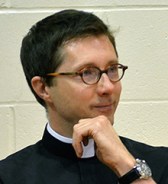 es Borromeo Parish in Gretna, Nebraska. Ordained in 2000, Fr. Loseke holds a Licentiate in Sacred Theology (S.T.L.) from the Pontifical Athenaeum of St. Anselm in Rome and is working to complete his doctoral degree (Ed.D.) in interdisciplinary leadership through Creighton University in Omaha. In addition to parish ministry, Fr. Loseke has served as a chaplain in the U.S. Air Force, taught high school theology and college-level philosophy, and has been a presenter for various missions, retreats, and diocesan formation days across the country.
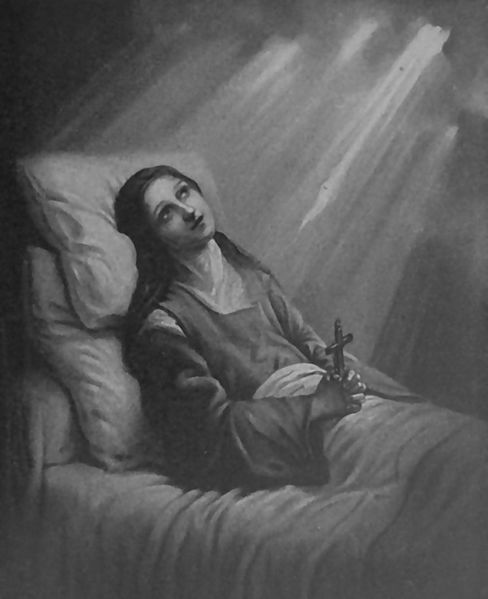
 how to love God, how to love their neighbor, and how to constantly practice their faith. These exhortations always remind me that, because of our fallen human nature and the inclination to sin (i.e., concupiscence), the love to which God calls us must be learned and practiced over time. Learning such a love does not necessarily come easily. Indeed, the acquisition of virtue is often—if not always—a painful process.

 Gospel. In fact, the amount of space in each Gospel that is given to the three days of Jesus’ Passion (20%-30%) is inordinately disproportionate to the space given to all the preceding events that make up the other three years of His life. This tells us just how significant Jesus’ Paschal Mystery was to the faith of the Evangelists and the early Christian communities. More than all of His miracles, teachings, and parables, Jesus’ Passion stands out as the single most important thing He did on this earth.
 pelicansbreast.com