If God is Our Best Friend, Why do We Treat Him Like a Doormat?

He wants our intercourse with Him to be perfectly free; nothing studied, nothing strained.  He desires to have us as we are, no less than as we would be. 

coram sanctissimo

Coram Sanctissimo
by Mother Mary Loyola

I
Visits 

Go to Him early in the morning, and let thy foot wear the steps of His doors.
(Ecclus. vi. 36.)

How careful we are to observe the courtesies of life! How uneasy till such social duties are discharged! In the making and returning of calls, how fidgety if hindered, how sensible that delay demands apology!

And this where mere acquaintances are concerned.  But what when there is question of a friend, a benefactor, one devoted to us and to our interests?  If formal visits are here uncalled for, it is only because our heart needs no prompting. Uninvited, inconsiderately often, we come and go, “wearing the steps of his doors.”

And our best of friends—do we treat Him thus?—as affectionately, as familiarly?  If not, why not?  Is He not among the benefactors whose gifts deserve thanks, the friends whose feelings have to be considered, the acquaintances, at least, whose attentions must be acknowledged?  Is it because He puts Himself so completely at our disposal that He is to be neglected?  Or because He is King of kings that He is to be considered outside the circle where courtesy is exacted?

Ah, Lord, how unmindful we are of what is due to You! How unmindful I am of Your unfailing devotedness to me! Sent into this world as into a strange neighbourhood, I found You waiting to receive me, to make me welcome, to offer Your services, to show me all manner of graceful kindness.  You have thrown open Your house to me.  You invite me to Your table. You press upon me Your gifts: “All ye that thirst, come to the waters…Come, buy wine and milk without money and without any price (Isa. lv.). “Come to Me and I will refresh you (Matt. xi.). “Him that cometh to Me, I will not cast out (John vi. ).  You make use of every motive to draw me to Yourself; yet have to complain after all: “You will not come to Me that you may have life” (Ibid v.).

“They began all at once to make excuse.  I have bought a farm…I pray thee, hold me excused.  I have bought five yoke of oxen…I pray thee, hold me excused.  I have married a wife, and therefore I cannot come” (Luke xiv.). 

Thus it was long ago; thus it is now.  We have time for other duties—for our correspondence, our shopping, our afternoon calls on other more favoured friends.  But no time for a visit to Him.  Is it so far then to the nearest church?  So far that He may well accept the distance as sufficient reason for our absence, except at times when attendance is of obligation?  Can I urge home duties and necessary occupations, when I see who those are that can and do find time to visit Him?

O my Lord, why these wretched subterfuges with You, “the God of truth”? (Psa. xxx.)  Why not fall at Your feet and own that it is not distance, nor lack of leisure, nor any reasonable plea that keeps me from You, but simply and solely the want of love?  It is a reason I could not give to any other friend.  I should have to find some other pretext with which to colour my neglect.  But with You there need be no dissembling.  Your friendship stands alone in the perfect frankness and confidence permissible on both sides.  We may own to being cold and half-unwilling visitors, yet we are not, for that, unwelcome.  The petulance, the selfishness, the waywardness of our moods that in the very interest of other friendships call for self-restraint, may show themselves in all their ugliness before the All-pitying, the Friend “more friendly than a brother,”(Prov. xviii)  whom nothing can shock, disgust, estrange.

He wants our intercourse with Him to be perfectly free; nothing studied, nothing strained.  He desires to have us as we are, no less than as we would be.  He wants to be taken into our confidence, to be let into the secret chambers of our souls, into which we only peep ourselves at stated times and with half-averted glance.  He would share in the interests and troubles of the moment; be called upon for sympathy in every event, great or small, that interrupts the even flow of our home life or of our inner life; take part in every experience, whether of sorrow or of joy.  The soldier off to the front, the baby with its broken toy, the girl with her first secret, no less than the wife, the mother, the priest, with their burdened hearts— He wants them all.  He sees us going off here and there for help, and comfort, and counsel.  He hears our feet as they hurry past His door to wear the doorsteps of other friends, and He calls to us in those tones divine in their tenderness of reproach: “You will not come to Me.  My people have forsaken Me, the Fountain of living water,and have digged to themselves cisterns, broken cisterns, that can hold no water” (Jer. ii.).  

How long, O Lord, how long?  When shall we wake up to the reality of Your Presence in our midst, and to the purpose of that Presence?  We would die for it if need be, and yet we heed it not. Shall I wait till it is brought home to me by the remorse of my last hour, or by the long, long hours of purgatory?  Oh, why did I not make use of my Emmanuel, my God with me, whilst I had time, “whilst He was in the way with me”? (Matt. v.) Why during my dream-life down there did I not realise the need of Him that is the one need in this real life of eternity?

A child at catechism said: “Won’t it be dreadful for those who don’t believe in the Real Presence to find at Judgment that it was real, that our Lord was there after all!  Even if they didn’t know any better, and so it was not their fault, and our Lord is not angry with them—I think they will be so dreadfully sorry all the same.”

But if these will be sorry, what will be the case of those who did know, and neglected Him? Those to whom He will say, “So long a time have I been with you,and you have not known Me!”(John xiv. ) I was daily with you in the temple.” (Luke xxii.)

Lord Jesus, let not that be my bitterest thought in purgatory, that land of bitter thoughts.  It is time that Your love should be returned, that I should make amends for the past, that I should hasten to You with my sorrow and my love.

Go to Him early in the morning.  Is daily Mass an impossibility in my case?  He waits for me there, to offer, for me and with me, His sacrifice and mine for the interests we share together.

And let thy feet wear the steps of His doors. More especially in the afternoon or evening, when the church is quiet and He is left all alone.  With a little goodwill and ingenuity could I not include a visit to Him in my weekly, if not in my daily programme?  Could I not so arrange my calls to other friends as to leave a few moments for my dearest and my best?  How blessed a remembrance, when He is brought to my doors at the last, to be my viaticum, that in life I was faithful to the duties of friendship and wore the steps of His doors!

O blessed, self-sufficing God
Athirst for me,
Coming a beggar to my door
All suppliantly,
Craving with meek persistence alms
Of my poor heart,
A thought, a word of sympathy—how sweet,
How sweet Thou art!  

And must Thou knock and ever knock
Till life is flown,
Seeking vain entrance to a heart
That is Thine own? 
Or wilt Thou rather work this hour
Such change in me
That hither I may come “wearing Thy steps”
Athirst for Thee!  


image001

Thank you so much to St. Augustine Academy Press for cooperating with this endeavor! If you are interested in this or other works by Mother Mary Loyola (as well as many other great books for spiritual growth and meditation), please check out their website.You will find many wonderful treasures from which to choose!

10 Great Books for Lent That You Won’t Find on Other Lists

Most of us are looking for spiritual reading suggestions that will serve us well during the Lenten season. Of course, there are the tried and true recommendations – Story of a Soul by St. Therese of Lisieux, Introduction to the Devout Life by St. Francis de Sales and  others are amazing choices, and can certainly be read over and over again. But if you’re looking for something a little different this year, I have just the thing.

Most of us are looking for spiritual reading suggestions that will serve us well during the Lenten season. Of course, there are the tried and true recommendations – Story of a Soul by St. Therese of Lisieux, Introduction to the Devout Life by St. Francis de Sales and  others are amazing choices, and can certainly be read over and over again. But if you’re looking for something a little different this year, I have just the thing. You may not find many of these books on other lists. You may not even have heard of them (with the exception of the top two, which I mention in my book and in just about every interview I’ve ever done:)). Regardless, every book on this list is an absolute classic that is sure to inspire tremendous change in your life!

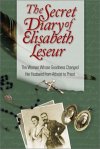
secret diary of elisabeth1 The Secret Diary of Elisabeth Leseur (1866-1914) – Marriages seem to struggle more often than not these days. Elisabeth Leseur had an amazing knack for seeing only light in the souls of those around her. Her goodness resulted in her husband’s conversion from atheism to Catholicism. In fact, upon her death, he even entered the priesthood! Rather than pray that others would change for the better, Elizabeth asked only that she could love more, and that the Holy Spirit would use her as an instrument to share Christ’s light with others – most especially those who mistreated her in any way. Read this book if you want to see your relationships thrive. Not only will you learn to focus your eyes on your spouse’s better traits, but you’ll learn to love and appreciate everyone else that God made as well.

trustful surrender2. Trustful Surrender to Divine Providence: The Secret of Peace and Happiness by Jean Baptiste Saint-Jure (1588-1657) and Saint Claude de la Colombiere (1641-1682) – Anyone who knows me knows that this is one of my all-time favorite books and a life-changing one at that. Having been held at knifepoint in college, I spent years afraid to be alone. Instantly upon reading this book, I was able to hand my life over to God, trusting Him with every moment of my life, and even the hour of my death.Suffice it to say that there is a world of wisdom within the pages of this tiny little companion and it will completely shatter any touchy feely paradigm you may have about God and His Hand in your life.

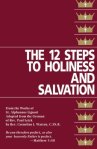
12 steps3. The Twelve Steps to Holiness and Salvation by St. Alphonsus Liguori (1696-1987) – The title says it all. Step by step, you can walk through Lent in a way that will help you to grow in holiness as you unite yourself to Christ. Liguori’s writings cover the twelve key virtues necessary for salvation, including faith, hope, love of God, love of neighbor, poverty, chastity, obedience, meekness and humility, mortification, recollection, prayer, and love of the cross. For those who appreciate practicality, order and simplicity, this book is a treasure trove of teaching that is concise and yet profound.

way to inner peace4. Way to Inner Peace by Fulton J. Sheen (1955) – If you long to be directed in the way of humility, love and service, Fulton Sheen will lead the way. With 59 specific recommendations for practical steps one can take toward inner peace, Sheen offers inspirational stories, entreaties into psychology, theology and good old common sense to lead you to a place of calm contentment, no matter the storms that threaten your progress as you continue on the path toward heaven.


hidden power5. The Hidden Power of Kindness by Father Lawrence Lovasik (1962)  – If you’re not quite sure what to do for Lent this year, this book will give you plenty of ideas on how to grow in holiness. No matter how kind you think you are, you’ll find plenty of room for improvement, and you will feel much better for making the effort. Even better, your relationships will flourish and you will wonder why you never read this book before. Be prepared to have highlighter in hand, for every page is filled with practical wisdom and sage advice.

summa6. Summa of the Christian Life (3 Volumes) – Writings of Venerable Louis of Granada (1504-1588) – Beginning with the existence of God and what that means for our everyday lives, Granada’s words direct readers clearly and succinctly toward holiness. His writing is simple yet beautiful. Venerable Louis of Granada was a favorite spiritual writer of St. Teresa of Avila, St. John of the Cross, St. Charles Borromeo, St. Francis de Sales, St. Vincent de Paul, St. Rose of Lima and many others. You can’t go wrong if you allow this great man to guide you on the path to holiness.

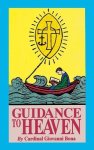
7. Guidance to Heaven by Cardinal Giovanni Bona (1658) – guidance to heavenGuidance to Heaven begins by making clear the purpose of this life in preparing for eternity. Cardinal Bona will help readers to prepare themselves for death by addressing vices with which many of us struggle, and helping us to bring them under control. The jacket of my book says it all and reads in part,

If the reader derived no other value from this book than the realization we are each one going to die – we know not when – and pass to our real life which will last for all eternity, and that our every waking hour of this one should be a preparation for that one, then a reading of this book would have been for him of ultimate value – the best thing he ever did.

jesus of nazareth8. Jesus of Nazareth: The Story of His Life Simply Told by Mother Mary of Loyola (1906) – If you are looking for a book on the life of Christ, this one is beautifully told. Jesus of Nazareth was originally written for children, and I did read it to my kids last year. But it was also re-packaged as an adult book because at 300+ pages and with beautiful language and captivating commentary, this book is a must read for anyone ages 10-110. If, like me, you struggle with imperfect contrition, Mother Mary of Loyola will help you to love Christ implicitly for His simple, yet beautiful goodness, for His loving obedience to the Father and for His great sacrifice, made selflessly for the sake of our eternal union with Him.

counsels of perfection for christian mothers9.Counsels of Perfection for Christian Mothers by the Very Reverend P. Lejeune (1913) – This is an amazing book for mothers. If you are anything like me, you strive for perfection in so many areas that you sometimes forget to put first things first. Wisely, Fr. Lejeune recognizes this temptation for women, and begins his book with a discussion of the meaning of perfection. Clarifying the only definition that matters – Perfection is accomplishing the will of God in a constant and generous fashion – Lejeune then sets out to direct us on how to actually achieve perfection in that light. Advising mothers on everything from how they spend their time to what they say and how they say it, this book offers a plethora of things to consider in the pursuit of holiness, as well as how to take proper steps to achieve it in our lifetime.

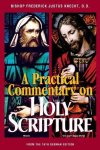
practical commentary10. A Practical Commentary on Holy Scripture by Bishop Frederick Justus Knecht, D.D. (1923) – A great way to read the Bible through in story form with commentary that helps you to understand the Faith, as well as practical applications for daily life. I found it to be a wonderful supplement during my time spent reading Sacred Scripture. According to the back cover of my edition,

This book is a great introductory Bible study all by itself – for it brings out the Catholic teachings that are hidden in Sacred Scripture! A famous book – one which received recommendations from 14 bishops when first published and which went through at least 16 editions – this commentary is not a work for scholars; but rather a very practical book for the ordinary Catholic.


This Lent, Fill Yourself with Holy Thoughts Drawn from Good Books

This world is a battleground, and we, the Church Militant, are called to fight evil – whether on a societal level or in the deepest recesses of our own souls – that we might grow in union with God and join Him for all eternity in heaven.

What do you say? The reading of these good books does not concern you? But I find this duty more incumbent on you than on those living in the security of the cloister. For you who sail on the open sea, whether you will it or not, are beset by a thousand occasions of sin. Thus the aid of spiritual books is for you a necessity. A religious cannot be wounded, because she is far from the combat. But you who are in the midst of battle, must protect yourself with the buckler of holy thoughts drawn from good books. – St. John Chrysostom, Discourse 3

This world is a battleground, and we, the Church Militant, are called to fight evil – whether on a societal level or in the deepest recesses of our own souls – that we might grow in union with God and join Him for all eternity in heaven. But the battle is difficult. And weak as we are, it is easy to get get wounded, to grow soft in discipline or get distracted from our mission. Sometimes we succumb to the world and all its demands and then look up to find that we are not where we hoped we’d be. Somehow we need to ground ourselves before we head out into battle each day. To retreat from battle that we might arm ourselves with the Sword of the Spirit (Ephesians 6:17), cling to the Pillar of Truth (1 Timothy 3:15), and fill ourselves with the buckler of holy thoughts, in order to face the enemy each day.

Prepare for Battle

What would you say if I offered you the opportunity to go on retreat for 15-30 minutes five days per week, directed by some of the greatest minds in the Church? This retreat will offer rewards like you’ve never dreamed. After 15-30 minutes of quiet, prayerful meditation, you will be ready to face your day like never before. If you embark on this retreat, I guarantee you will be equipped with everything you need to make progress in your spiritual life – progress that will be witnessed by your family, friends, colleagues and fellow pilgrims you meet each day.

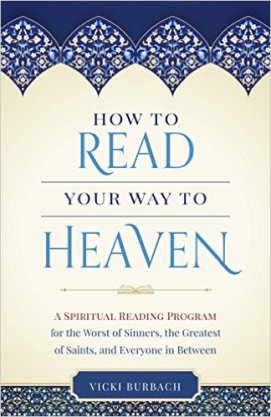
You’ll find this retreat in How to Read Your Way to Heaven: A Spiritual Reading Program for the Worst of Sinners, the Greatest of Saints and Everyone in Between.

book-cover

Sound like a far-fetched sales pitch?

Absolutely not! In just 15-30 minutes per day, you will

  • Meditate on Sacred Scripture
  • Read 1-2 paragraphs from the Catechism of the Catholic Church
  • Read a few pages from some of the greatest minds in the history of the Church

Spiritual reading is organized around the Four Pillars of the Catechism:

  1. The Profession of Faith – What we Believe as Catholics
  2. The Celebration of the Christian Mystery – Liturgy and the Sacraments
  3. Life in Christ – Man’s Vocation as a Christian
  4. Christian Prayer 

For the person who hasn’t done much spiritual reading…

this program offers a no-fail plan, sans dates or pressure, so you can get started right away, and pace yourself – while reaping great rewards found through Sacred Scripture, the direction of the Saints and  wisdom of the Early Church Fathers.

For the avid reader…

this program provides rhyme and reason to your spiritual reading. It puts order into what is often a random process, allowing for accelerated progress in the spiritual life. Spending concentrated time in each pillar allows you to learn from various perspectives and to practice what you’ve learned in your daily life for an extended time, before moving on to the next topic.

The Time is Now

Lent will soon be upon us – do not delay. Make spiritual reading your Lenten resolution. How to Read Your Way to Heaven is a tool that will help you with all facets of the process. Make this your best Lent ever by uniting yourself to Our Lord like never before!

What’s Inside:

  • Why Spiritual Reading is critical to our lives as Christians
  • Important considerations when embarking on a Spiritual Reading Program
  • What is Syntopical Reading and how it can help you make great strides in your spiritual life
  • What kinds of works to read
  • How to read sacred scripture
  • How to structure your reading time
  • Specific assignments for a 1-Year, 3-Year or 5-Year Reading Program
  • Blank spaces each day so you can add or substitute books of your choice
  • Two Fabulous Book Lists: 99 of the favorite reads of notable Catholics; Fr. C. John McCloskey’s Lifetime Catholic Reading List
  • A lay-flat binding to ensure years of use


There isn’t enough space to extoll the benefits of spiritual reading – Rather than belabor the point, I’ll leave you with a final quote from Venerable Louis of Granada, favorite spiritual writer of St. Teresa of Avila, St. John of the Cross, St. Francis de Sales, St. Charles Borromeo, St. Vincent de Paul and St. Rose of Lima:

So great is the light and fruit of spiritual reading that we know from experience many person who have changed their entire lives by this means. When asked the root and cause of such a change, they responded that after reading such and such a book they resolved to amend their lives…

So sublime are the mysteries that the Christian religion proposes to man and so powerful for moving hearts that I would not be surprised if they effected a great change in anyone who attentively considers them. – Summa of the Christian Life, p. 7-8


What People are Saying about How to Read Your Way to Heaven:


Personal Message:

Just finished reading Rome Sweet Home and loved it. I’m also enjoying the Book of Matthew. I think it’s a great book to start with. I’m looking forward to my reading time early every morning. I thank God for giving me you…to show me the way to reading His Word. I love to read and this has been something I’ve wanted to do for a very long time.

Check out Amazon for Reader Reviews!


Editorial Reviews
McCloskey III profile photo

“If you want to develop a deep knowledge of our Faith, here is a reliable book that shows you how.” Fr. C. John McCloskey III


Aquilina profile photo

“We can read all day and read forever, and still feel as if we’re not making progress. Vicki Burbach gets us out of the rut and onto a track toward real spiritual — and cultural and intellectual — progress. This is the kind of book that can make life so much richer — by leading to many more books, and all in good order.” Mike Aquilina


Hendey profile photo

“Whether you’re a lifelong Catholic or a skeptical inquirer, you’ll find How to Read Your Way to Heaven by Vicki Burbach to be an indispensable gift for your intellectual and spiritual life. With this timeless treasure, Vicki has helped solve my so many books and so little time problem by providing a masterplan that’s both exciting and accomplishable.”
Lisa M. Hendey Founder of CatholicMom.com and author of The Grace of Yes


Burke profile photo

“Getting to heaven often requires that we rely on the wisdom of those who have gone before us. Vicki Burbach has done us a great service by providing an insightful reading plan and approach that, if absorbed and followed, will no doubt produce saints!”
Dan Burke, President of the Avila Institute


Resting in the Lord

Should a vacation or a summer activity ever pull us away from Sunday Mass or daily prayer, we then would find ourselves worshipping the idol-gods of our own making.

by Fr. Jeff Loseke

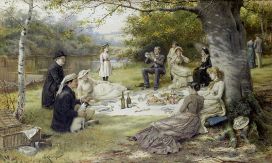
Memorial Day weekend marks the unofficial start to the summer, and the rhythm of life tends to change for us all.  The days are longer, the weather warmer, and we find 800px-George_Goodwin_Kilburne_The_Picnicourselves outside a whole lot more.  We are enjoying picnics, reunions, vacations, games, gardening, and a whole host of summertime activities.  Not only might we find ourselves enjoying God’s marvelous creation more, but also we add to it by expressing our own gifts and talents within it.

The summer is a great time to reflect upon the inherent dignity of work and the necessity of leisure in the divine plan.  Created in the image and likeness of God, we have been given the ability to sub-create or co-create with God.  While you and I cannot create something out of nothing as can God, we can work with God’s initial creation and further develop it in a way that expresses God’s likeness within us.  By cultivating the ground and helping it to bear fruit; by honing our skills and sharpening our reflexes for a competitive sport; or by painting, writing, or sculpting a work of art into existence we give further meaning to the world around us and we participate in God’s own work.  Because of the effects of sin, we live in a broken world; therefore, not all work is pleasing.  Sometimes it takes sheer toil and willpower to persevere through it.  Nevertheless, by laboring through these difficulties in love, united with God and by His grace, we overcome the effects of sin and help to bring about God’s kingdom.

The Book of Genesis reminds us that God Himself “rested” after completing the work of Creation, not because He can be exhausted but to teach us the necessity of taking time away from our work to “recharge” and to enjoy what we have done.  Days off and vacations are necessary for us who are not infinite in our energies and abilities.  Simply taking a day off, going on vacation, or enjoying a leisure activity is not enough, however.  While those things may refresh our bodies and minds, our souls require time spent with God, especially in the Eucharist.  Should a vacation or a summer activity ever pull us away from Sunday Mass or daily prayer, we then would find ourselves worshipping the idol-gods of our own making.  (Recall the Israelites’ golden calf…)  So, as the summer may bring rest and leisure into our lives, so may it also bring a renewed sense of what it means to rest in the Lord, not only on Sunday but on every day.

The Reverend Jeffery S. Loseke is a Priest of the Archdiocese of Omaha and is currently the pastor of  St. Charlccn_father-les Borromeo Parish in Gretna, Nebraska.  Ordained in 2000, Fr. Loseke holds a Licentiate in Sacred Theology (S.T.L.) from the Pontifical Athenaeum of St. Anselm in Rome and is working to complete his doctoral degree (Ed.D.) in interdisciplinary leadership through Creighton University in Omaha.  In addition to parish ministry, Fr. Loseke has served as a chaplain in the U.S. Air Force, taught high school theology and college-level philosophy, and has been a presenter for various missions, retreats, and diocesan formation days across the country.

Art: The Picnic by George Goodwin Kilburne, circa 1900 (Wikimedia Commons)

The Original Novena: Ascension to Pentecost

by Fr. Jeff Loseke

Devotionally speaking, Pentecost marks the fulfillment of the original “novena” prayed by the early Church in anticipation of the promised Gift of the Holy Spirit.  After Jesus’
Jesus_ascending_to_heavenResurrection, He spoke repeatedly to His Apostles about how He would send the Holy Spirit to remain with them after He ascended into heavenly glory.  The Acts of the Apostles recounts how Mary, the Apostles, and other disciples returned to the upper room and remained there in prayer and supplication.  The total number of days between Ascension Thursday and Pentecost Sunday is nine.  This is the reason the Church’s devotional novenas follow a similar nine-day model.

The purpose of a novena prayer is to teach us patience and perseverance in prayer.  Too often we can be tempted to believe that God is not answering our prayers if we do not see “results” as expediently as we would like.  Our prayers can easily turn from being supplications, whereby we attempt to conform our wills to God’s will, to demands, whereby we attempt to conform God’s will to our own.  The discipline of the novena is more for us than it is for God: God hears and answers all our prayers, whether we pray for just one day or for 99 days.  We, however, are always in need of learning how to pray as we ought.  In a traditional novena, like the Apostles and Mary, we agree to wait for the working of the Spirit and to submit our desires to the will of God.

Unfortunately, the beautiful traditions of the Church are not free from human manipulation and error.  The Evil One wants us to forget that the purpose of the novena prayer is to wait patiently for God to work in His own time, and so he tempts us to approach novenas in superstition, believing that the prayer will be magically answered according to our will at the conclusion of the nine days.  Sadly, there are any number of unofficial prayers in print that are the result of such diabolical deception.  Perhaps you’ve seen them: “This prayer has never been known to fail,” or “Make nine copies of this prayer and leave them in church for nine consecutive days and your prayers will be answered.”  We can never forget that our repetition of prayers for any amount of time cannot force God’s hand.  Likewise, the failure to carry out a novena perfectly cannot invalidate the prayers and petitions of a humble and contrite heart.  When formulas become more important than our relationship with God and our trust in His mercy, then we find that we have turned from authentic devotion to empty superstition.  The upcoming “original novena” between Ascension Thursday and Pentecost teaches us once again that Jesus always keeps His promises and that God’s will is always done.  Come, Holy Spirit, and renew the face of the earth!

The Reverend Jeffery S. Loseke is a Priest of the Archdiocese of Omaha and is currently the pastor of  St. Charlccn_father-les Borromeo Parish in Gretna, Nebraska.  Ordained in 2000, Fr. Loseke holds a Licentiate in Sacred Theology (S.T.L.) from the Pontifical Athenaeum of St. Anselm in Rome and is working to complete his doctoral degree (Ed.D.) in interdisciplinary leadership through Creighton University in Omaha.  In addition to parish ministry, Fr. Loseke has served as a chaplain in the U.S. Air Force, taught high school theology and college-level philosophy, and has been a presenter for various missions, retreats, and diocesan formation days across the country.