Don’t Vacation From Your Vocation of Sharing the Good News!

The responsibility of giving witness and explaining the faith belongs not just to religious leaders, but it is fittingly situated in the lives of the baptized faithful.

by Fr. Jeff Loseke

A few years ago, I was on vacation with two classmates from my days in seminary.  The three of us now are Priests in different dioceses in the U.S. and get together every now 800px-Georges_Seurat_023and again for vacation to enjoy each other’s friendship while we travel.  To see us together, one would not immediately recognize us as Priests at first glance since we often do not travel in Roman collars or other such clerical garb while on vacation.  Nevertheless, our identity is sometimes uncovered… not by how we are dressed but by a faith that cannot be hidden.

While lounging at the pool and soaking up the sun, one of my friends was reading a book entitled, The Mass, whose title was clearly emblazoned on the front cover.  (Not your average, run-of-the-mill poolside reading, for sure!)  Another vacationer at the pool noticed this conspicuously Catholic book and asked my friend if he were indeed a Priest.  She, not being Catholic herself, then proceeded to ask him several questions about the Mass and the Catholic Church.  He happily answered her questions, and what could have been time wasted by the pool—albeit a well-deserved break—turned into an opportunity to share his faith.  What a great example of how one’s faith can be both recognizable and inviting without being ostentatious and standoffish.  When our faith is an integrated part of who we are, it becomes more than just a single part of us.  Instead, it permeates every other part of our very selves, and it cannot help but be seen.  For this reason, St. Peter reminds us that we must always be ready to give an explanation to anyone who asks us for a reason for our hope (see 1 Pt 3:15).

Almost 2,000 years prior to this poolside catechesis, St. Justin wrote to the pagan emperor Antoninus Pius and the Roman Senate around A.D. 155 also explaining the Mass and the Church’s beliefs.  The writings of St. Justin and other Apostolic Fathers from the first centuries of the Church’s history provide some of the best examples of Christians explaining and defending their faith to those who questioned it.  What is most interesting about St. Justin, however, is the fact that he was not a Bishop, Priest, or Deacon.  He was a layman, and he was the first as such to write extensively about the faith, especially to those who questioned it.  What an excellent example he is for the Christian faithful of today!  The responsibility of giving witness and explaining the faith belongs not just to religious leaders, but it is fittingly situated in the lives of the baptized faithful.  In all truth, the laity have more day-to-day contact with the world than do the clergy.  The Second Vatican Council rightly reminded us that it is the task of the clergy to evangelize the men and women of the Church, and that it is the task of the faithful to evangelize the world.  Truly, whether clergy or laity, there are no vacations from our vocation to announce the Good News!

The Reverend Jeffery S. Loseke is a Priest of the Archdiocese of Omaha and is currently the pastor of  St. Charlccn_father-les Borromeo Parish in Gretna, Nebraska.  Ordained in 2000, Fr. Loseke holds a Licentiate in Sacred Theology (S.T.L.) from the Pontifical Athenaeum of St. Anselm in Rome and is working to complete his doctoral degree (Ed.D.) in interdisciplinary leadership through Creighton University in Omaha.  In addition to parish ministry, Fr. Loseke has served as a chaplain in the U.S. Air Force, taught high school theology and college-level philosophy, and has been a presenter for various missions, retreats, and diocesan formation days across the country.

Art: A Sunday Afternoon on the Island of La Grande Jatte by George Seurat, 1884

Resting in the Lord

Should a vacation or a summer activity ever pull us away from Sunday Mass or daily prayer, we then would find ourselves worshipping the idol-gods of our own making.

by Fr. Jeff Loseke

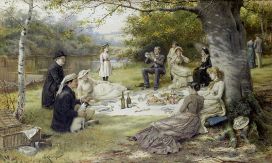
Memorial Day weekend marks the unofficial start to the summer, and the rhythm of life tends to change for us all.  The days are longer, the weather warmer, and we find 800px-George_Goodwin_Kilburne_The_Picnicourselves outside a whole lot more.  We are enjoying picnics, reunions, vacations, games, gardening, and a whole host of summertime activities.  Not only might we find ourselves enjoying God’s marvelous creation more, but also we add to it by expressing our own gifts and talents within it.

The summer is a great time to reflect upon the inherent dignity of work and the necessity of leisure in the divine plan.  Created in the image and likeness of God, we have been given the ability to sub-create or co-create with God.  While you and I cannot create something out of nothing as can God, we can work with God’s initial creation and further develop it in a way that expresses God’s likeness within us.  By cultivating the ground and helping it to bear fruit; by honing our skills and sharpening our reflexes for a competitive sport; or by painting, writing, or sculpting a work of art into existence we give further meaning to the world around us and we participate in God’s own work.  Because of the effects of sin, we live in a broken world; therefore, not all work is pleasing.  Sometimes it takes sheer toil and willpower to persevere through it.  Nevertheless, by laboring through these difficulties in love, united with God and by His grace, we overcome the effects of sin and help to bring about God’s kingdom.

The Book of Genesis reminds us that God Himself “rested” after completing the work of Creation, not because He can be exhausted but to teach us the necessity of taking time away from our work to “recharge” and to enjoy what we have done.  Days off and vacations are necessary for us who are not infinite in our energies and abilities.  Simply taking a day off, going on vacation, or enjoying a leisure activity is not enough, however.  While those things may refresh our bodies and minds, our souls require time spent with God, especially in the Eucharist.  Should a vacation or a summer activity ever pull us away from Sunday Mass or daily prayer, we then would find ourselves worshipping the idol-gods of our own making.  (Recall the Israelites’ golden calf…)  So, as the summer may bring rest and leisure into our lives, so may it also bring a renewed sense of what it means to rest in the Lord, not only on Sunday but on every day.

The Reverend Jeffery S. Loseke is a Priest of the Archdiocese of Omaha and is currently the pastor of  St. Charlccn_father-les Borromeo Parish in Gretna, Nebraska.  Ordained in 2000, Fr. Loseke holds a Licentiate in Sacred Theology (S.T.L.) from the Pontifical Athenaeum of St. Anselm in Rome and is working to complete his doctoral degree (Ed.D.) in interdisciplinary leadership through Creighton University in Omaha.  In addition to parish ministry, Fr. Loseke has served as a chaplain in the U.S. Air Force, taught high school theology and college-level philosophy, and has been a presenter for various missions, retreats, and diocesan formation days across the country.

Art: The Picnic by George Goodwin Kilburne, circa 1900 (Wikimedia Commons)

The Original Novena: Ascension to Pentecost

by Fr. Jeff Loseke

Devotionally speaking, Pentecost marks the fulfillment of the original “novena” prayed by the early Church in anticipation of the promised Gift of the Holy Spirit.  After Jesus’
Jesus_ascending_to_heavenResurrection, He spoke repeatedly to His Apostles about how He would send the Holy Spirit to remain with them after He ascended into heavenly glory.  The Acts of the Apostles recounts how Mary, the Apostles, and other disciples returned to the upper room and remained there in prayer and supplication.  The total number of days between Ascension Thursday and Pentecost Sunday is nine.  This is the reason the Church’s devotional novenas follow a similar nine-day model.
The purpose of a novena prayer is to teach us patience and perseverance in prayer.  Too often we can be tempted to believe that God is not answering our prayers if we do not see “results” as expediently as we would like.  Our prayers can easily turn from being supplications, whereby we attempt to conform our wills to God’s will, to demands, whereby we attempt to conform God’s will to our own.  The discipline of the novena is more for us than it is for God: God hears and answers all our prayers, whether we pray for just one day or for 99 days.  We, however, are always in need of learning how to pray as we ought.  In a traditional novena, like the Apostles and Mary, we agree to wait for the working of the Spirit and to submit our desires to the will of God.

Unfortunately, the beautiful traditions of the Church are not free from human manipulation and error.  The Evil One wants us to forget that the purpose of the novena prayer is to wait patiently for God to work in His own time, and so he tempts us to approach novenas in superstition, believing that the prayer will be magically answered according to our will at the conclusion of the nine days.  Sadly, there are any number of unofficial prayers in print that are the result of such diabolical deception.  Perhaps you’ve seen them: “This prayer has never been known to fail,” or “Make nine copies of this prayer and leave them in church for nine consecutive days and your prayers will be answered.”  We can never forget that our repetition of prayers for any amount of time cannot force God’s hand.  Likewise, the failure to carry out a novena perfectly cannot invalidate the prayers and petitions of a humble and contrite heart.  When formulas become more important than our relationship with God and our trust in His mercy, then we find that we have turned from authentic devotion to empty superstition.  The upcoming “original novena” between Ascension Thursday and Pentecost teaches us once again that Jesus always keeps His promises and that God’s will is always done.  Come, Holy Spirit, and renew the face of the earth!

The Reverend Jeffery S. Loseke is a Priest of the Archdiocese of Omaha and is currently the pastor of  St. Charlccn_father-les Borromeo Parish in Gretna, Nebraska.  Ordained in 2000, Fr. Loseke holds a Licentiate in Sacred Theology (S.T.L.) from the Pontifical Athenaeum of St. Anselm in Rome and is working to complete his doctoral degree (Ed.D.) in interdisciplinary leadership through Creighton University in Omaha.  In addition to parish ministry, Fr. Loseke has served as a chaplain in the U.S. Air Force, taught high school theology and college-level philosophy, and has been a presenter for various missions, retreats, and diocesan formation days across the country.


Mother Mary, Mother Church and the Vocation of Motherhood

Just as it is the ordained Priest’s vocation to give a physical face to Jesus Christ in the world today, so also it belongs in a special way to mothers to give a physical face to the Church.

by Fr. Jeff Loseke

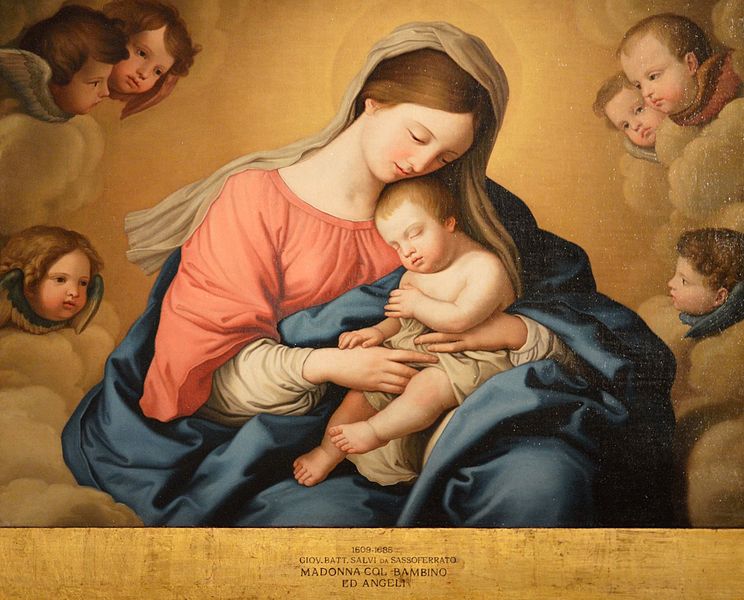
This month of May is dedicated in a special way to Mary, the Mother of God.  We recall how, on the Cross, Jesus entrusted Mary and the Beloved Disciple into each other’s care.  Madonna_with_child_and_angelsIn so doing, He gave all of His disciples into His Mother’s care and gave us Mary to be our Mother as well.  As the one chosen by the Father to give birth to His Only-Begotten Son, Mary serves as a resplendent example of motherhood to all who are her children as well as to all who share the noble vocation of motherhood.  Mary’s motherhood extends to us primarily because Jesus joined His disciples to Himself and made us members of His Body in the Church.  Mary, as the Mother of Jesus, is the mother also of His very Body, the Church.
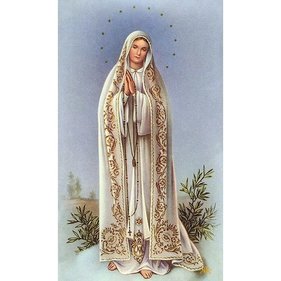
Mary’s vocation as mother is also iconic of the motherhood of the Church.  As the most perfect disciple of Jesus, Mary reveals in her very person what the whole Church, comprised of many members, looks like.  The Church, being the Bride of Christ, gives birth to His offspring from the watery womb of the Baptismal Font.  Like Mary, the Church’s vocation in the world is maternal: Mary gave birth to Jesus in history; the Church gives birth to the Body of Christ in the present.  This is why the Church is referred to with a feminine pronoun (e.g., “she”, “her”, etc.) and oftentimes is called “Mother Church”.  Like all mothers, the Church gives birth to her children and nourishes them at her breast.  She teaches them and shares her wisdom with them.  She nurtures them and heals them with a gentle laying on of hands when they are hurt.  Sometimes she even needs to discipline them for their own good.  In every way, the Church is our spiritual mother.

Each and every mother for her part also shares in this iconic vocation.  Just as it is the ordained Priest’s vocation to give a physical face to Jesus Christ in the world today, so also it belongs in a special way to mothers to give a physical face to the Church.  Their motherhood stems from and points to the God who created them and who established His Church to communicate the new life of grace to all believers.  No longer is Eve the model of motherhood—the life she gave ended in death.  The Church, represented in the person of Mary, is the New Eve who gives a life that never dies.  May God bless all our mothers and grandmothers who reveal to us what it means to be alive in Christ Jesus our Lord!


The Reverend Jeffery S. Loseke is a Priest of the Archdiocese of Omaha and is currently the pastor of  St. Charlccn_father-les Borromeo Parish in Gretna, Nebraska.  Ordained in 2000, Fr. Loseke holds a Licentiate in Sacred Theology (S.T.L.) from the Pontifical Athenaeum of St. Anselm in Rome and is working to complete his doctoral degree (Ed.D.) in interdisciplinary leadership through Creighton University in Omaha.  In addition to parish ministry, Fr. Loseke has served as a chaplain in the U.S. Air Force, taught high school theology and college-level philosophy, and has been a presenter for various missions, retreats, and diocesan formation days across the country.

]

Fatima: A Call to Participate in Salvation

As we approach the 100th anniversary of Our Lady’s apparitions in Fatima, then, we recommit ourselves to personal prayer and to doing penance so that all souls, especially those most in need of God’s mercy, will be saved.

by Fr. Jeff Loseke

On May 13, 1917, the Virgin Mary appeared to three young children at Fatima, Portugal and identified herself as “the Lady of the Rosary.”  She continued to appear to the Fatima_Grotto_(Sorrowful_Mother_Shrine)_-_statue_of_the_childrenchildren each month through October 13th and revealed to them a plan for peace in the world through personal prayers and penances.  At her final appearance to them on October 13th, about 70,000 people had gathered to witness the children as they spoke to the Virgin.  Everyone present that day testified to having seen the “miracle of the sun” as it “danced” in the sky, thus confirming the apparition for the onlookers.

On May 13, 1981, Pope St. John Paul II was shot in St. Peter’s Square at point-blank range.  Of this assassination attempt, the Pope later wrote: “Could I forget that the event… took place on the day and at the hour when the first appearance of the Mother of Christ to the poor little peasants has been remembered for over sixty years at Fatima, Portugal? …I felt that extraordinary motherly protection and care, which turned out to be stronger than the deadly bullet.”  One year after he was shot, St. John Paul placed a crown on the statue of Mary in Fatima in which was suspended the very bullet that came so close to claiming his life.  Why?  The Pope absolutely believed that it was a miracle of Our Lady of Fatima that had preserved his life that day.

On May 13, 2017, we will mark one hundred years since Our Lady first appeared to the three young children in Fatima.  Her message to them then—and to us now—is a message of urgency.  Mary has exhorted us to prayer and penance for the conversion of sinners and for lasting peace in our world.  In the last century, the human race has suffered the effects of so much evil: human life has been destroyed in countless numbers, the divide between the East and West has grown, marriage and the family are under attack, faithless secularism is on the rise, and sin and its consequent effects continue to abound in every corner of the globe.  Nevertheless, we know that “where sin increased, grace overflowed all the more” (Rom 5:20).  The Virgin Mary is a shining example of this testament.  She, as Mediatrix of All Graces, demonstrates to us the magnanimous will of the Father that His children through adoption, raised up by the grace of the Cross and Resurrection of His Son and flooded by the Gift of the Holy Spirit ought to participate in the salvation of the whole world by our union with Him and His salvific will.  Like St. John Paul II in 1981, and the 70,000 in 1917, we too ought to be ready to witnesses the miracles God desires to work in our lives through the intercession of His Son’s Mother.  As we approach the 100th anniversary of Our Lady’s apparitions in Fatima, then, we recommit ourselves to personal prayer and to doing penance so that all souls, especially those most in need of God’s mercy, will be saved.


The Reverend Jeffery S. Loseke is a Priest of the Archdiocese of Omaha and is currently the pastor of  St. Charlccn_father-les Borromeo Parish in Gretna, Nebraska.  Ordained in 2000, Fr. Loseke holds a Licentiate in Sacred Theology (S.T.L.) from the Pontifical Athenaeum of St. Anselm in Rome and is working to complete his doctoral degree (Ed.D.) in interdisciplinary leadership through Creighton University in Omaha.  In addition to parish ministry, Fr. Loseke has served as a chaplain in the U.S. Air Force, taught high school theology and college-level philosophy, and has been a presenter for various missions, retreats, and diocesan formation days across the country.

Art: Fatima Grotto (Sorrowful Mother Shrine) – Statue of the Children, 2016 (Wikimedia Commons)

Easter Love Gives Life

In God, love is always unitive and creative. It is always faithful, free, total, and fruitful.

by Rev. Jeff Loseke

The Easter Season celebrates divine life and love, especially as it is shared with us.  We have been redeemed by God and given a share in His divine life through the waters of 800px-Wilhelm_Alexander_Meyerheim_Mother_and_baby_in_an_interiorBaptism, the outpouring of the Holy Spirit in Confirmation, and the nourishment provided in the Most Holy Eucharist.  As God’s people, we reject sin and promise to live a new life of faith in Christ.  Indeed, as witnesses of Jesus’ Death and Resurrection, we do what St. Paul urges: “Offer your own bodies as a living sacrifice, holy and pleasing to God… Do not conform yourselves to this age but be transformed by the renewal of your mind, that you may discern what is the will of God, what is good and pleasing and perfect” (Rom 12:1-2).

When mounting the wood of the Cross, Jesus Christ put His Body into our hands and breathed out His Spirit upon us with His dying breath.  He gave Himself to His Bride, the Church, totally, freely, and faithfully.  This gift has borne great fruit in destroying death and giving new life to countless children reborn from the Church’s maternal, baptismal womb.  In God, love is always unitive and creative.  It is always faithful, free, total, and fruitful.  This is the kind of love that the world has rejected, because the Prince of this World, Satan, knows that this kind of divine love has the power to redeem the world and to transform the children of Adam into the children of God.  And so, one of the Devil’s most pernicious temptations against the kind of love that God has shown us is through the widespread embrace of contraception and surgical sterilization, rejecting the very first words God spoke to our first parents, “Be fertile and multiply” (Gen 1:28b).  The Evil One has convinced so many Christians to believe his lie that our sexuality and our fertility are diseases that need to be cured.  Since the early 20th century, artificial means of contraception and birth control have even been touted as a means of liberation for women.  Let’s be honest, however… the real message being communicated under the veil of that lie is that the female body, with its cycles of fertility and infertility, is seriously flawed and even undesirable in its natural state—it must be changed, fixed, and controlled.

As a pastor of souls, I know that this is an area of great moral distress for so many Catholic families, especially since many of them have never been presented with a full and faithful teaching of the beauty of our human sexuality as God designed it.  How can we be faithful to the Gospel of Life if it is not preached and taught to us?  Especially in our age, when so many evils are waging war against marriage, the family, human sexuality, and so forth, the whole Church must give ever greater witness to the beauty of God’s plan for His people.  “Let your love be sincere; hate what is evil, hold on to what is good” (Rom 12:9).


The Reverend Jeffery S. Loseke is a Priest of the Archdiocese of Omaha and is currently the pastor of  St. Charlccn_father-les Borromeo Parish in Gretna, Nebraska.  Ordained in 2000, Fr. Loseke holds a Licentiate in Sacred Theology (S.T.L.) from the Pontifical Athenaeum of St. Anselm in Rome and is working to complete his doctoral degree (Ed.D.) in interdisciplinary leadership through Creighton University in Omaha.  In addition to parish ministry, Fr. Loseke has served as a chaplain in the U.S. Air Force, taught high school theology and college-level philosophy, and has been a presenter for various missions, retreats, and diocesan formation days across the country.


Art: Mother and Baby in an Interior by Wilhelm Meyerheim, 1882 (Wikimedia Commons)

The Resurrection: Blessed Are Those Who Have Not Seen and Have Believed

Jesus’ Resurrection is not an event to be recorded in a history book. It is not something to be studied through the scientific method. The Resurrection of Jesus is a relational encounter that we have in faith.

by Rev. Jeff Loseke

The mystery of the Resurrection is like nothing else in human history.  While Jesus’ life, death, and Resurrection are all historical events that happened in time, there is resurrectionsomething about them that transcends time.  There were many disciples of Jesus who followed Him throughout the course of His earthly ministry and became witnesses of the many miracles.  They saw Him.  We can only imagine how many people actually heard Jesus’ teachings, saw His wonders, or stood by as He walked the Way of the Cross.  Countless numbers had some experience, some story to tell of Jesus’ life and death.
Jesus’ Resurrection, however, is different.  No one was there to witness Him rise from the dead.  No one was there to see Him break open the gates of hell for the just.  No one was there to see Him roll the stone away and walk out of the tomb.  No one at all.  And yet, our entire faith hinges on the fact that Jesus did all these things.  To paraphrase St. Paul:  if Jesus had not risen from the dead, then our Christian life is lived in vain.

If you think about it, the only proof we have of Jesus’ Resurrection is an empty tomb, the absence of a body… that is to say, we have no proof at all.  There is no hard evidence to look to to say that Jesus positively has risen from the dead.  And that’s okay.  Jesus’ Resurrection is not an event to be recorded in a history book.  It is not something to be studied through the scientific method.  The Resurrection of Jesus is a relational encounter that we have in faith.  Even those who knew Him best, Mary Magdalene and His disciples (e.g., the two on the road to Emmaus) for instance, did not recognize Him right away.  It was only when their eyes of faith were opened that they finally saw the Risen Jesus.  The same was true for St. Paul.  Never did he meet Jesus while He was alive.  His conversion happened on the road to Damascus when He encountered the Risen Jesus spiritually.  This gives us great hope today.  We are no different from St. Paul and Jesus’ other disciples:  through our faith, we too can come to know the Risen One.  If you want to see Him, if you want to know that He is risen from the dead, then you begin by believing.  Like the Resurrection itself, this faith of ours transcends time and carries us beyond this world into the kingdom yet to come!


The Reverend Jeffery S. Loseke is a Priest of the Archdiocese of Omaha and is currently the pastor of  St. Charlccn_father-les Borromeo Parish in Gretna, Nebraska.  Ordained in 2000, Fr. Loseke holds a Licentiate in Sacred Theology (S.T.L.) from the Pontifical Athenaeum of St. Anselm in Rome and is working to complete his doctoral degree (Ed.D.) in interdisciplinary leadership through Creighton University in Omaha.  In addition to parish ministry, Fr. Loseke has served as a chaplain in the U.S. Air Force, taught high school theology and college-level philosophy, and has been a presenter for various missions, retreats, and diocesan formation days across the country.


Art: The Resserection by Carl Heinrich Bloch, 2009 (Wikimedia Commons)

The Paschal Mystery in Three Acts

This week, during the Sacred Triduum, the Church invites you to participate in the very mysteries that merited salvation for you and for all.

by Rev. Jeff Loseke

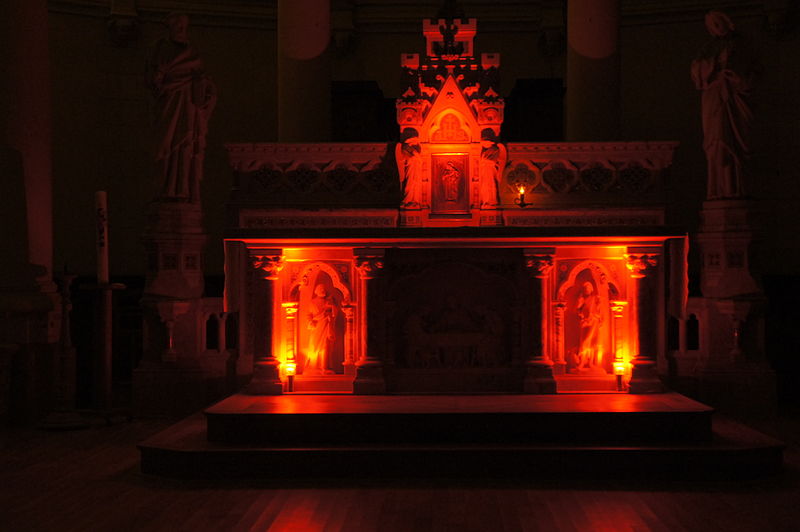
This week, during the Sacred Triduum, the Church invites you to participate in the very mysteries that merited salvation for you and for all.  “Triduum” literally means “three 800px-Triduum_Pascal_St_Léger_d'Orvault_02.jpgdays” and commemorates the events of the Paschal Mystery from the evening of Holy Thursday to the evening of Easter Sunday.  The Triduum begins with the evening Mass of the Lord’s Supper on Holy Thursday, which recalls Jesus’ Last Supper with His Apostles.  The Gospels remind us that on this night, Jesus instituted the Eucharist, washed His Apostles’ feet, and went to the Garden of Gethsemane to pray.  At the Mass of the Lord’s Supper we do the same: the Eucharist is celebrated as usual, the Priest washes the feet of twelve parishioners, and the Blessed Sacrament is taken to a side altar for adoration throughout the night.
Holy Thursday’s Mass has no formal conclusion… it simply ends.  The liturgy commemorating the Lord’s Passion on Good Friday has no formal beginning… it simply picks up where Thursday’s Mass left off.  The altar has been stripped, and the tabernacle stands empty: Jesus has been arrested and has been taken away to die on the Cross.  The Passion from John’s Gospel is proclaimed and the faithful have the opportunity to venerate the Cross, paying homage to the Tree of Life on which was hung their Savior.  Afterwards, Holy Communion is distributed.  Since no Mass is permitted on Good Friday, there must be enough hosts in reserve from the Mass of the Lord’s Supper from the day before.  This liturgy has no formal conclusion either.  Everyone departs in silence, leaving us with an eerie sense of emptiness.

Finally, the Easter Vigil begins in the darkness where Good Friday left off.  A fire is lit, and the Easter Candle emerges, scattering the darkness of death with its Resurrected light.  This candle represents Jesus Himself risen from the grave!  The whole Church is reborn on this night.  The Liturgy of the Word consists of many readings, retracing the promise of salvation up until the coming of the Messiah.  The Gloria and Alleluia are reintroduced to the congregation by the Priest, and the waters of Baptism are blessed.  Those being baptized and/or confirmed are brought into full union with the Church, and every believer reaffirms his or her own baptismal promises.  The Eucharist is celebrated, and the Blessed Sacrament is reserved in the tabernacle again.  This liturgy concludes what was begun on Thursday night, and the final blessing is imparted at long last.  These are liturgies not to be missed.  If you regularly attend them, you know of what I speak.  If you have not been to them before, then I invite you to “taste and see the goodness of the Lord” in these, the Church’s most beautiful and moving rites.


The Reverend Jeffery S. Loseke is a Priest of the Archdiocese of Omaha and is currently the pastor of  St. Charlccn_father-les Borromeo Parish in Gretna, Nebraska.  Ordained in 2000, Fr. Loseke holds a Licentiate in Sacred Theology (S.T.L.) from the Pontifical Athenaeum of St. Anselm in Rome and is working to complete his doctoral degree (Ed.D.) in interdisciplinary leadership through Creighton University in Omaha.  In addition to parish ministry, Fr. Loseke has served as a chaplain in the U.S. Air Force, taught high school theology and college-level philosophy, and has been a presenter for various missions, retreats, and diocesan formation days across the country.


Art: Triduum Pascal St. Leger d’Orvault (Wikimedia Commons)

Where Did All the Crosses Go?

As Holy Week and the Sacred Triduum fast approach, we cannot relax our efforts to rend our hearts. Ultimately, it is God who will work the grace of His Death and Resurrection in us, breaking our hearts of stone in order to give us hearts that live (cf. Ezekiel 36:26).

by Rev. Jeff Loseke

In many places this weekend, the Fifth Sunday of Lent, the faithful will walk into churches and find that the crosses and sacred images have all been covered or removed Attachment-1from sight.  During Lent, the Church recommends—and even obliges in some matters—that the liturgy be stripped of those elements that communicate the fullness of Easter joy so that the reality of this penitential time might be more apparent.  For example, no flowers are permitted and musical instruments are silenced (except for last week’s Lætare Sunday celebration), the Gloria is omitted, fewer Saints’ days are commemorated, and so forth.  And now, as we enter into the final two weeks of Lent, many parishes will observe the longstanding tradition of stripping away even the crosses and sacred images from the church—a poignant reminder of how Christ Himself shed His heavenly glory to become a man for our sake… even to the point of death.

The church building itself is consecrated to stand in the midst of the local community as a visible image of Christ.  For this reason, its architecture and artistry should stand out from all the ordinary, profane, and secular buildings that surround it.  Indeed, a church’s walls are anointed with Sacred Chrism by the Bishop, signifying that it stands in and of itself as an “anointed one,” (i.e., a “Christ”) for all to see.  During these last weeks of Lent, as the beauty of the physical environment of the church building fades away, we recall the words of Scripture regarding God’s Suffering Servant: “He had no majestic bearing to catch our eye, no beauty to draw us to him” (Isaiah 53:2).

Rather than winding down at its end, Lent intensifies.  The reason is simple: How can there be a Resurrection without first experiencing a death?  As we ritually and sacramentally experience Jesus’ Passion and Death, each of us is called to enter into these very Mysteries and to let them permeate his or her own life.  Just as Jesus was stripped—and now the church stands stripped—we must ask ourselves: What needs to be stripped away in my own life?  How yet do I need to die to my own selfishness?  There is nothing serene or passive about that!  As Holy Week and the Sacred Triduum fast approach, we cannot relax our efforts to rend our hearts.  Ultimately, it is God who will work the grace of His Death and Resurrection in us, breaking our hearts of stone in order to give us hearts that live (cf. Ezekiel 36:26).

The Reverend Jeffery S. Loseke is a Priest of the Archdiocese of Omaha and is currently the pastor of  St. Charlccn_father-les Borromeo Parish in Gretna, Nebraska.  Ordained in 2000, Fr. Loseke holds a Licentiate in Sacred Theology (S.T.L.) from the Pontifical Athenaeum of St. Anselm in Rome and is working to complete his doctoral degree (Ed.D.) in interdisciplinary leadership through Creighton University in Omaha.  In addition to parish ministry, Fr. Loseke has served as a chaplain in the U.S. Air Force, taught high school theology and college-level philosophy, and has been a presenter for various missions, retreats, and diocesan formation days across the country.

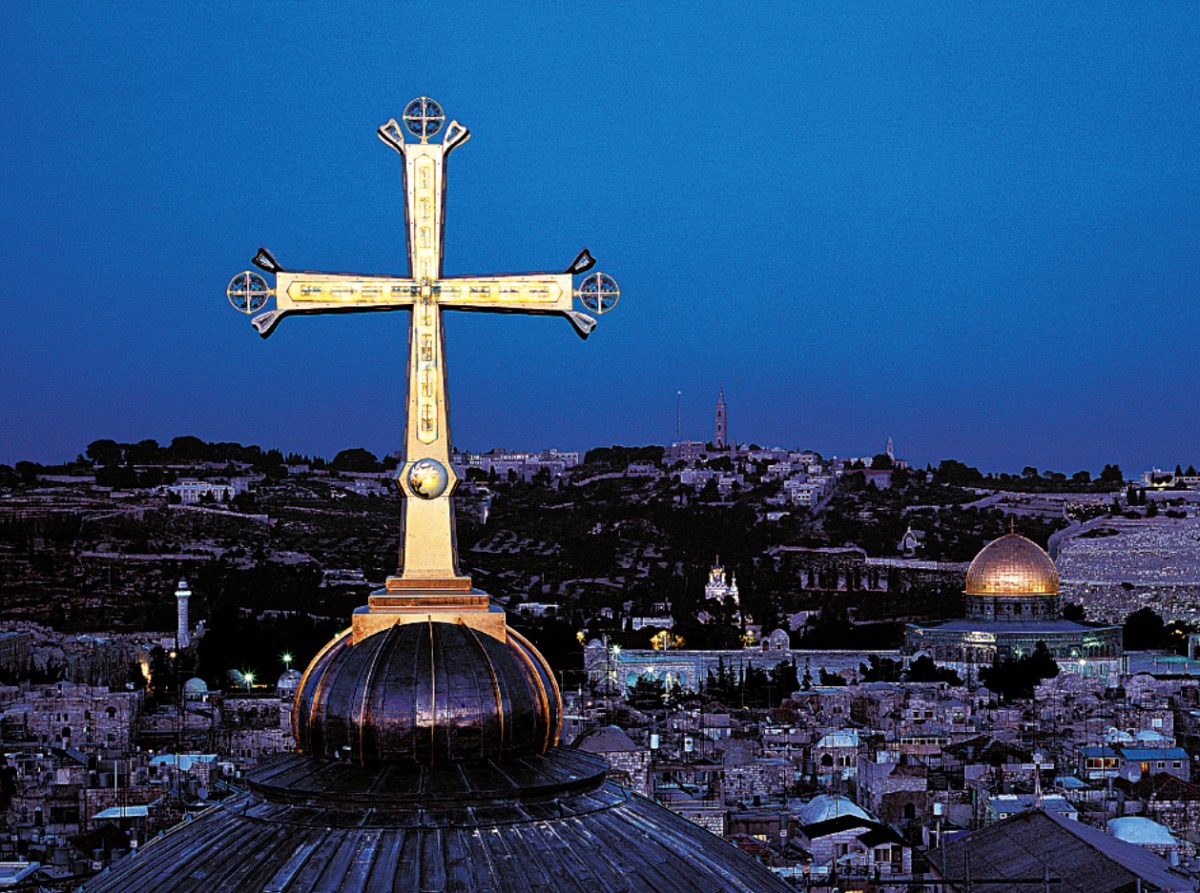
Art: Photography – Golgotha Crucifix, Church of the Holy Sepulcher in Jerusalem (Wikimedia Commons)

Reconciliation: Don’t Wait to Rejoice!

Do not wait to take advantage of the opportunity to know God’s mercy as soon as possible, to live in His light, and to experience His joy right now!

by Rev. Jeff Loseke

This Sunday, Lætare Sunday—whose name comes from the first words of the Entrance Antiphon at Mass, Lætare Ierusalem (Rejoice, Jerusalem)—marks the halfway point in Artgate_Fondazione_Cariplo_-_Molteni_Giuseppe,_La_confessioneLent and invites us to begin experiencing the joy of the Resurrection even as we continue our journey to the Cross.  Hopefully, our Lenten practices and penances have been chipping away at our hardened hearts so that they are already being freed from temptation and slavery to sin through God’s grace.  Our works alone are incapable of effecting this interior change, however.  Only in cooperation with God’s work do we experience the movement from darkness to light.
Were an athlete or a musician to wait until the last minute to begin practicing for a contest or performance, he or she would not likely perform to the best of his or her ability.  All the weeks and months of potential growth would have been squandered through procrastination.  I would suggest that we ought to consider our spiritual life with a similar mindset, especially during Lent.  Too many Catholics, perhaps, like to wait to the last minute to go to Confession before Easter so that they will be “squeaky clean” for Easter Sunday.  Unfortunately, by putting off the Sacrament of Reconciliation to the last minute, one is left to struggle through Lent without the particular help of that sacramental grace.  While on the one hand, Confession in the eleventh hour will bring us full forgiveness of sins prior to the Easter Mysteries, on the other hand, it leaves us potentially in a state of sin now, stymieing the effects of sanctifying grace, which could have been growing in us over time.  The fullness of our Easter joy is potentially stunted because of our tardiness in choosing to be freed from sin as soon as possible.  The earlier we are freed, the longer we walk in grace and grow in joy.

Almost everywhere you go, a number of extra opportunities are being made available during Lent for the faithful to receive the Sacrament of Reconciliation.  Do not wait to take advantage of the opportunity to know God’s mercy as soon as possible, to live in His light, and to experience His joy right now!  Had the Prodigal Son not waited so long to return to his father’s house, he would not have had to face starvation and destitution.  Why, then, should we wait to be forgiven?  Rather, we should be running to our Savior, who cannot wait to give us the fullness of His joy.  Therefore, with the whole Church we cry out: “Rejoice, Jerusalem, and all who love her.  Be joyful, all who were in mourning; exult and be satisfied at her consoling breast.


The Reverend Jeffery S. Loseke is a Priest of the Archdiocese of Omaha and is currently the pastor of  St. Charlccn_father-les Borromeo Parish in Gretna, Nebraska.  Ordained in 2000, Fr. Loseke holds a Licentiate in Sacred Theology (S.T.L.) from the Pontifical Athenaeum of St. Anselm in Rome and is working to complete his doctoral degree (Ed.D.) in interdisciplinary leadership through Creighton University in Omaha.  In addition to parish ministry, Fr. Loseke has served as a chaplain in the U.S. Air Force, taught high school theology and college-level philosophy, and has been a presenter for various missions, retreats, and diocesan formation days across the country.


Art: The Confession by Giuseppe Molteni, 1838