

by Fr. Jeff Loseke
A few years ago, I was on vacation with two classmates from my days in seminary. The three of us now are Priests in different dioceses in the U.S. and get together every now  and again for vacation to enjoy each other’s friendship while we travel. To see us together, one would not immediately recognize us as Priests at first glance since we often do not travel in Roman collars or other such clerical garb while on vacation. Nevertheless, our identity is sometimes uncovered… not by how we are dressed but by a faith that cannot be hidden.
While lounging at the pool and soaking up the sun, one of my friends was reading a book entitled, The Mass, whose title was clearly emblazoned on the front cover. (Not your average, run-of-the-mill poolside reading, for sure!) Another vacationer at the pool noticed this conspicuously Catholic book and asked my friend if he were indeed a Priest. She, not being Catholic herself, then proceeded to ask him several questions about the Mass and the Catholic Church. He happily answered her questions, and what could have been time wasted by the pool—albeit a well-deserved break—turned into an opportunity to share his faith. What a great example of how one’s faith can be both recognizable and inviting without being ostentatious and standoffish. When our faith is an integrated part of who we are, it becomes more than just a single part of us. Instead, it permeates every other part of our very selves, and it cannot help but be seen. For this reason, St. Peter reminds us that we must always be ready to give an explanation to anyone who asks us for a reason for our hope (see 1 Pt 3:15).
Almost 2,000 years prior to this poolside catechesis, St. Justin wrote to the pagan emperor Antoninus Pius and the Roman Senate around A.D. 155 also explaining the Mass and the Church’s beliefs. The writings of St. Justin and other Apostolic Fathers from the first centuries of the Church’s history provide some of the best examples of Christians explaining and defending their faith to those who questioned it. What is most interesting about St. Justin, however, is the fact that he was not a Bishop, Priest, or Deacon. He was a layman, and he was the first as such to write extensively about the faith, especially to those who questioned it. What an excellent example he is for the Christian faithful of today! The responsibility of giving witness and explaining the faith belongs not just to religious leaders, but it is fittingly situated in the lives of the baptized faithful. In all truth, the laity have more day-to-day contact with the world than do the clergy. The Second Vatican Council rightly reminded us that it is the task of the clergy to evangelize the men and women of the Church, and that it is the task of the faithful to evangelize the world. Truly, whether clergy or laity, there are no vacations from our vocation to announce the Good News!
The Reverend Jeffery S. Loseke is a Priest of the Archdiocese of Omaha and is currently the pastor of St. Charl es Borromeo Parish in Gretna, Nebraska. Ordained in 2000, Fr. Loseke holds a Licentiate in Sacred Theology (S.T.L.) from the Pontifical Athenaeum of St. Anselm in Rome and is working to complete his doctoral degree (Ed.D.) in interdisciplinary leadership through Creighton University in Omaha. In addition to parish ministry, Fr. Loseke has served as a chaplain in the U.S. Air Force, taught high school theology and college-level philosophy, and has been a presenter for various missions, retreats, and diocesan formation days across the country.
Art: A Sunday Afternoon on the Island of La Grande Jatte by George Seurat, 1884


 in our own identity as Christians, who, like Paul, never met Jesus in the flesh. There can be no doubt that Christianity would look very differently today—if it existed at all!—without the efforts of St. Paul and his companion missionaries. For this reason, the Church has always regarded St. Paul as a model for evangelization and as one of the principal architects of the Church. Saint Paul’s missionary strategy (i.e., establishing a communal identity among new believers) is precisely what the Catholic Church has always understood as “Sacred Tradition.” Saint Paul and the other Apostles modeled their style of leadership after that of Jesus Christ and passed it on in a living Tradition. Jesus gathered His closest followers around Himself and, for a period of about three years, established a way of life that would give them their identity as His Apostles. He did not hand them a book of instructions; rather, He enjoined upon them a way of life, a communal identity, a Sacred Tradition. They in turn passed it on to the next generation.
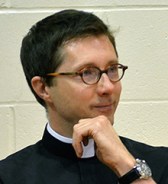 es Borromeo Parish in Gretna, Nebraska. Ordained in 2000, Fr. Loseke holds a Licentiate in Sacred Theology (S.T.L.) from the Pontifical Athenaeum of St. Anselm in Rome and is working to complete his doctoral degree (Ed.D.) in interdisciplinary leadership through Creighton University in Omaha. In addition to parish ministry, Fr. Loseke has served as a chaplain in the U.S. Air Force, taught high school theology and college-level philosophy, and has been a presenter for various missions, retreats, and diocesan formation days across the country.
 pelicansbreast.com