

by Fr. Jeff Loseke
Today, the most recognizable symbol of Christianity is a cross. This once-popular method of execution by the Romans was forever changed after Jesus conquered His own  crucifixion by rising from the dead. Interestingly, the cross was not one of the principal symbols the first Christians used to identify themselves as followers of Jesus, however. Why not? Probably because it was far too obvious. To publicly declare oneself a Christian, especially during the 2nd and 3rd centuries, was a crime punishable by death. While many believers publicly professed their faith when pressed to do so, they were not necessarily in the habit of volunteering such information. This was by no means an act of cowardice, but rather an act of prudence.
Rather than openly advertise their Christian beliefs with a cross, they utilized less obvious, though deeply meaningful symbols to identify themselves to one another. For example, they would impose the Greek letters Chi (X) and Rho (P) atop one another in the now familiar traditional symbol for Christ. They did so because these are the first two letters of the Greek word for Christ. Incidentally, this is why the letter Chi (X) is used even today as an abbreviation for Christ (e.g., Xmas for Christmas, Xianity for Christianity, etc.). Another common ancient Christian symbol—often seen today on the backs of vehicles—is the fish. This clever innovation, used by our Christian ancestors, makes an acronym out of the first letters of the phrase, “Jesus Christ, the Son of God, the Savior,” which spell “ichthus,” the Greek word for “fish”. Thus, the symbol came to represent Christians in the first centuries.
So why all this Greek in early Christianity? Under the Roman Empire, while Latin was spoken as the official language, Greek was more commonly spoken among its subjects. Indeed, many of the Jews of the Diaspora spoke Greek better than they did Hebrew. These Greek-speaking Jews, along with Greek-speaking pagans, became the more likely candidates for conversion to Christianity than many of the Hebrew-speaking Jews of Israel. Since Greek was the unofficial language of the time, it, therefore, became the first language of Christianity—so much so that the entire New Testament was originally written in Greek. This is why we hear Jesus describe Himself in Revelation as “the Alpha and the Omega,” the first and last letters of the Greek alphabet. Furthermore, even the liturgy pays homage to our Greek-speaking roots by retaining one of the oldest titles for Jesus in its original Greek: Kurios, which means “Lord”. Remember, in order to avoid uttering the Holy Name of God unnecessarily, faithful Jews would substitute the title “Lord” for God’s Name. By using this same title, the first Christians were professing that Jesus Christ is the same Lord, the same God of Israel. It is Greek we speak, not Latin, when we say, “Kyrie, eleison. Christe, eleison. Kyrie, eleison.”
The Reverend Jeffery S. Loseke is a Priest of the Archdiocese of Omaha and is currently the pastor of St. Charl es Borromeo Parish in Gretna, Nebraska. Ordained in 2000, Fr. Loseke holds a Licentiate in Sacred Theology (S.T.L.) from the Pontifical Athenaeum of St. Anselm in Rome and is working to complete his doctoral degree (Ed.D.) in interdisciplinary leadership through Creighton University in Omaha. In addition to parish ministry, Fr. Loseke has served as a chaplain in the U.S. Air Force, taught high school theology and college-level philosophy, and has been a presenter for various missions, retreats, and diocesan formation days across the country.
Art: Hörnse kyrka auf Gotland. Chorportal: Fische by Wolfgang Sauber, 2007 (Wikimedia Commons)


 it is a feast that acknowledges humanity’s failure to love God fully in return. Without the Savior loving both us and the Father to the end, we would not be redeemed. Not only did Jesus willingly lay down His life for our salvation, but also He allowed His very heart to be pierced by a lance. With that final act of man’s rejection of the Father’s love, God could have poured out judgment upon the centurion and upon the whole world for the death of His Son. Instead, God willed that blood and water—symbols of the Eucharist and Baptism—should flow from Christ’s wounded Heart to bring healing and conversion to sinful humanity. No matter how many times humanity has offended and rejected God, He has always been ready to meet us with mercy and forgiveness.

 substantial, real, and abiding presence in His Church. We acknowledge and worship this sacramental mystery whereby ordinary bread and wine become the Body and Blood of Christ. Neither is the Eucharist just a symbol of Christ’s Body and Blood nor does it reveal Christ to us only spiritually. We know that Christ is really and truly present—body, blood, soul, and divinity—in the Eucharist. This truth is so central and so important to our faith that the great Catholic American author Flannery O’Connor (d. 1964) once said in defense of the Eucharist: “Well, if it’s a symbol, to hell with it. It is the center of existence for me; all the rest of life is expendable.”

 and again for vacation to enjoy each other’s friendship while we travel. To see us together, one would not immediately recognize us as Priests at first glance since we often do not travel in Roman collars or other such clerical garb while on vacation. Nevertheless, our identity is sometimes uncovered… not by how we are dressed but by a faith that cannot be hidden.

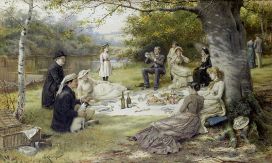 ourselves outside a whole lot more. We are enjoying picnics, reunions, vacations, games, gardening, and a whole host of summertime activities. Not only might we find ourselves enjoying God’s marvelous creation more, but also we add to it by expressing our own gifts and talents within it.


 Resurrection, He spoke repeatedly to His Apostles about how He would send the Holy Spirit to remain with them after He ascended into heavenly glory. The Acts of the Apostles recounts how Mary, the Apostles, and other disciples returned to the upper room and remained there in prayer and supplication. The total number of days between Ascension Thursday and Pentecost Sunday is nine. This is the reason the Church’s devotional novenas follow a similar nine-day model.


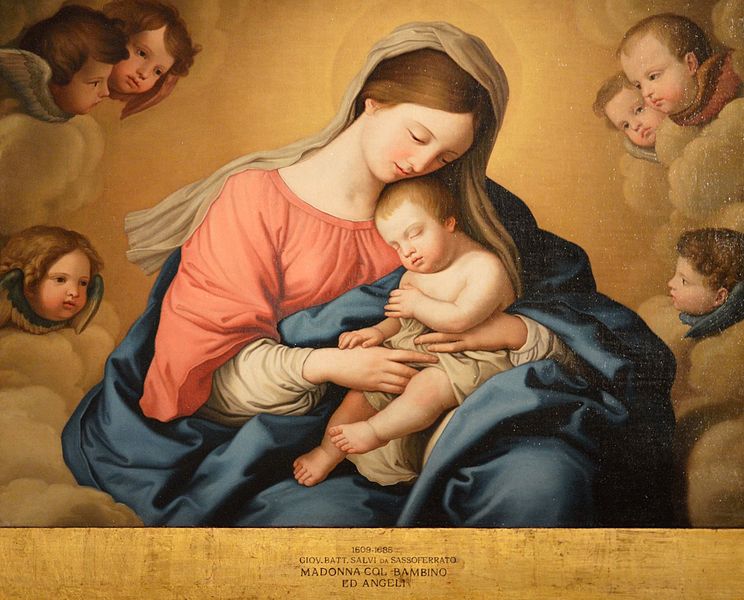
 In so doing, He gave all of His disciples into His Mother’s care and gave us Mary to be our Mother as well. As the one chosen by the Father to give birth to His Only-Begotten Son, Mary serves as a resplendent example of motherhood to all who are her children as well as to all who share the noble vocation of motherhood. Mary’s motherhood extends to us primarily because Jesus joined His disciples to Himself and made us members of His Body in the Church. Mary, as the Mother of Jesus, is the mother also of His very Body, the Church.
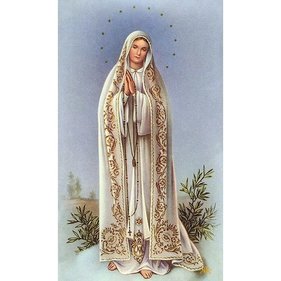
 children each month through October 13th and revealed to them a plan for peace in the world through personal prayers and penances. At her final appearance to them on October 13th, about 70,000 people had gathered to witness the children as they spoke to the Virgin. Everyone present that day testified to having seen the “miracle of the sun” as it “danced” in the sky, thus confirming the apparition for the onlookers.
 pelicansbreast.com