Guest-Post: Introducing Paula Zwenger

In marriage, those small blessings we can offer our spouse tend to go a long way. Paula Zwenger captures their beauty in her poem, “This Man of Mine”


Recently I camthe_marriage_of_mary_and_joseph-_engraving_by_s-a-_bolswert_wellcome_v0034533e across a poem by Paula Zwenger that really speaks to the subject of sacrifice in a beautiful and inviting way – particularly as it pertains to the vocation of marriage. I wasted no time in asking if she would allow me to post it here. Thankfully she said yes – please enjoy her contribution below:


Easing Into the Ordinary

Who doesn’t love a good party – times when you gather with family and friends, partake of really delicious food, and wile away hours in fun and games? Perhaps you commemorate festivities by exchanging gifts, traditional mementos or souvenirs?

Life is full of reasons to rejoice. We make merry at birthday parties, graduations, or if good health and grace allow, high-number anniversaries in our vocations. We may travel different paths to arrive at our milestones, and express our thanksgiving in unique and creative ways based on our cultural traditions, but the logistics of our celebrations hold a few things in common.

Each one starts with preparation, building anticipation proportionate to the length and importance of the feast. Do you need to choose and send invitations? Are out-of-town guests expected? Where will they stay? Who plans and executes the menus for meals (don’t forget that Aunt Susan is allergic to nuts and Cousin Joe is diabetic)? Is special clothing required? Will there be a photographer? What about decorations? ‘To-do’ lists span columns or pages and require many hands to accomplish.

Finally . . . the ‘big day’ arrives! Everything goes off without a hitch (or not).  You spend yourself in joy, creating memories to last a lifetime. You may even arrive at this day exhausted by your preparations, but still luxuriate in what goes right, and bask in the joy on faces of those around you. This is what life is about – the very feasts that help make life worth living. Gratitude is simple to attain and acclaim in the midst of such blessing!

Then . . . a new day dawns. The party is over. It’s now time for post-celebration clean-up and return to day to day living. No more dancing in the streets, or aisles, or banquet hall – now you roll up your sleeves and return to work.

As Catholics, our faith tradition provides us with a liturgical calendar of seasons which help to focus our prayers, thoughts and actions.  We cherish the beauty of an extended Christmas season, which lasts far beyond the influences of secular society. Yet even with all the opportunity for special feasts and solemnities, we can wax nostalgic for the beauty of the crèche and stockings and beautifully lighted tree as it comes to a close.

In fact, in our house we’ve been known to ‘extend’ this season, as evidenced by holiday decorations, by as long as two weeks into Ordinary Time. If your family is anything like mine, everyone is excited to put up Christmas decorations, but no one is excited to take them down. The house looks a bit empty for awhile when the colors, lights, and precious heirlooms have been stowed away again for another year, out of sight.

This year, once again, I was dreading the chore of ringing out Christmas and ringing in ordinary time. My husband, Patrick, and I had talked on January 6th, the traditional calendar date of Epiphany, about needing to take things down on the following Saturday (the day this poem arrived to be written).

That morning he, an early riser by nature, held to his usual schedule while I slept in.  I was upstairs longer than usual, puttering around and reading online articles while listening to the local radio station, not looking forward to the chore ahead.

As it turns out, a plan beyond my own was already in motion. You might say I had a little ‘epiphany’ of my own about easing into the ordinary – which prompted the poem below.

This Man of Mine

I’ve never fully understood, not even ‘til today
how bonds we formed so long ago have blessed us both to stay
It’s got to be a gracing, giving strength beyond our own
that holds this love together all through choices we have grown
You take two different people and conjoin them up for life,
a model tried through centuries, this husband with his wife

He’s not given to praising and perfection’s not his game
but oh, he works in many ways at loving, just the same
Today, for instance, when I rose, ‘to-do’ list on my mind
I came downstairs with heavy sigh and what gift did I find?
The tree and lights, near put away (Epiphany now passed)
he did a chore I didn’t like without it being asked

Some frown at my believing and they wonder at my hope
yet every day, some way I’m blessed with gifts that help me cope
My answer is in trusting full that come good days or bad
this sacramental bonding tarries not as passing fad
It’s choice each morn on rising new to honor and to bless
in ways the other may not know, or ever even guess

I don’t pretend all answers in this riddle that we live
but time and time again it seems we get more when we give
I share with you if you are blue that times can turn around
not Pollyanna pandering but truth that I have found
I’ll write the blues when they appear but sunshine rays this day
right now it’s time to ‘walk my talk’ with no more word delay

I’ll find the chore that blesses him and makes for brighter day
I’ll love it into being and amend my past delays
When gratitude is lacking I will turn my heart to prayer
And offer even that to God who meets me in His care
There’s nothing that I cannot do when guided by His call
In loving you, in loving Him, whose mercy saves us all


——————————————————————————————

image1
Paula Zwenger
is a wife, mother, and grandmother who, upon finding herself an empty nester, tried on the hat of rhyme loving writer. It fitted very well. Her joy manifests completely while taking the ups and downs of life and wrangling them into poetry. She also has a passion for creating rhymed treasure hunts with a Catholic flare to celebrate the faith and learn a thing or two along the way. You can find her musings at RhymeLovingWriter.com.


The Real Value of Work

We learn through work that patience matters. That, eventually, given great effort day after day, year after year, we’ll see results. Through our experience in work, we can deduce that that progress in the spiritual life is slow, but that it will pay off. We learn that we don’t necessarily have to see the big picture in order to know it’s there.

Recently I heard some horrific statistics regarding young men and their participation in the work force. The host of a national radio program cited an article from The Washington Post 800px-gustave_courbet_-_the_stonebreakers_-_wga05457that referred to recent research demonstrating a growing tend in America. Apparently, not only are about 20% of young men between 21-30 years of age out of work, but they aren’t too upset about it. Instead, they are finding satisfaction in video games, computers and television, while living in their parents’ basements. Most in this group have not held a job of any kind in at least a year.  Staggering. As such, this is the first generation to feel no guilt about a virtual no-show in the work force, or about being dependent upon parents or the government dole.

While this news is shocking, the astute have been warning about this problem for the past several years. In Bill Bennet’s, The Book of Man, published in 2011, he quotes another author,

There is trouble with men today. For example, after studying today’s workforce data, author and commentator David Brooks observed that “in 1954, about 96 percent of American men between the ages of 25-54 worked. Today that number is around 80 percent. One-fifth of all men in their prime working ages are not getting up  and going to work.”

There are many reasons for this change in society. Bennet, himself, cites video games, single parenthood, corrosive entertainment and a lack of religion, among other things.

Whatever the cause, I want to discuss one particular concern among the many overwhelming consequences this lack of discipline and drive among our young men will reap on their souls. One young man profiled in the Washington Post article – who holds an Associates Degree, by the way – had some words that should give us great pause:

 “When I play a game, I know if I have a few hours I will be rewarded” he said. “With a job, it’s always been up in the air with the amount of work I put in and the reward.”

That quote got me thinking about the true value of work.

Of course, there are the obvious things. Work is necessary in a civil society, allowing us the ability to support ourselves and our families – as such it is often the conduit through which God provides our daily bread. Work is good for us both physically and intellectually. God called man to work, telling Adam, “in the sweat of your face you shall eat bread” (Genesis 3:19).

But what concerns me most is how much work provides for us spiritually, how perfectly our experience with work can reflect our spiritual journey, and how this disconnect with work is will result in an even greater disconnect with the spiritual in our young men.

Labor is a physical manifestation of the spiritual effort we must continue faithfully throughout our lives in order to obtain union with God.

Just as the carpenter must continue to hew the wood, patiently carving, hour upon hour, day by day, seeing the end product only in his mind’s eye, so too, we must continue to pursue heaven, trusting that, indeed, “no eye has seen, nor ear heard, nor the heart of man conceived, what God has prepared for the who love him” (1 Corinthians 2:9).

Just as the bricklayer lays brick after brick, taking care to place each and every one exactly to plan, not seeing the end of his work, but only trusting in the plan of the architect, so we, too, must continue to pursue excellence with every step, trusting the architect of our lives to create something magnificent from the application of our best efforts to some of the most mundane tasks, day after day after day.

If the carpenter quits before seeing the final product, it will be forever hidden within the confines of the wood. In that case no one will ever see the beauty hidden within. And the wood will never realize its intended end.

If the brick layer allows himself to get tired on the job, his work will be sloppy, and his building will not be up to par. The plan may have been correct, but the brick-layer’s carelessness will cause problems for him, for anyone who works beside him, or anyone who plans to use that building that he so carelessly built. We, too, must apply the utmost care every step of the way, for our work affects those around us in ways we may never witness.

In our vocations as fathers, mothers, husbands, wives, priests, consecrated singles and others, we must not simply plod along, but rather work with passion and purpose – and great care – from hour to hour, day to day. Never mind the monotony; never mind the challenges; never mind the tiresome little crosses we must bear.

We learn these things through a consistent experience with work. Not necessarily paid work. As a stay-at-home mom, I certainly see the connection between my work life and my spiritual life. I toil day after day, trusting in God’s plan for my children. I see glimpses here and there, but so often as a mother, I am tempted to throw my hands up at what appears to be the futility of the work. I’ll never be able to do this job right. This is too much. It is too thankless. It will never be finished. Too often I fail to see the fruits of my labor.

No matter. I am only called to lay the bricks according to God’s plan. I must trust that He will work everything out for the best. Day after day, I must rejoice even in the mundane. I must bring my all to the job that, frankly, doesn’t always offer positive feedback. But there is one way that my experience differs from that of the bricklayer. The architect may not be standing alongside the bricklayer, assuring him and encouraging his progress. In our case, Christ is with us. He helps us to lay that brick. He applies the mortar so all our efforts build toward the finished product, which is the eternal happiness of heaven for ourselves and our families.

If we ignore the architect, if we lose faith in the finished product, if we try to follow our own plans, we will look back and wish we would have paid closer attention, that we would not have trudged along with such half-baked effort. For our lives will be scarred reflections of our own sloppiness, our lack of patience, diligence and discipline.

We learn through work that patience matters. That, eventually, given great effort day after day, year after year, we’ll see results. Through our experience in work, we can deduce that that progress in the spiritual life is slow, but that it will pay off. We learn that we don’t necessarily have to see the big picture in order to know it’s there.

Ultimately, work gives us evidence in the physical realm of what religion can do for us in the spiritual realm. According to Saint John Paul II,

(9) Work is a good thing for man-a good thing for his humanity-because through work man not only transforms nature, adapting it to his own needs, but he also achieves fulfilment as a human being and indeed, in a sense, becomes “more a human being”. – Laborem Exercens

To the extent that our young men are not “achieving fulfillment” as human beings, we cannot possibly achieve fulfillment as a society.

Even more importantly, if we do not teach our young men to have patience to perform a good job in pursuit of long-term satisfaction on earth, how will they ever be able to pursue the long-term satisfaction of heaven? If the immediate feedback from a video game trumps the long-term satisfaction of a job well-done, how will they ever be willing to do the work necessary on earth now, that one day they might hear these glorious words from heaven:

Well done, my good and faithful servant…enter into the joy of your master.”


The Unholy Family

Most of us were born into an unholy family. Actually, that family – unholy as it may be – is the best way for each of us to make our way in this world, the greatest vehicle known to man for our sanctification.

What do you get when two fallen people fall in love and commit to spending the rest of their lives together, struggling through this thing called life, climbing, stumbling, and familyclimbing again; pulling each other up when we fall, sometimes tripping over each other along the way?

You get the precious seed of a holy family.

Your marriage may not be perfect. No worries. So long as you remain committed through the ups and downs and ins and outs of your relationship. Because the commitment itself will provide you both with the room you need for that seed to take root and germinate.

Marriage gives love the structure, the shelteredness, the climate in which alone it can grow. Marriage teaches spouses humility and makes them realize that the human person is a very poor lover. Much as we long to love and be loved, we repeatedly fall short and desperately need help. We must bind ourselves through sacred vows so that the bond will grant our love the strength necessary to face the tempest-tossed sea of our human condition. – Dietrich von Hildebrand, Marriage: The Mystery of Faithful Love

And what do you get when those two people give themselves completely -at least to the extent that two fallen human beings can give themselves – to one another in love?

This is when love can produce life, and through this act that delicate greenery breaks the surface of the ground, growing more beautiful by the day through the waters of baptism, the nutrients of love and sacrifice provided daily by the parents, with the light of Christ shining down from above in grace and mercy.

This is when you get a family.

You may be thinking, My family doesn’t come close to that image. When you look at your family, you may be discouraged by what you consider to be an infestation of individualism and idiosyncrasies. No one seems on the same page at the same time and polar opposites can be found in every corner. You may be worried that your family may never blossom.

Yours may not be a holy family.

In fact, yours may be an unholy family.

That’s OK.

Most of us were born into an unholy family. Actually, that family – unholy as it may be – is the best way for each of us to make our way in this world, the greatest vehicle known to man for our sanctification.

The modern writers who have suggested, in a more or less open manner, that the family is a bad institution, have generally confined themselves to suggesting, with much sharpness, bitterness, or pathos, that perhaps the family is not always very congenial. Of course the family is a good institution because it is uncongenial…

…The best way that a man could test his readiness to encounter the common variety of mankind would be to climb down the chimney into any house at random, and get on as well as possible with the people inside. And that is essentially what each one of us did on the day he was born.

This is, indeed, the sublime and special romance of the family. It is romantic because it is a toss-up…

…When we step into the family, by the act of being born, we do step into a world which is incalculable, into a world which has its own laws, into a world which could do without us, into a world that we have not made. In other words, when we step into the family, we step into a fairytale. – G.K. Chesterton, On Certain Modern Writers and the Institution of the Family

But how, given the widely varied personalities involved in a family, the different values and goals, the wild adventures and the unknown outcomes, do we grow holy in that environment? How can we begin to turn in the same direction, linking arms as we walk through this vale of tears, climbing together to the summit of heaven?

We sacrifice.

We serve.

We let go.

We love.

(15) The human family, disunited by sin, is reconstituted in its unity by the redemptive power of the death and Resurrection of Christ.[37] Christian marriage, by participating in the salvific efficacy of this event, constitutes the natural setting in which the human person is introduced into the great family of the Church.

(21) Family communion can only be preserved and perfected through a great spirit of sacrifice. It requires, in fact, a ready and generous openness of each and all to understanding, to forbearance, to pardon, to reconciliation. There is no family that does not know how selfishness, discord, tension and conflict violently attack and at times mortally wound its own communion: hence there arise the many and varied forms of division in family life. But, at the same time, every family is called by the God of peace to have the joyous and renewing experience of “reconciliation,” that is, communion reestablished, unity restored. In particular, participation in the sacrament of Reconciliation and in the banquet of the one Body of Christ offers to the Christian family the grace and the responsibility of overcoming every division and of moving towards the fullness of communion willed by God, responding in this way to the ardent desire of the Lord: “that they may be one.” -Saint John Paul II, Familiaris Consortio 

So we keep working. In our roles as parents, and in our roles as children, we sacrifice. We serve. We let go. We love.

And when we fall, we get back up and we begin again. Through reconciliation.

Through the life-giving love of the sacraments, the nutrients of our daily sacrifice, and by the grace-filled rays of Christ’s mercy, little by little, our families can become holy. That is when that tiny seed, planted in marriage, germinated in love to become a family, will begin to bloom. And the fragrance will intoxicate the world with its beauty.

But for now…

Face it. Your unholy family is the most amazing adventure you’ll ever find in this life. And the more wild the adventure and the higher the mountain you must climb together, the sweeter the victory when you reach the top.

Let us be grateful for our unholy families, and let us pray that we can unite ourselves to His Cross; that the Blood of Christ will wash away our sins, our pain and our tears along the way. Ultimately, may our families experience the joy of a love that is absolutely and completely self-giving, and together may we find the fruit of salvation through the embrace of the cross.


My Exciting Pre-Announcement and Why You Haven’t Heard From Me Lately!!!

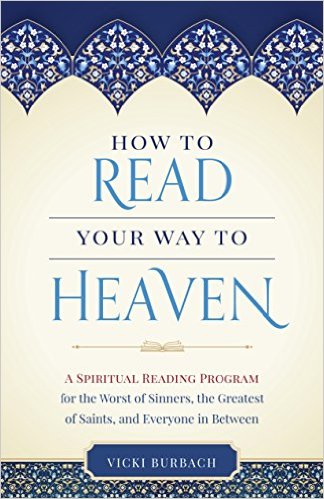
Not merely another book to read, How to Read Your Way to Heaven is designed to be an invaluable tool for guiding and organizing your reading to help you on your journey to become a saint.

Lately I have been off-line. I have had insights and inquiries I wanted to discuss with you; but instead I have used any time on my computer to put the final touches on my latest project. In that regard, and in the interest of the delicate balancing act that is the life of a mother, I have neglected the youngest of my children. Yes, I consider this blog to be my infant child – barely a year old, it has been left to flounder for most of the past two months. Between preparing for holidays and finishing other projects, our conversation about sacrifice has been left on the back burner. Sacrificed, so to speak.

So what’s been taking so much time that I couldn’t spare a minute to check in here and there?

Well, I’m pleased to announce that my first book just went to the printer!!! How to Read Your Way to Heaven is available for pre-order and will be formally released by Sophia Institute Press on January 26th!

book-cover

That’s right! I’ve spent the last month or two plugging away at small details here and there, hoping to make this a spiritual reading program well worth your time and energy. And, while I am humbled by the opportunity to pull this together, I must say, I do think it has turned out to be quite a valuable resource.

From the back of the book:

Wouldn’t it be great if we really could read our way to heaven?

Many of us commit to some form of spiritual reading, but we find that our book choices are sporadic and often based on a whim rather than following a purposeful plan. Designed for individual or group settings, How to Read Your Way to Heaven will guide your quest to delve deeper into a relationship with Christ by meditating on the written word while organizing your reading around the four pillars of the Catholic Faith – the Creed, the sacraments, morality and prayer.

Not merely another book to read, How to Read Your Way to Heaven is designed to be an invaluable tool for guiding and organizing your reading to help you on your journey to become a saint.

Following this plan, you’ll meditate daily on Sacred Scripture and read the entirety of the Catechism over the course of the program. You’ll be introduced to a treasure trove of the greatest Catholic books ever written, and you’ll learn prayerful reading methods such as lectio divina and find time-tested advice on where and when to read.

A couple of additional notes:

  • This book is an integrated 1-,3- or 5-year spiritual reading program, complete with a checklist, specific assignments and a magnificent book list that is fully in line with the Magisterium of the Church.
  • A sample page from the reading program:


screen-shot-of-book

  • Daily assignments include brief readings from Sacred Scripture, the Catechism of the Catholic Church and some of the greatest Catholic books ever written. Readings generally take 15-30 minutes per day, or can be split between two days, if time is limited. The program is completely adaptable to the schedule of each individual reader.
  • The four pillars of the Catholic Faith as described in the Catechism of the Catholic Church are the foundation on which this reading program is built: What we believe (Profession of Faith); liturgy and the sacraments (Celebration of the Christian Mystery); life of Christ; prayer.
  • SO excited about this one  – We asked Catholics to whom many of us look for wisdom, guidance or support on our spiritual journeys to share their favorite books from each of the four pillars of Faith. Many responded. We have recommendations from Dr. Peter Kreeft, Jennifer Fulwiler, Mike Aquilina, Fr. Mike Schmitz, Fr. Timothy Gallagher, Tim Staples, Trent Horn, Jason Evert and many others. Additionally, we included Fr. C. John McCloskey’s Catholic Lifetime Reading List, which includes over 100 books for your spiritual reading pleasure and enlightenment.
  • Hundreds of quotes by saints and other great and holy minds are sprinkled throughout the text for your meditation and contemplation on each of the four pillars.
  • The main text includes the story of my spiritual reading journey as a Catholic convert, including five things I’ve learned about spiritual reading, and why it should play a critical role in our lives as Catholics.

I’m so excited to share this resource with you! I hope you’ll check it out and let me know what you think!!!

Joy – That Elusive but Necessary Virtue

Clearly those who knew Chiara witnessed something very special. People are starving to experience the joy of Christ. Imagine what the world would be like if all Christians were brimming with it.

For Easter, I received the long-awaited biography, Chiara Corbella Petrillo: Witness to Joy. I say long-awaited, and yet Chiara died just less than four years ago. But her story has spread like wildfire. In fact, I first heard about her two years ago at a retreat withchiara corbella the Apostles of the Interior Life in Kansas City. The talk was an unbelievably inspirational meditation on Joy. 

Only two years after her death, her story had traveled over 5,000 miles. Amazing. Since then it has no doubt traveled the world.

At first glance, Chiara’s story is quite tragic. By the young age of 28, she had given birth twice to two beautiful children, only to lose each of them within 24 hours. Shortly thereafter, she and her husband were blessed with another baby, only to learn early in her pregnancy that she had cancer. Immediately after they gave birth to a healthy baby boy, Chiara had to undergo major surgery to remove the tumor. But their story didn’t stop there. Shortly after her surgery, Chiara and her husband, Enrico learned that her condition was terminal, and at the time of this photograph, her body was completely ravaged with cancer, even taking the sight from her right eye. She passed from this world shortly thereafter.

Now do you see what’s so compelling about this woman? With all that she had lost, and with all that she stood to lose, her joy was – is –  captivating.

Chiara was a living image of the Word of God:

In this you rejoice, though now for a little while you may have to suffer various trials, so that the genuineness of your faith, more precious than gold which though perishable is tested by fire, may redound to praise and glory and honor at the revelation of Jesus Christ. Without having seen him you love him; though you do not now see him you believe in him and rejoice with unutterable and exalted joy (1 Peter 1:6-8).

This is the kind of joy we are called to live as Christians!

So if we are supposed to have this kind of joy, why is Chiara so inspirational?

Could it be because many of us can’t seem to bring ourselves to be joyful in the face of the menial inconveniences of daily life – late alarm, cold coffee, cold weather, hot weather, busy children, too little sleep – let alone summon a smile when tragedy strikes?

What is it about those for whom it seems second nature to look at the glass half full? How do they do it? How do they live out their Faith with such grace?! Do they just FEEL so full of joy that they can’t seem to contain the smiles, the laughter, the overall good nature?

For some of us, this is hard to imagine.

Were they born that way?!

Most of us think there may be a bit of truth to that one. Case in point – My 15-year-old son. Rarely is he seen without a smile on his face (He’s also rarely seen sitting still, but that’s another subject altogether.). There is nothing he enjoys more than making someone smile – he actually told me once that it makes his day. Last Saturday, he laughed when he shared that another employee where he works walked over to where he was busy running the cash register and told him, “I’m just going to stand here and see if some of your positivity will rub off on me.”

I have to admit, I’m a little jealous. I spend a decent amount of time examining traits I admire in others, and thinking, “It is not fair that ‘So and So’ is naturally  ________, while I have to work so hard at it!” Forget about the unfair distribution of wealth – what about the unfair distribution of virtue?!

While such natural traits seem ridiculously unfair, don’t think the rest of us are off the hook. It may be a common excuse on earth, but I don’t think “I was born that way” is going to play well when we stand before Justice Himself, trying to explain our brooding natures.

So what about us? What about the great majority of people who were not born with joy shooting through our veins? Maybe we tend to be caught up in our problems and can’t seem to get out of ourselves long enough to make any real attempts at sustained joy. Is there no hope for us?

Well, I’m sure those of us who have to work a little harder can learn from those who seem to have an easy time of things.

My son, for example, has been blessed with a few characteristics that I am willing to bet are common to all joyful people. First, he is grateful. He doesn’t seem to take things for granted, but rather makes a point to enjoy every conversation, every song, every joke, every job – every moment. Second, he tends to let things run off his back and is quick to forgive. Third, he cares about others. Fourth, he gives his all. He spends very little if any time wondering whether he “fits in.” Rather, he dives in head first and goes for broke. He’s not about getting noticed – whether in school, sports, church, or anything else. Sure – he appreciates accolades. But really, he’s about living. And when he is busy living, he gets noticed because people are naturally drawn to his personality.

These are things we can all work on – gratitude, forgiveness, caring, perseverance. By growing in these areas, perhaps we will find some of that joy that seems so elusive to many of us.

And that’s something else to think about. When we notice those people who are brimming with joy, how do we know that they were born with it? It’s easy for me to think they were – makes for a good excuse on my part. But could it be that they wake up every day with a desire and determination to exhibit the virtue of joy, whether they feel it or not?

Maybe joy is like love – not so much an emotion that we exhibit only when we feel like it, but a verb – something we do because we will it, even when we don’t feel it on the inside.

Take the example given by Servant of God, Elisabeth Leseur in her Secret Diary. In memoriam, her husband says of her,

She was thoroughly gay and took care to be so always; she even considered gaiety a virtue. In her final years, she remembered gladly that St. Teresa of Avila…recommended her sisters to be always gay. Her lovely laughter rang out at every opportunity, with its fresh, frank sound.

More than anything, we must remember that God is the source of all virtue, joy included, whether it is imbued upon birth, or developed over time. For Elisabeth, joy was clearly a discipline that she sought to develop through God’s grace in her daily life. Perhaps we should borrow both her resolution and prayer to emulate in our own lives:

One resolution that I have taken and begun to put into practice, notwithstanding physical and moral weakness, is to be “joyful” in the Christian sense of the word, as joyful as I can be toward life, toward others, and even toward myself. My God, help me, and “Thy Kingdom Come!”

But why all this talk about joy? Is it really necessary that we are a joy-filled people? Well, just look again at Chiara. Isn’t it our goal as Christians to spread the light of Christ? Through Chiara’s life and beautiful death have come such amazing grace. In her biography, the priest who spoke at her funeral writes,

The desire to know Chiara was immediately very strong, and at her funeral, when I said at the end of my homily, “If you wish to know more about Chiara, come ask us,” people responded by the thousands.

Clearly those who knew Chiara witnessed something very special. People are starving to experience the joy of Christ. Imagine what the world would be like if all Christians were brimming with it. If only we could harness that elusive virtue, we could truly serve as His witnesses, for we would

…show triumphantly that all the human lights collectively cannot obscure the pure light of God, but gain, on the contrary, additional radiance from it. – Elisabeth Leseur, “Work to Bring Christ to Others”