


Coram Sanctissimo
by Mother Mary Loyola
I
Visits
Go to Him early in the morning, and let thy foot wear the steps of His doors.
(Ecclus. vi. 36.)
How careful we are to observe the courtesies of life! How uneasy till such social duties are discharged! In the making and returning of calls, how fidgety if hindered, how sensible that delay demands apology!
And this where mere acquaintances are concerned. But what when there is question of a friend, a benefactor, one devoted to us and to our interests? If formal visits are here uncalled for, it is only because our heart needs no prompting. Uninvited, inconsiderately often, we come and go, “wearing the steps of his doors.”
And our best of friends—do we treat Him thus?—as affectionately, as familiarly? If not, why not? Is He not among the benefactors whose gifts deserve thanks, the friends whose feelings have to be considered, the acquaintances, at least, whose attentions must be acknowledged? Is it because He puts Himself so completely at our disposal that He is to be neglected? Or because He is King of kings that He is to be considered outside the circle where courtesy is exacted?
Ah, Lord, how unmindful we are of what is due to You! How unmindful I am of Your unfailing devotedness to me! Sent into this world as into a strange neighbourhood, I found You waiting to receive me, to make me welcome, to offer Your services, to show me all manner of graceful kindness. You have thrown open Your house to me. You invite me to Your table. You press upon me Your gifts: “All ye that thirst, come to the waters…Come, buy wine and milk without money and without any price” (Isa. lv.). “Come to Me and I will refresh you” (Matt. xi.). “Him that cometh to Me, I will not cast out” (John vi. ). You make use of every motive to draw me to Yourself; yet have to complain after all: “You will not come to Me that you may have life” (Ibid v.).
“They began all at once to make excuse. I have bought a farm…I pray thee, hold me excused. I have bought five yoke of oxen…I pray thee, hold me excused. I have married a wife, and therefore I cannot come” (Luke xiv.).
Thus it was long ago; thus it is now. We have time for other duties—for our correspondence, our shopping, our afternoon calls on other more favoured friends. But no time for a visit to Him. Is it so far then to the nearest church? So far that He may well accept the distance as sufficient reason for our absence, except at times when attendance is of obligation? Can I urge home duties and necessary occupations, when I see who those are that can and do find time to visit Him?
O my Lord, why these wretched subterfuges with You, “the God of truth”? (Psa. xxx.) Why not fall at Your feet and own that it is not distance, nor lack of leisure, nor any reasonable plea that keeps me from You, but simply and solely the want of love? It is a reason I could not give to any other friend. I should have to find some other pretext with which to colour my neglect. But with You there need be no dissembling. Your friendship stands alone in the perfect frankness and confidence permissible on both sides. We may own to being cold and half-unwilling visitors, yet we are not, for that, unwelcome. The petulance, the selfishness, the waywardness of our moods that in the very interest of other friendships call for self-restraint, may show themselves in all their ugliness before the All-pitying, the Friend “more friendly than a brother,”(Prov. xviii) whom nothing can shock, disgust, estrange.
He wants our intercourse with Him to be perfectly free; nothing studied, nothing strained. He desires to have us as we are, no less than as we would be. He wants to be taken into our confidence, to be let into the secret chambers of our souls, into which we only peep ourselves at stated times and with half-averted glance. He would share in the interests and troubles of the moment; be called upon for sympathy in every event, great or small, that interrupts the even flow of our home life or of our inner life; take part in every experience, whether of sorrow or of joy. The soldier off to the front, the baby with its broken toy, the girl with her first secret, no less than the wife, the mother, the priest, with their burdened hearts— He wants them all. He sees us going off here and there for help, and comfort, and counsel. He hears our feet as they hurry past His door to wear the doorsteps of other friends, and He calls to us in those tones divine in their tenderness of reproach: “You will not come to Me. My people have forsaken Me, the Fountain of living water,and have digged to themselves cisterns, broken cisterns, that can hold no water” (Jer. ii.).
How long, O Lord, how long? When shall we wake up to the reality of Your Presence in our midst, and to the purpose of that Presence? We would die for it if need be, and yet we heed it not. Shall I wait till it is brought home to me by the remorse of my last hour, or by the long, long hours of purgatory? Oh, why did I not make use of my Emmanuel, my God with me, whilst I had time, “whilst He was in the way with me”? (Matt. v.) Why during my dream-life down there did I not realise the need of Him that is the one need in this real life of eternity?
A child at catechism said: “Won’t it be dreadful for those who don’t believe in the Real Presence to find at Judgment that it was real, that our Lord was there after all! Even if they didn’t know any better, and so it was not their fault, and our Lord is not angry with them—I think they will be so dreadfully sorry all the same.”
But if these will be sorry, what will be the case of those who did know, and neglected Him? Those to whom He will say, “So long a time have I been with you,and you have not known Me!”(John xiv. ) “I was daily with you in the temple.” (Luke xxii.)
Lord Jesus, let not that be my bitterest thought in purgatory, that land of bitter thoughts. It is time that Your love should be returned, that I should make amends for the past, that I should hasten to You with my sorrow and my love.
Go to Him early in the morning. Is daily Mass an impossibility in my case? He waits for me there, to offer, for me and with me, His sacrifice and mine for the interests we share together.
And let thy feet wear the steps of His doors. More especially in the afternoon or evening, when the church is quiet and He is left all alone. With a little goodwill and ingenuity could I not include a visit to Him in my weekly, if not in my daily programme? Could I not so arrange my calls to other friends as to leave a few moments for my dearest and my best? How blessed a remembrance, when He is brought to my doors at the last, to be my viaticum, that in life I was faithful to the duties of friendship and wore the steps of His doors!
O blessed, self-sufficing God
Athirst for me,
Coming a beggar to my door
All suppliantly,
Craving with meek persistence alms
Of my poor heart,
A thought, a word of sympathy—how sweet,
How sweet Thou art!
And must Thou knock and ever knock
Till life is flown,
Seeking vain entrance to a heart
That is Thine own?
Or wilt Thou rather work this hour
Such change in me
That hither I may come “wearing Thy steps”
Athirst for Thee!


 1
1  2.
2.  3.
3.  4.
4.  5.
5.  6.
6.  Guidance to Heaven begins by making clear the purpose of this life in preparing for eternity. Cardinal Bona will help readers to prepare themselves for death by addressing vices with which many of us struggle, and helping us to bring them under control. The jacket of my book says it all and reads in part,
 8.
8.  9.
9. 10.
10. 




 it is a feast that acknowledges humanity’s failure to love God fully in return. Without the Savior loving both us and the Father to the end, we would not be redeemed. Not only did Jesus willingly lay down His life for our salvation, but also He allowed His very heart to be pierced by a lance. With that final act of man’s rejection of the Father’s love, God could have poured out judgment upon the centurion and upon the whole world for the death of His Son. Instead, God willed that blood and water—symbols of the Eucharist and Baptism—should flow from Christ’s wounded Heart to bring healing and conversion to sinful humanity. No matter how many times humanity has offended and rejected God, He has always been ready to meet us with mercy and forgiveness.
 es Borromeo Parish in Gretna, Nebraska. Ordained in 2000, Fr. Loseke holds a Licentiate in Sacred Theology (S.T.L.) from the Pontifical Athenaeum of St. Anselm in Rome and is working to complete his doctoral degree (Ed.D.) in interdisciplinary leadership through Creighton University in Omaha. In addition to parish ministry, Fr. Loseke has served as a chaplain in the U.S. Air Force, taught high school theology and college-level philosophy, and has been a presenter for various missions, retreats, and diocesan formation days across the country.

 ourselves outside a whole lot more. We are enjoying picnics, reunions, vacations, games, gardening, and a whole host of summertime activities. Not only might we find ourselves enjoying God’s marvelous creation more, but also we add to it by expressing our own gifts and talents within it.
 Resurrection, He spoke repeatedly to His Apostles about how He would send the Holy Spirit to remain with them after He ascended into heavenly glory. The Acts of the Apostles recounts how Mary, the Apostles, and other disciples returned to the upper room and remained there in prayer and supplication. The total number of days between Ascension Thursday and Pentecost Sunday is nine. This is the reason the Church’s devotional novenas follow a similar nine-day model.
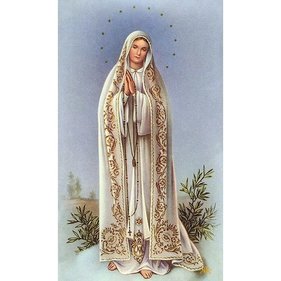
 children each month through October 13th and revealed to them a plan for peace in the world through personal prayers and penances. At her final appearance to them on October 13th, about 70,000 people had gathered to witness the children as they spoke to the Virgin. Everyone present that day testified to having seen the “miracle of the sun” as it “danced” in the sky, thus confirming the apparition for the onlookers.


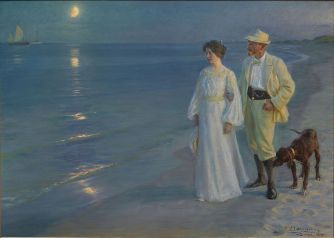 fresh and so in love that even folding socks together was fun? Where even an accidental touch was electrifying and you called your love 100 times a day just to hear his voice?
 pelicansbreast.com