Has Your Child Left the Church? You are not Alone, but Elisabeth Leseur Can Help

In a recent homily, our parish priest discussed the staggering fact that 80 percent of baptized young people are leaving the Faith before they are 25 years old.

In a recent homily, our parish priest discussed the staggering fact that 80 percent of baptized young people are leaving the Faith before they are 25 years old. He was sharing the findings of a newly published study conducted by St. Mary’s Press, in conjunction with Georgetown University. The report —  Going, Going, Gone! The Dynamics of Disaffiliation in Young Catholics — discusses the self-reported reasons Millennials give for leaving the Church. Our pastor mentioned three:
  1. They do not believe in God
  2. The Church is full of Hypocrites.
  3. What the Church has to say about morality (particularly sexual morality) is diametrically opposed to what the culture is teaching Millennials.
Elisabeth intuitively recognized and understood each of these reasons, and sought to eradicate them through the only productive means possible —  personal transformation. May each of us be inspired to adopt her resolutions, that His light may be encountered by every soul we meet:
Elisabeth_LeseurIt is not in arguing or in lecturing that I can make them know what God is to the human soul. But in struggling with myself, in becoming, with His help, more Christian and more valiant, I will bear witness to Him whose humble disciple I am. By the serenity and strength that I mean to acquire, I will prove that the Christian life is great and beautiful and full of joy. By cultivating all the best faculties of my mind, I will proclaim God is the highest Intelligence and that those who serve Him can draw without end from that blessed source of intellectual and moral light. The Secret Diary of Elisabeth Leseur, p. 10


Elisabeth Leseur, Pray for us!


Important Note: The brief reflection above was written for a wonderful website promoting the cause for Elisabeth Leseur’s canonization – an effort I pray will be fruitful, as there is so much we can learn from this holy woman. Please check out elcause.org for more information and join EL Circle of Friends!


Don’t Shy from Adoration Because You Get Distracted in Prayer – Take Your Cares to Your Lord!

Some of us, maybe, are deterred from visiting our Lord in the Blessed Sacrament by a false conception of what a visit should be.  We suppose that the occupations which fill our heads and our hands from morning till night must all be laid aside at the church door and sternly forbidden entrance, much in the same way as we bid our dog lie down in the porch and wait for us. 

coram sanctissimo

Coram Sanctissimo
by Mother Mary Loyola

V
What Things?


“Art Thou a stranger and hast not known the things that have
been done
in these days?” To whom He said: “What things?”
(Luke xxiv. 18, 19.)


Some of us, may-be, are deterred from visiting our Lord in the Blessed Sacrament by a false conception of what a visit should be.  We suppose that the occupations which fill our heads and our hands from morning till night must all be laid aside at the church door and sternly forbidden entrance, much in the same way as we bid our dog lie down in the porch and wait for us.  We read that St. Bernard thus dismissed all secular thoughts, and we conclude—though his biographer does not say so—that they returned at the end of his prayer, and not before. Self-mastery such as this demands an effort to which few of us feel equal.  Do what they will, the mind of the doctor and the lawyer will run more or less upon their anxious cases, the student’s head will be full of his examination, the mother’s of her household cares.  These thoughts, if indeliberate, will be at least persistent, and if quite deliberate will become sinful.  In either case they render prayer an impossibility—hence we stay away.

Now do we find this view of prayer borne out by the practice of God’s servants?  Of David in perplexity and trouble we read: “And the Philistines coming spread themselves in the valley of Raphaim.  And David consulted the Lord, saying: Shall I go up to the Philistines? and wilt Thou deliver them into my hand?  And the Lord said to David: Go up, for I will surely deliver the Philistines into thy hand…And the Philistines came up again…And David consulted the Lord: Shall I go up against the Philistines?…He answered: Go not up against them.”(2 Kings v. ) 

Of David in a mood of joy and thankfulness we are told: “And King David came and sat before the Lord, and said: Who am I, O Lord God, that Thou shouldst give such things to me?” (1 Par. xvii.)  

See, too, the simplicity and confidence of Ezechias on receiving the threatening message of Sennacherib: “And Ezechias took the letter from the hand of the messengers, and read it, and went up to the house of the Lord, and spread it before the Lord.”(Isa. xxxvii.) 

A common complaint is that daily worries and anxieties so invade our minds that our prayer has no chance.  But is this our feeling about a talk with a trusty friend—a man of sound judgment, wide experience and influence, on whose interest in all that concerns us we can count with certainty?  Should we say: “I had half an hour with him this morning, but my mind was so full of that affair I could find nothing to say”; or: “I had it all out with him this morning, and am ever so much better already”?

Why not deal thus familiarly with our best Friend?  If Ezechias could spread out his letter before the Lord in that old Temple, which was but a shadow of the better things to come, why may not we carry our good news and our bad before the pitying human Heart of Christ, with us all days on purpose to hear every day—and, if we will, every hour of the day—all we have to tell Him, and hearing all, to help in all?

Had our Lord said to us: “I will prosper any spiritual concerns that you commend to Me, but really you must look after your own temporal affairs, and I shall count it an irreverence if you bring such things into My presence”—had He said this, there might be some excuse for the pains we take to shut Him out of the cares and business of everyday life.

But has He said this, or does all we know of Him go to prove the exact contrary?  Did He count it an irreverence when the sick were thrust upon Him at every step; when a paralytic let down from the roof and laid at His feet stopped His teaching; when messengers came one upon another to draw Him here and there for some temporal need: “Lord, he whom Thou lovest is sick”(John xi); “Lord, come down before that my son die” (Ibid. iv)? Did He refuse the invitation at Cana?  And if, for a brief space, He delayed the miracle designed from all eternity to manifest His tender interest in the joys as well as in the sorrows of home life, was it not obviously to show how Mary’s heart beat in unison with His, and to honour His Mother’s prayer?

“Lord, come and see,” said the weeping sisters as they led the way to the grave.  Look at Him between them, listening now to one, now to the other, as they tell the history of the past three days—how they had watched and waited for Him, and counted on His coming, and He came not. See their tearful eyes.  See the eager Heart, longing for the moment when He may reward their trust and turn their mourning into gladness.

What should we have felt and said that day at Bethany if, after raising Lazarus, He had turned to us and made Himself our listener, placing Himself, as was His wont, at the complete disposal of the one who wanted Him?  Should we have felt shy of trying to interest Him in the details of our life, in our little joys and troubles?  Or would our hearts have opened out to Him, and simply emptied themselves in His presence?

Do we want an ideal visit to Christ?  Let us seek it in Nicodemus’ talks by night; in the centurion’s urgent pleading for his servant; in the unburdening of soul that we see in Zaccheus and in the sisters at Bethany. And let us frame our own visits on such models.  If a big worry threatens to invade prayer, why not take it straight away into prayer, giving it the place and time it wants, making it the subject-matter of our intercourse with God, and so turning a hindrance into a help!

Of course we must do all this with reverence and a certain amount of watchfulness, or our prayer will be no prayer at all, but distraction pure and simple.  But if we put our case before our Lord and talk it over with Him, representing our difficulty, asking His advice, listening to His whispered word in answer, our time of prayer will be what He wants it to be—a time of rest, and light, and strength.

Some may say that this so-called prayer is very unsupernatural, and that the results of such a compromise between prayer and distraction will not be very satisfactory. It may be so; we can only reply that there are times without number when this is the only method of getting results at all, and that our Lord’s method of dealing with His own and theirs with Him was eminently natural. 

No, surely, our difficulty is not due to want of sympathy on the part of Christ our Lord.  It can only come from our failing to recognise the full purpose of the Incarnation and its bearing on every detail of human life.  Had His act of Redemption been His one motive in coming amongst us, He might have come straight from His throne at the right hand of the Father to the cross on Calvary.  But the proof of love greater than which no man can give did not satisfy Him.  He wanted, as “Firstborn amongst many brethren,”(Rom. viii) as Head of the human family, to place Himself in intimate communication with it on every side—to touch, as far as might be, every point, every experience of human life, entering personally into its mysteries of joy, and fear, and love, and sorrow.  And so we have the years of infancy and childhood and youth, and—precious above all— the blessed years of the public life, when “the Lord Jesus came in and went out among us,”(Acts i.) proving by every word and act His desire to be associated with us His brethren, His right to His name of predilection—the Son of Man. 

He it is Whom we find waiting for us when our turn comes to pass across the short stage of life on earth.  He calls us to Him, calls us by our name, one by one.  He bids us take Him to our hearts as the nearest and dearest of our friends, Who alone can stand by us when all others fail.  He bids us cultivate His friendship, and try it and prove it.  And He promises that we shall find Him what all have found Him who have put their trust in Him—what Martha and Mary, and Paul and Bernard, and Teresa and Margaret Mary have found Him—the “Faithful and True,”(Apoc. xix)  “Jesus Christ yesterday, and to-day: and the same for ever.”(3 Heb. xiii) 


image001

Thank you so much to St. Augustine Academy Press for cooperating with this endeavor! If you are interested in this or other works by Mother Mary Loyola (as well as many other great books for spiritual growth and meditation), please check out their website.You will find many wonderful treasures from which to choose!

When Jesus Speaks from the Tabernacle

There will be no more visitors for Me today, none through the long hours of the night.  Stay with Me because it is towards evening.

coram sanctissimo

Coram Sanctissimo
by Mother Mary Loyola

IV
The Son of Man


“I also have a heart as well as you.”
(Mark x. 38, 39.)


Our Lord does quite simply what some of us are too proud to do.  He owns to the yearning felt by every human heart for the sympathy of its kind. He speaks plainly of His desire to share His joy and sorrows with His friends, and is at no pains to conceal His need of their support, His gratitude for their devotedness, His distress at their unfaithfulness and desertion.  “Father, I will that where I am, they also whom Thou hast given Me may be with Me: that they may see My glory.”(John xvii)  “You are they who have continued with Me in My temptations.”(Luke xxii)  “My soul is sorrowful even unto death: stay you here, and watch with Me…Could you not watch one hour with Me?”(Matt xxvi)  “The hour cometh…that you shall be scattered every man to his own, and shall leave Me alone.”(John xvi) 

He comes to a weak woman for her compassion and her help.  He asks her to spread abroad among His friends the words in which He unburdened His heart to her, and beg them to come and bear Him company in His life of solitude and neglect.  To each one of us He says from the tabernacle: “Stay you here, and watch with Me…Could you not watch one hour with Me?” Or if not one hour, one quarter?

Stay with Me because I am going to offer My morning sacrifice, and men are too busy to assist at the oblation of Myself for them.

Stay with Me for a few moments at midday, when the glare of the world and its rush and its din are fiercest. Turn off the crowded pavement into the quiet church, “Come apart…and rest a little.”(Mark vi) 

Stay with Me because it is towards evening and the day is now far spent.  There will be no more visitors for Me today, none through the long hours of the night.  Stay with Me because it is towards evening.

O Lover of men, so lonely, so forsaken, if Your object in staying with us day and night was to win our love, have You not failed? Has it been worth Your while to work miracle after miracle to produce Your Real Presence upon the altar?  Have I made it worth Your while to be there for me?   Jesus, dear Jesus, I bury my face in my hands; I know of no heart more ungrateful, more callous than my own.  I have been miserably unmindful of Your Presence here for me. I have let self, pleasure, troubles even—anything and everything furnish an excuse for keeping away from You and neglecting You in that sacramental life which is lived here for me.


image001

Thank you so much to St. Augustine Academy Press for cooperating with this endeavor! If you are interested in this or other works by Mother Mary Loyola (as well as many other great books for spiritual growth and meditation), please check out their website.You will find many wonderful treasures from which to choose!

What Can We Promise in Response to Our Lord?

“Can you come after Me by taking up your cross daily— the cross I have laid upon you to liken you to Myself?” 

As we continue our Thursday Lenten meditation series for adoration, join us in reading Chapter III of Mother Mary Loyola’s Coram Sanctissimo.


coram sanctissimo

Coram Sanctissimo
by Mother Mary Loyola

III
“Possumus.”
[We can.]

“Can you drink of the chalice that I drink of?” “We can.”
(Mark x. 38, 39.)


Far back in the ages before the world was, “in the beginning,” I hear the Eternal Father treating with His co-equal Son about my redemption:

“Canst Thou for that soul and for its salvation go down from heaven and be made man?”

And the Divine Word answered: “I can.”

“Canst Thou live a life of thirty-three years, toiling and teaching and instituting Divine means for its salvation, and end that life of hardship and suffering by a death of pain and shame?”

I can.”

“Canst Thou perpetuate that Incarnation and annihilation even to the end of time; hiding Thyself under the form of bread in order to meet it on its entrance into life, to be its companion, its refuge, its food all the days of its pilgrimage?”

I can.

“And when, O Lover of that soul, it shall meet Thy love, Thy advances, Thy sacrifices as Thou knowest it will meet them, canst Thou bear with it still, supporting its coldness, its waywardness, its indifference, its ingratitude?”

And Jesus said, “I can.”

And now my Redeemer turns to question me in my turn:

“Can you for the sake of your salvation co-operate with Me and turn to your own profit all I have done and am ready to do for you, resolving to avoid everything that would imperil the great work we have undertaken—all grievous sin and all venial sin that leads to mortal?”

What can I answer but, “O Lord, I can”—?

“Can you, as some return for My love, find it in your heart to avoid not only sin, but the infidelities which impede My work in your soul, obstruct My grace and hinder union between us?”

What is my answer now?

“Can you, with the eye of faith, see Me in My suffering members—the poor, the sick, the outcast, the unprotected, the little helpless children—and for My sake sacrifice leisure, or ease, or worldly means to succour and serve them?”

“Give me the faith, Lord, to recognise You in all these, and in the strength of that faith, I can.

“Can you come after Me by taking up your cross daily— the cross I have laid upon you to liken you to Myself?”

“Yes, Lord, for beneath will be the everlasting arms.  You will not leave me alone, and with Your help, I can.”

“Can you uphold My cause in the face of ridicule and disgrace—ready, if not glad, to suffer reproach for My name?”

“In Him Who strengtheneth me, Lord, I can.”

“Can you bear to be overlooked, set at naught, despised by the world as one at variance with its principles, as following another leader?  Can you bear the taunt: ‘And thou also wast with Jesus of Nazareth’ —? ”

“Look on me, Lord, in hours of trial as You looked on Peter, and sustained by that glance, I can.”

“Can you drink still deeper of My chalice—the chalice I drained for you—bearing with constancy desolation of spirit and the hiding of the Father’s Face, content to serve Him for Himself rather than for His gifts?”

“In union, O my Lord, with Your desolate soul on Calvary, I can.”


image001

Thank you so much to St. Augustine Academy Press for cooperating with this endeavor! If you are interested in this or other works by Mother Mary Loyola (as well as many other great books for spiritual growth and meditation), please check out their website.You will find many wonderful treasures from which to choose!

11 Inspirational Quotes about Sacrifice

We are called to give everything, without holding back. Sometimes it’s hard to comprehend the lengths to which we are asked to extend ourselves. Perhaps the quotes below will help to inspire you to desire the love that He desires for you; if not, perhaps at the very least they will provoke a deeper reflection of your Christian vocation.

We have entered the second week of Lent. Most of us are hopefully at least ankle-deep in Lenten devotions, carving time out of daily schedules for prayer, fasting and almsgiving. jesus carrying crossJust in case you need a little motivation, perhaps you could be inspired by Christ’s Summons to His would-be followers:

If any man would come after me, let him deny himself and pick up his cross and  follow me. For whoever would save his life will lose it, and whoever loses his life for my sake will find it. For what will it profit a man, if he gains the whole world and forfeits his life? — Matthew 16: 24-26

Christ does not mince words here. We can slice and dice this quote all we want; but as Christians, we are called to love with a special kind of devotion. We are called to give everything, without holding back. Sometimes it’s hard to comprehend the lengths to which we are asked to extend ourselves. Perhaps the quotes below will help to inspire you to desire the love that He desires for you; if not, perhaps at the very least they will provoke a deeper reflection of your Christian vocation:

  1. The sacrifice the good Lord wants of us is to die to ourselves. – St. Charles of Sezze

  2. A sacrifice to be real must hurt, and must empty ourselves. Give yourself fully to God. He will use you to accomplish great things on the condition that you believe much more in His love than in your weakness. — Saint Teresa of Calcutta

  3. He gave Himself wholly to you: He left nothing for Himself. – Saint John Chrysostom

  4. There is no place for selfishness-and no place for fear! Do not be afraid, then, when love makes demands. Do no be afraid when love requires sacrifice. — Pope John Paul II

  5. The day men forget that love is synonymous with sacrifice, that day they will ask what selfish sort of woman it must have been who ruthlessly extracted tribute in the form of flowers, or what an avaricious creature she must have been who demanded solid gold in the form of a ring, just as they will ask what cruel kind of God is it who asks for sacrifice and self-denial. — Archbishop Fulton Sheen

  6. In the cross alone do we find the soul’s eternal salvation and hope of everlasting life. Take up your cross, therefore, and follow Jesus and you will pass into unending life. — Thomas A’ Kempis

  7. The more intense the love, the less we think of a sacrifice involved to secure what we love. — Archbishop Fulton Sheen

  8. I have found the paradox, that if you love until it hurts, there can be no more hurt, only more love. — Saint Teresa of Calcutta

  9. I have seen clearly what I can do in my own corner of life. Above all, to work on myself, to try to develop in myself all the instincts God has given me; to strengthen my will by regular work; to elevate my soul unceasingly by sacrifice and the acceptance of my usual sufferings, and by a constant and tender sympathy for all who approach me. — Elisabeth Leseur

  10. Love is the soul of sacrifice. — Archbishop Fulton Sheen

  11. It is right to offer sacrifice to God as a sign of adoration and gratitude, supplication and communion: “Every action done so as to cling to God in communion of holiness, and thus achieve blessedness, is a true sacrifice.” — CCC  #2099 (quoting St. Augustine)

Lord, Teach me to Praise You

Do this for me, O dearest Lord.  Praise does not come easily to these lips of mine. The cares of life, and its failures, and its pains; heaviness of soul, and the weight of the corruptible body, with all the engrossingness of self, wring my heart dry of praise. 

As we continue our Thursday Lenten meditation series for adoration, join us in reading Chapter II of Mother Mary Loyola’s Coram Sanctissimo.


coram sanctissimo

Coram Sanctissimo
by Mother Mary Loyola

II
Praise 

Give praise to our God, all ye His servants, and you
that fear Him, little and great. 
(Apoc. xix. 5.)

When heaven is opened for an instant it is to let out a burst of praise.  “Glory to God in the highest!” (Luke ii.)  Thou art worthy, O Lord our God, to receive glory, and honour, and power!”(Apoc. iv.) “The Lamb that was slain, is worthy to receive power, and divinity, and wisdom, and strength, and honour, and glory, and benediction…To Him that sitteth on the throne, and to the Lamb, benediction and honour and glory and power for ever and ever.” (Ibid. v)

We lift up our heads; we are rapt. It is an unexpected strain from fatherland that catches the exile’s ear and thrills through every fibre of his being.  It finds an affinity, that burst of praise, in every human soul on which the sense of exile weighs.  For it is the strain to which every soul is attuned by the very fact of its creation.  The language of praise is our mother-tongue. Gementes et flentes in hac lacrymarum valle [For you, moaning and weeping in this vale of tears] was no part of God’s original design for us.  We took the golden harps out of His hand and strained and broke the strings, and now the notes are plaintive when not discordant.  But Christ has restored all things. He has brought back our joy by taking our sorrow on Himself.  Because here on earth He prayed “with a strong cry and tears” (Heb. v.) the song of praise is to be put again upon our lips. Yet a little while and “God shall wipe away all tears…and death shall be no more, nor mourning, nor crying, nor sorrow shall be any more” (Appoc. xxi).  He is here upon the altar, waiting to catch up the faint accents of my praise, and bear them with His own before the throne of God.

Do this for me, O dearest Lord.  Praise does not come easily to these lips of mine.  The cares of life, and its failures, and its pains; heaviness of soul, and the weight of the corruptible body, with all the engrossingness of self, wring my heart dry of praise.  A sudden revelation of Your goodness in the removal of a trial, or the advent of an unlooked-for joy, will lighten it for a moment and lift it up to You in benediction.  Yet even this impulse of thankful love is weak and cannot long sustain itself, and I fall again humbled at Your feet, to feel how little I can do and say even at my best.  As to the pure praise of heaven—free of all thought of self, where self is drowned in the glad, triumphant, all-absorbing sense of Your greatness, and grandeur, and all-sufficingness—of this I know nothing.  Yet it is the language of my country, the tongue I shall speak for ever—should I not be learning it here in time?  A language may be learned in a foreign land though the accent we only catch on its own soil.

Often and often, dear Master, I say to You with the Twelve, “Teach me to pray.” I say to You now, “Teach me to praise.” Teach me that highest, purest prayer which will be the incense rising for ever from my heart when other prayer has ceased.

Fuller and richer every hour grows the heavenly harmony, as part after part is taken up by the blessed choristers arriving from earth and purgatory.  But for whom are reserved the richest notes in the anthem, entoned with human voice by Christ Himself?  Surely for those who have practised that praise even here in hac lacrymarum valle [in this vale of tears].  Whose hearts have never been allowed, even in exile, to forget the tongue of fatherland. Which have leaped up day by day in the Gloria in excelsis and the Magnificat, in the Benedictus and the Te Deum. Which have persisted in praise when the heart was weighted heaviest; when doubt, repining, rebellion even, sought to stifle its voice.  They heard the call:  “Arise, give praise in the night (Lament. ii.). And answered: “The Lord gave, and the Lord hath taken away, as it hath pleased the Lord, so is it done: blessed be the name of the Lord (Job i).  It is this praise in the night that sounds sweetest in the ear of God.  It is of these His faithful servants that He says: “They shall praise Me in the land of their captivity, and shall be mindful of My name (Baruch ii).

What wonder that their song shall be sweetest in the City of Peace; that their voices shall mingle more intimately than the rest with hers whose heart was singing Ecce ancilla—even in its agony—with His Who, having sung a hymn, went forth to Calvary!


image001

Thank you so much to St. Augustine Academy Press for cooperating with this endeavor! If you are interested in this or other works by Mother Mary Loyola (as well as many other great books for spiritual growth and meditation), please check out their website.You will find many wonderful treasures from which to choose!

Spiritual Reading for Children

A list of great spiritual reading books that will inspire Catholic children from preschool through high school.

This post is an answer to a reader who must have seen my post on Lenten reading. She specifically requested a list for kids under 12. For those of you with older kids, I’ve included teens as well! I wrote a version of this for National Catholic Register a couple of years ago – I tried not to overlap here too much; regardless, anything from either list is highly recommended! Keep in mind, this is an organic list – please comment with your own great recommendations!


Pre-school, Elementary and Middle School

Because there is such a wide range of reading levels in this age group, it’s virtually impossible to judge exactly where any particular book would fall. I would consider just about any of these books to be a great read aloud for younger kids. I’ve estimated age appropriateness, but please check out the links so you can see for yourself how each book would work for your family.

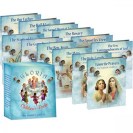
gloriaGloria Children’s Books (12 Volumes) – Ages 3-8; These tiny treasures are beautifully illustrated and simply written for the youngest of souls. And yet, with titles like The Our Father, Ten Commandments, The Story of Mary, The Rosary, The Hail Mary, The Guardian Angels, The Holy Family, Favorite Prayers, The Apostles Creed, The Mass, The Boy Jesus and The Sacred Heart of Jesus, these books provide wonderful catechetical instruction.

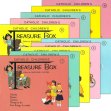
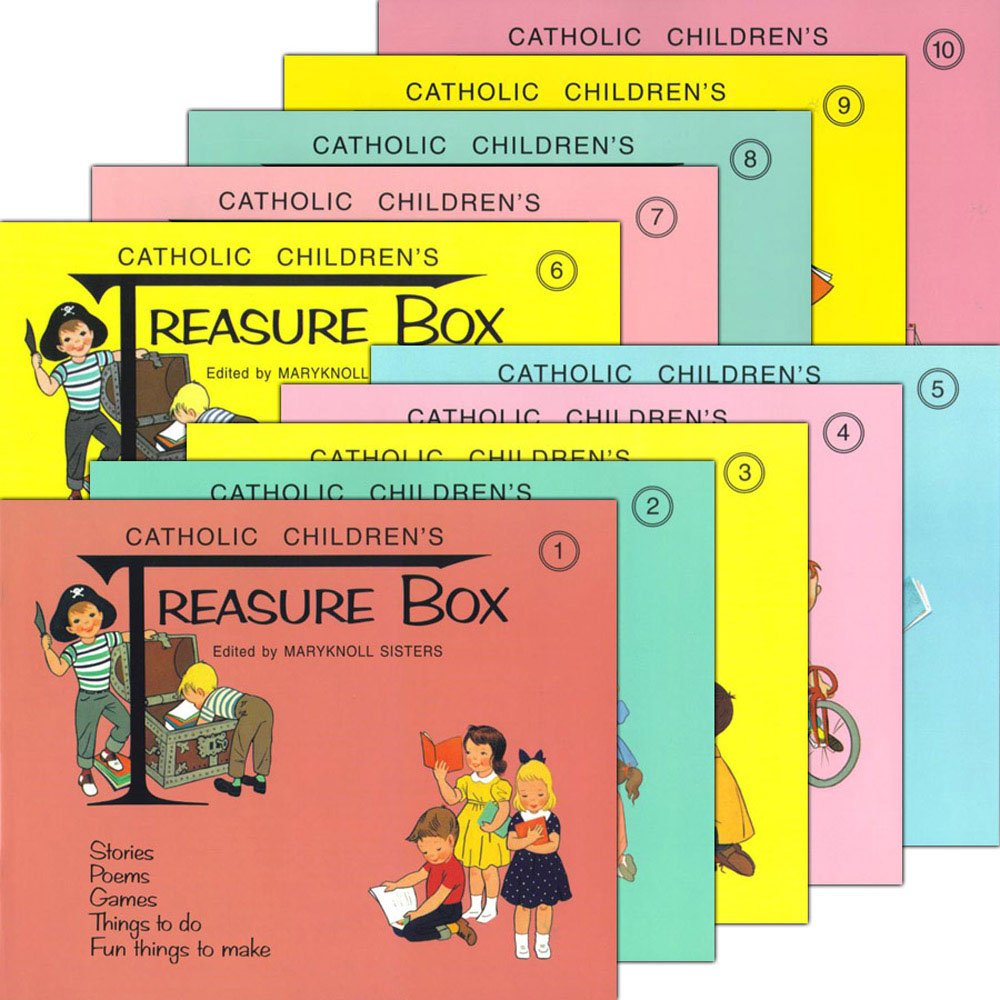
treasure boxTreasure Box Books – Ages 3-9; Available individually or as a set of 10 or 20, these are perfect books for younger children! Reprinted from the 1950’s, each book includes wonderful poetry, games, and stories about saints, guardian angels and more. They inspire a great love for God, and are full of doctrine that is taught for the hearts and minds of little children. On top of all that, the illustrations are lovely.

Angel FoodAngel Food for Boys & Girls (4 Volumes) – Ages 3-9; Wonderful little stories, each of which shares an important moral. Just a little skim through Volume II will find The Boy who Weighed an Elephant  (purity), The Orphan’s Plea (love of God), The Boy who Dusted the Devil’s Tail (never trust the devil), and many more.


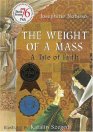
weight of massThe Weight of the Mass: A Tale of Faith
 by Josephine Nobisso – Ages 3-103; A beautiful picture book about the value of a Mass and a life lesson for an unbelieving baker. This is a precious story that you will read with your children over and over again.


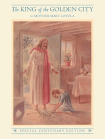
king of golden cityKing of the Golden City by Mother Mary Loyola – Ages 7-107; Great book to read with First Communicants! Mother Mary Loyola does a dynamite job of demonstrating that our Faith is about not “rules,” but rather, love. That said, she does inspire readers to live a life of orthodox faith in response to Christ’s love for us and our desire to be united to Him. (There is a study guide available for this book.)


book of saintsLoyola Kids Book of Saints by Amy Wellborn – Read aloud ages 3-10; self-reader grades 3-5; I love reading this to my kids! The stories are lively but brief, and Wellborn demonstrates that the issues we face today are the same issues faced by saints of 1,000+ years ago. These stories offer inspirational alternatives to worldly responses when addressing the human condition.


ChristophersChristopher’s Talks to Catholic Children by David L. Greenstock- Read aloud with ages 7-11; otherwise information for ages 7-107; Sadly, this book is out of print. But it is so good that I highly recommend searching high and low for a copy. It will be well worth your effort. As a convert, I’ve learned many things from children’s books – this one in particular. Greenstock inspires a great love for Christ and His Church, along with a desire to know, love and serve Him as a member of the Body of Christ. He takes challenging doctrines and simplifies them for young ears without removing a scintilla of their depth or beauty. I’ve read this book aloud to my kids at various ages.

bronze bowThe Bronze Bow by Elizabeth George Speare – Grades 4-8; Newberry Medal historical novel that takes place during the time of Christ. It is about a young man’s conversion from blind hatred and vengeance to understanding and love. A story that will move hearts and minds.


ravenhurstOutlaws of Ravenhurst by Sister M. Imelda Wallace – Grades 5-8; A great novel with many lessons on the Catholic faith. This quote from an Amazon review speaks volumes: “My late husband was taught by Sister Mary Imelda in Auburn, Nebraska back in the late 20’s. As a reward for their good behavior she would read her next installment as she completed it. He never forgot the story and always felt that this was what gave him his love and devotion to the Eucharist. This is a must for…Catholic youth.” (There is a study guide available for this book.)

activity bookCreative Catechism Series from Holy Family Press – Read aloud and work along with younger children, or independent for Ages 8-12; These are not regular reading books, but rather, informative activity books. We have given them for Easter gifts and as supplements for First Communion gifts. They are also great for a family road trip or a rainy day. Available titles: Miracles of the Holy Eucharist, Mary Our Mother, Our Lady of Fatima, Children’s Prayers, The 7 Sacraments, Sacramentals, Guardian Angels, The Great Battle for Heaven, The World of the Holy Angels, Creation, The Ark and the Rainbow


High School

morning glory33 Days to Morning Glory by Father Michael Gaitley – An engaging and doable preparation for Marian consecration. Gaitley profiles four great saints to illustrate the role of Mary in our lives.  This is a great book for teens who have little time, but want profound inspiration in bite-sized chapters.


before i goBefore I Go: Letters to Our Children about What Really Matters by Peter Kreeft – All the letters I would love to write to my teens, but written from the heart of a loving father. These letters are short, easy to read, and yet packed with catechetical wisdom that only the intellect of Kreeft can offer.
 

bibleThe Gospels – One chapter a day is a sure way to renew your relationship with Our Lord through Lent.


home for goodHome for Good by Mother Mary Loyola – Unlike most of the recommendations in this section (which were written for a broad population), this book was written specifically for teens about how to navigate the temptations of the world – poignant for that age when the world beckons from every direction. The wisdom here speaks to teens today with as much relevance as it did to those for whom it was written over 100 years ago.

imitation of christImitation of Christ by Thomas A. Kempis – the classic spiritual guide upon which countless saints meditated daily. Each page speaks directly to the heart of the matter; timeless wisdom for all.


lambs supperThe Lamb’s Supper: The Mass as Heaven on Earth by Scott Hahn – Revives a great love for the Eucharist, using Sacred Scripture to demonstrate the value of the Mass, and its supreme role as heaven on earth. Hahn’s enthusiasm is contagious – this is an inspiring read that will help teens to approach Mass with renewed eyes and an open heart.


mapA Map of Life: A Simple Study of the Catholic Faith by Frank Sheed – From beginning to end, this is a thorough yet concise guide that will lead us on the proper path toward our true Home. Profound and life-changing.


mere christianity

Mere Christianity by C.S. Lewis – In this great work, Lewis offers a rational argument in favor of Christianity. Compelling – particularly for teens who are hearing from every direction that faith and reason are incompatible.


screwtapeThe Screwtape Letters by C. S. Lewis – A must read for everyone who risks allowing the world to distract them from life’s purpose (meaning EVERYONE). Lewis’ humor is engaging and his angle – letters from a senior devil to his protege on how to trip up humans, that they might forego heaven for an eternity in hell – make this the most original plea for holiness ever written.


mark hartA Second Look: Encountering the True Jesus by Mark Hart – The first line in the introduction is, “The road from your head to your heart is the longest journey you’ll ever take.” Need I say more? Hart brings a unique and amusing perspective to profound biblical texts. He speaks in a way that invites teens to relax and engage.


story of a soulThe Story of a Soul by Saint Therese of Lisieux – A “little way” to holiness. I have met countless young ladies who were forever changed by this humble work of profound faith.


trustful surrender

Trustful Surrender to Divine Providence by Father Jean Baptiste Saint-Jure and Saint Claude de la Colombiere – A tiny book of monumental proportions. This will help every teen to know that, no matter the challenge or however great the struggle, we can trust that God will use it to guide us toward our greatest purpose, which is perfect union with Him.


the wayThe Way by Saint JoseMaria Escriva – Brief bits of wisdom that don’t beat around the bush – Escriva offers the frankness that teens are looking for, divided into categories for easy reference or organized meditation.


Note: If you like what you just read, please share and click the “follow” button to receive thought-provoking and action-oriented posts promoting the virtue of sacrifice and union with God. 

Eucharistic Adoration: The Development of a Devotion

The custom of honouring the Eucharistic presence of Christ our Lord by paying “Visits” to the Blessed Sacrament may be quoted as one of the most conspicuous examples of development in the devotional practice of the Catholic Church. 

If you are looking for thought-provoking meditations for Eucharistic Adoration this Lent, look no further! Beginning with this lovely preface today (Ash Wednesday), from hereafter each Thursday throughout Lent we will post a chapter from Coram Sanctissimo, a simple yet profound work by Mother Mary Loyola, first published in 1902. If you’ve ever wondered over the practice of Eucharistic Adoration, be sure to read on!


coram sanctissimo

In this Preface to Coram Sanctissimo by Mother Mary Loyola,
Herbert Thurston, S.J., introduces this beautiful book of meditations for Eucharistic Adoration by first discussing the development of the devotion.

Coram Sanctissimo

Preface

The custom of honouring the Eucharistic presence of Christ our Lord by paying “Visits” to the Blessed Sacrament may be quoted as one of the most conspicuous examples of development in the devotional practice of the Catholic Church.  Down to the latter part of the Middle Ages such an usage seems to have been entirely unknown.  As far as regards England, the late Father Bridgett, if I mistake not, says that in all the researches made by him while compiling his History of the Holy Eucharist in Great Britain he had not come across one clear example of a visit to the Blessed Sacrament in pre-Reformation times.  Even on the Continent the idea of any extra-liturgical cultus of the Blessed Eucharist seems to have grown up very tardily. There were many saints as late as the fifteenth century—say, for example, St. Frances of Rome, whose lives show no trace of such a conception, though nothing could be more strongly emphasised than their devotion to the Blessed Sacrament in Holy Communion.  It is remarkable to notice that even St. Ignatius Loyola, in the book of the Spiritual Exercises, when directing attention to the abiding presence of God with His creatures as a motive for awakening love, says not a word of the Blessed Sacrament.  One must not, of course, press the negative argument too far.  No prudent man would infer in this latter case that the practice of visiting churches to commune with our Lord in the Tabernacle was unknown in the sixteenth century, but it is reasonable to conclude that the uninterrupted Eucharistic presence of God with His people did not then play the same conspicuous part in the devotional life of the faithful that it does in our day.

This late and gradual development of a devotion, which seems to us now so natural and so unmistakably involved in premises that all men accepted, is certainly a remarkable fact. Even to the present day the Greek Church, though its belief in transubstantiation is no less explicit than our own, has never drawn the inference that our Lord has come in the Blessed Sacrament to be our companion and refuge as well as our food.  It seems to have been part of the Divine dispensation, in this as in some other matters, to hold men’s eyes that they should not know Him.  Throughout the long centuries our forefathers seem to have regarded the Eucharistic presence as if Christ had wished to preserve His incognito while He dwelt amongst them, or as if He were sleeping as of old in the bark of Peter and would rebuke the want of faith of those who too importunately disturbed His repose.  But surely we are right in thinking that if they so apprehended God’s purpose in remaining on our altars, their appreciation of His boon was but inchoative and imperfect.  To us now it seems so obvious that the work of Jesus Christ in the Blessed Sacrament was not meant to be intermittent, limited to the time of Mass and Holy Communion, that it is hard to believe that Christians who truly recognised this presence in their midst can ever have conceived otherwise.  Perhaps we may draw the lesson that if the fulness of understanding were long delayed in so plain a matter, it is not surprising that in other dogmas and practices which justify themselves less obviously, there may be developments in the Church’s teaching not suspected or at least not clearly apprehended by our forefathers in the faith.

As things are, no devout Catholic would wish to be deprived of the privilege of drawing near to our Saviour in the Tabernacle and making Him the daily confidant of hopes and fears, of joys and troubles.  But what distresses many pious souls is that having Him ready and willing to listen they should so often find themselves tongue-tied in His presence.  The set forms of prayer which they know by heart are worn threadbare by routine, and books too often prove stiff and artificial.  The heart has many wants and longings, but hardly knows how to put them into words.  In such a case real help, I think, is likely to be found in this very miscellaneous collection of musings, self-arraignments, out-pourings of spirit, to which the authoress has given the apt name of Coram Sanctissimo, “in the presence of the Most Holy.” They are not intended to be taken in rotation, or to be used every day, but there are times when a troubled worshipper, turning over the leaves, may light upon something here which will chime in with his mood and will make the task of prayer more easy to him.  And if for one or another the thoughts of this little book may serve to break the ice and to render the soul for the nonce more at home in that holy presence, I feel sure that the authoress will consider the labour spent in writing it to have been abundantly repaid.

It will be noticed that in the pages which follow verse finds a place as well as prose. It would not be fair to let this go forth to the world without stating that it has been written, so to speak, under protest, and that without strong encouragement Mother Mary Loyola would hardly have suffered it to see the light.  Although the verses are perhaps unequal, I do not in any way repent the share I have had in urging the writer to let them stand.  It would have been worth a greater risk of failure and a longer expenditure of time to have secured even a few such happy lines as may be read for instance in the chapter headed “In Silence and in Hope,” describing St. Mary Magdalen:—

She came with her crushing memories,
She came with her secret fears,
She brought Him her hidden misery
And her bitter, burning tears.

Or again:—

Absorbed in her loving ministries
She knelt at His feet apart,
The scandal of every eye save one
That soundeth the secret heart.  

The verses at best are only an experiment.  They were written in each case for the sake of the thought, not of the metrical form, and if the authoress could have found, as she long endeavoured to do, any suitable religious poetry which expressed kindred ideas, and which would have afforded that variety which is meant to be characteristic of this little booklet, she would have been glad, I know, to escape the seeming presumption of appearing as a writer of verse.  But I do not think that the many friends who use and appreciate Mother Loyola’s Confession and Communion and her other devotional books will be disappointed in anything which may meet their eye in this new effort of her pen.

Herbert Thurston, S.J.
11th September, 1900


image001

Thank you so much to St. Augustine Academy Press for cooperating with this endeavor! If you are interested in this or other works by Mother Mary Loyola (as well as many other great books for spiritual growth and meditation), please check out their website.You will find many wonderful treasures from which to choose!

Before the Most Holy – A Lenten Meditation Series

As you make preparations for Lent, perhaps you plan to carve out some time for Eucharistic Adoration. If so, we invite you to join us in reading a wonderful book by Mother Mary Loyola. 

As you make preparations for Lent, perhaps you plan to carve out some time for Eucharistic Adoration. If so,  we invite you to join us in reading a wonderful book by Mother Mary Loyola.

If you’ve followed my posts at all, whether here or at spiritualdirection.com, you know that Mother Mary Loyola is one of my favorite spiritual writers. Beginning with The King of the Golden City (a children’s book) many years ago, I have eagerly sought her work. Imagine how thrilled I was to learncoram sanctissimo
that St. Augustine Academy Press has beautifully reprinted all her books, that pilgrims in the 21st Century might be as blessed as those in her own generation.

Beginning on Ash Wednesday, Pelican’s Breast is so excited to share excerpts from Mother Mary Loyola’s book, Coram Sanctissimo (Before the Most Holy). With 40 chapters, intended as reflection for 40 hours of prayer before the Blessed Sacrament, this book beautifully lends itself to Lenten contemplation. As we humble ourselves before the Almighty, offering from the depths of our hearts acts of repentance, prayer and fasting, we can be inspired by the words of Mother Mary Loyola, whose sole desire is to draw us ever closer to Him.

On Ash Wednesday I will post the Preface, and then every Thursday throughout Lent,  – and perhaps thereafter – I will post one chapter from Coram Sanctissimo. I pray it will give you much fodder for thought as you approach Our Lord in the Blessed Sacrament. No doubt time spent with the insightful words of Mother Mary Loyola will help you to grow in humility and love, two great virtues necessary for true sacrifice.


image001

Thank you so much to St. Augustine Academy Press for cooperating with this endeavor! If you are interested in this or other works by Mother Mary Loyola (as well as many other great books for spiritual growth and meditation), please check out their website.You will find many wonderful treasures from which to choose!

10 Great Books for Lent That You Won’t Find on Other Lists

Most of us are looking for spiritual reading suggestions that will serve us well during the Lenten season. Of course, there are the tried and true recommendations – Story of a Soul by St. Therese of Lisieux, Introduction to the Devout Life by St. Francis de Sales and  others are amazing choices, and can certainly be read over and over again. But if you’re looking for something a little different this year, I have just the thing.

Most of us are looking for spiritual reading suggestions that will serve us well during the Lenten season. Of course, there are the tried and true recommendations – Story of a Soul by St. Therese of Lisieux, Introduction to the Devout Life by St. Francis de Sales and  others are amazing choices, and can certainly be read over and over again. But if you’re looking for something a little different this year, I have just the thing. You may not find many of these books on other lists. You may not even have heard of them (with the exception of the top two, which I mention in my book and in just about every interview I’ve ever done:)). Regardless, every book on this list is an absolute classic that is sure to inspire tremendous change in your life!

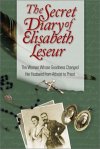
secret diary of elisabeth1 The Secret Diary of Elisabeth Leseur (1866-1914) – Marriages seem to struggle more often than not these days. Elisabeth Leseur had an amazing knack for seeing only light in the souls of those around her. Her goodness resulted in her husband’s conversion from atheism to Catholicism. In fact, upon her death, he even entered the priesthood! Rather than pray that others would change for the better, Elizabeth asked only that she could love more, and that the Holy Spirit would use her as an instrument to share Christ’s light with others – most especially those who mistreated her in any way. Read this book if you want to see your relationships thrive. Not only will you learn to focus your eyes on your spouse’s better traits, but you’ll learn to love and appreciate everyone else that God made as well.

trustful surrender2. Trustful Surrender to Divine Providence: The Secret of Peace and Happiness by Jean Baptiste Saint-Jure (1588-1657) and Saint Claude de la Colombiere (1641-1682) – Anyone who knows me knows that this is one of my all-time favorite books and a life-changing one at that. Having been held at knifepoint in college, I spent years afraid to be alone. Instantly upon reading this book, I was able to hand my life over to God, trusting Him with every moment of my life, and even the hour of my death.Suffice it to say that there is a world of wisdom within the pages of this tiny little companion and it will completely shatter any touchy feely paradigm you may have about God and His Hand in your life.

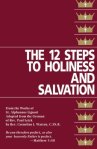
12 steps3. The Twelve Steps to Holiness and Salvation by St. Alphonsus Liguori (1696-1987) – The title says it all. Step by step, you can walk through Lent in a way that will help you to grow in holiness as you unite yourself to Christ. Liguori’s writings cover the twelve key virtues necessary for salvation, including faith, hope, love of God, love of neighbor, poverty, chastity, obedience, meekness and humility, mortification, recollection, prayer, and love of the cross. For those who appreciate practicality, order and simplicity, this book is a treasure trove of teaching that is concise and yet profound.

way to inner peace4. Way to Inner Peace by Fulton J. Sheen (1955) – If you long to be directed in the way of humility, love and service, Fulton Sheen will lead the way. With 59 specific recommendations for practical steps one can take toward inner peace, Sheen offers inspirational stories, entreaties into psychology, theology and good old common sense to lead you to a place of calm contentment, no matter the storms that threaten your progress as you continue on the path toward heaven.


hidden power5. The Hidden Power of Kindness by Father Lawrence Lovasik (1962)  – If you’re not quite sure what to do for Lent this year, this book will give you plenty of ideas on how to grow in holiness. No matter how kind you think you are, you’ll find plenty of room for improvement, and you will feel much better for making the effort. Even better, your relationships will flourish and you will wonder why you never read this book before. Be prepared to have highlighter in hand, for every page is filled with practical wisdom and sage advice.

summa6. Summa of the Christian Life (3 Volumes) – Writings of Venerable Louis of Granada (1504-1588) – Beginning with the existence of God and what that means for our everyday lives, Granada’s words direct readers clearly and succinctly toward holiness. His writing is simple yet beautiful. Venerable Louis of Granada was a favorite spiritual writer of St. Teresa of Avila, St. John of the Cross, St. Charles Borromeo, St. Francis de Sales, St. Vincent de Paul, St. Rose of Lima and many others. You can’t go wrong if you allow this great man to guide you on the path to holiness.

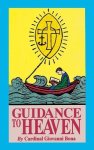
7. Guidance to Heaven by Cardinal Giovanni Bona (1658) – guidance to heavenGuidance to Heaven begins by making clear the purpose of this life in preparing for eternity. Cardinal Bona will help readers to prepare themselves for death by addressing vices with which many of us struggle, and helping us to bring them under control. The jacket of my book says it all and reads in part,

If the reader derived no other value from this book than the realization we are each one going to die – we know not when – and pass to our real life which will last for all eternity, and that our every waking hour of this one should be a preparation for that one, then a reading of this book would have been for him of ultimate value – the best thing he ever did.

jesus of nazareth8. Jesus of Nazareth: The Story of His Life Simply Told by Mother Mary of Loyola (1906) – If you are looking for a book on the life of Christ, this one is beautifully told. Jesus of Nazareth was originally written for children, and I did read it to my kids last year. But it was also re-packaged as an adult book because at 300+ pages and with beautiful language and captivating commentary, this book is a must read for anyone ages 10-110. If, like me, you struggle with imperfect contrition, Mother Mary of Loyola will help you to love Christ implicitly for His simple, yet beautiful goodness, for His loving obedience to the Father and for His great sacrifice, made selflessly for the sake of our eternal union with Him.

counsels of perfection for christian mothers9.Counsels of Perfection for Christian Mothers by the Very Reverend P. Lejeune (1913) – This is an amazing book for mothers. If you are anything like me, you strive for perfection in so many areas that you sometimes forget to put first things first. Wisely, Fr. Lejeune recognizes this temptation for women, and begins his book with a discussion of the meaning of perfection. Clarifying the only definition that matters – Perfection is accomplishing the will of God in a constant and generous fashion – Lejeune then sets out to direct us on how to actually achieve perfection in that light. Advising mothers on everything from how they spend their time to what they say and how they say it, this book offers a plethora of things to consider in the pursuit of holiness, as well as how to take proper steps to achieve it in our lifetime.

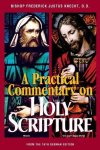
practical commentary10. A Practical Commentary on Holy Scripture by Bishop Frederick Justus Knecht, D.D. (1923) – A great way to read the Bible through in story form with commentary that helps you to understand the Faith, as well as practical applications for daily life. I found it to be a wonderful supplement during my time spent reading Sacred Scripture. According to the back cover of my edition,

This book is a great introductory Bible study all by itself – for it brings out the Catholic teachings that are hidden in Sacred Scripture! A famous book – one which received recommendations from 14 bishops when first published and which went through at least 16 editions – this commentary is not a work for scholars; but rather a very practical book for the ordinary Catholic.