

Truly, truly I say to you, unless a grain of wheat falls into the earth and dies, it remains alone; but if it dies, it bears much fruit.
— John 12:24
We are living in trying times. The world seems to have lost its way, and so many of us feel powerless to correct its course. We begin each day wondering what happened to the world we once knew, and some are fearful of the future. But it’s very possible that Our Lord has allowed this opportunity in history as a reminder for us that this world is passing away (1 John 2:17). Perhaps now is a perfect time to step back from material things and remember that there is something more for which we were made. As Christians, our allegiance is not to this world, but to God alone, through His Son, our Lord and Savior, Jesus Christ. So what should we do? Perhaps we should take this time to return to our roots, examining what it means to be a Christian in the world today.
What does it mean to be a Christian? What does it mean to follow Christ? Two thousand years ago, it meant a complete transformation of one’s heart, mind, and soul. It often meant a willingness to endure torture and death. It meant knowing the promise of an eternal life that was infinitely more valuable than the world in which we live. That promise provided Christians with a purpose that transcended the pleasures of this life. For early Christians, the Cross was part of their identity, and they didn’t shy away from it. Rather, they passionately pursued their mission, whatever the cost.
What was that mission? It was to bring the Gospel to every man, woman and child, opening hearts to God’s grace, that He might draw every soul to Himself. Christians recognized that this mission required a life of sacrifice; a denial of “self.” It meant cooperating with the Master Gardener as He pruned and formed them, ridding their hearts and souls of all that might obscure Him from view. For they knew that in order to accomplish their mission, they must be able to say with St. Paul, “I have been crucified with Christ; it is no longer I who live, but Christ who lives in me” (Gal. 2:20).
Today, this mission remains the same. Sadly, there is little evidence in the world of the Christianity of old. Our secular culture celebrates the temporal over the spiritual, and many of us have been seduced by the daily demands and attractions of the here and now. As a result, many have drifted from the passion- ate Christianity of earlier times. In fact, in recent generations, Christianity has even developed a reputation in the West for soft sentimentalism. Christ has been reduced to tender emotion and unconditional love, wrapped up in a nonjudgmental blanket of relativism. This is what Archbishop Fulton Sheen referred to as Christ without His Cross. Many Christians no longer strive to engage in lives of prayer and sacrifice in order to carry out the Great Commission — and most aren’t even aware of what has been lost. Rather than seeking to reunite Christ with His Cross, they have destroyed the Cross altogether and used the scraps to build a sort of progressive humanitarian religion based on materialism and self-entitlement.
This development should cause grave concern for those of us who truly desire to follow Christ, for how can one follow in His footsteps if the Way has been obscured by generations of distortions and misrepresentations?
It seems the only solution to this problem is to return to Christ’s words and find out what He actually said to His would-be follow- ers. We owe it to ourselves and to Him to consider His call as He made it, unblemished by the mores of the culture:
If any man would come after me, let him deny himself and take up his cross and follow me. For whoever would save his life will lose it, and whoever loses his life for my sake will find it. For what will it profit a man, if he gains the whole world and forfeits his life? (Matt. 16:24–26)
The question is, how do we go about doing this? What does denying myself look like? How exactly must I carry my cross?
Not only are we to deny ourselves and take up our crosses, but we are to follow Christ in the process. And although we might be tempted to assume we are following Him through the pearly gates to an eternal Paradise with the Father, many of us have somehow been indoctrinated to overlook a major stop along the way.
Before He leads us to Paradise, Christ leads us to Calvary.
Like Christ, we are called to carry the cross and to be crucified. Of course, we can ask the Simons in our lives to help us make our way along the path, and we may certainly help them as well. But at the end of our fated journey, whether that journey is a moment of consideration for someone else or a lifetime of pain and suffering, each of us will be asked to climb right up there alongside Christ and sacrifice our very lives. By this I don’t necessarily mean that we are called to be martyrs, offering our blood as a testament of our allegiance to Christ — although, for some of us, that call may come — but rather that we offer ourselves as “bloodless” martyrs, ready to release our attachments, our desires, our preferences, our idiosyncrasies, our very wills, in deference to the will of God. Essentially, we are called to die to ourselves.
And if we don’t? Say we decide to climb down from the hill of Calvary and save our lives — that is, hold on to our attach- ments; prioritize our wants, desires, and preferences; and put ourselves first? Well, according to Christ, in saving my own life, I will surely lose it. But — and here’s the clincher — if I climb up on that cross, enduring to the end, all in effort to lose my life for Christ’s sake; if I unite my will to the will of God, denying myself by offering myself; in that case, I am bound to find my life — and no doubt I will have it abundantly (John 10:10).
There is no greater paradox in all the world than the paradox of the Cross.
Yes, sacrifice is hard.
But our souls were made for sacrifice. And deep down in the farthest corners of our hearts, in places that we keep hidden even from ourselves, we know that this is true.
Sadly, generations of comfort and excess and expectations have weakened our wills. In fact, there are many who argue for the need to scrap the concept of willpower altogether. We have grown soft. We have lost our way in a world of materialism and self-determination. We have slipped from the cross, even deny- ing Christ, in order to avoid that call that speaks directly to the depths of our hearts.
So how can we find our way back to the cross? How can we reconnect to the root of our very souls? How can we find that part of us that absolutely knows we were made for love? For sacrifice? We may be moved by the contributions made to the world by our fellow man, and inspired by all the saints who’ve gone before us; but how can we bring ourselves to participate in the type of life for which we were made? How can we find the joy that is wait- ing for us?
Whatever your experience with the cross, whether you struggle with a painful and debilitating illness or with finding joy in the little interruptions in life, it is my prayer that through these pages you might reclaim the lost art of sacrifice.
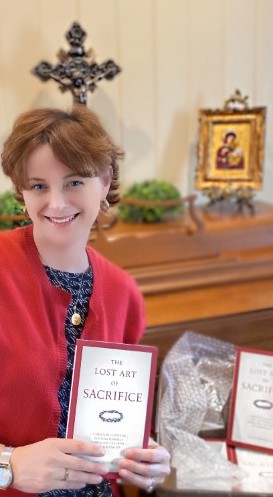
Note: Above is an excerpt from the Introduction to my new book, The Lost Art of Sacrifice. I hope you will read it and spread the word! Let’s re-discover our identity with the Cross!




 Just in case you need a little motivation, perhaps you could be inspired by Christ’s Summons to His would-be followers:

 1
1  2.
2.  3.
3.  4.
4.  5.
5.  6.
6.  Guidance to Heaven begins by making clear the purpose of this life in preparing for eternity. Cardinal Bona will help readers to prepare themselves for death by addressing vices with which many of us struggle, and helping us to bring them under control. The jacket of my book says it all and reads in part,
 8.
8.  9.
9. 10.
10. 
 things we’ve taught him (and that he forgets all the bad).
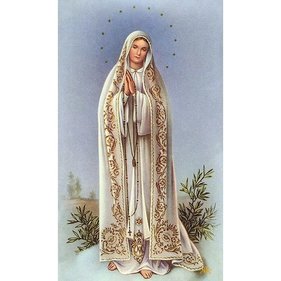
 children each month through October 13th and revealed to them a plan for peace in the world through personal prayers and penances. At her final appearance to them on October 13th, about 70,000 people had gathered to witness the children as they spoke to the Virgin. Everyone present that day testified to having seen the “miracle of the sun” as it “danced” in the sky, thus confirming the apparition for the onlookers.
 es Borromeo Parish in Gretna, Nebraska. Ordained in 2000, Fr. Loseke holds a Licentiate in Sacred Theology (S.T.L.) from the Pontifical Athenaeum of St. Anselm in Rome and is working to complete his doctoral degree (Ed.D.) in interdisciplinary leadership through Creighton University in Omaha. In addition to parish ministry, Fr. Loseke has served as a chaplain in the U.S. Air Force, taught high school theology and college-level philosophy, and has been a presenter for various missions, retreats, and diocesan formation days across the country.

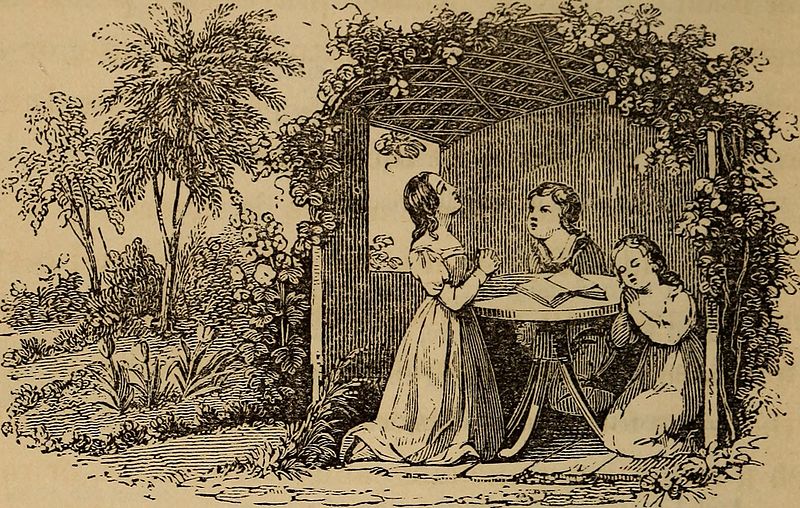 unrecognizable sweaty clump of weeds. There is a sacred element to the gift as a result, not of its quality, but of the depth of the child’s desire to please. That desire is evident in the exuberant bounce of the step, the excited thrust of the gift into her open palms, the devoted gaze and the joyful anticipation of mother’s reaction as she receives such a loving gesture.
 pelicansbreast.com