Five Ways to Model Your Family after the Holy Family

The Holy Family is the ideal to which all other families should subscribe, if they hope to find joy and fulfillment in this life.

“The triangle of truisms, of father, mother and child, cannot be destroyed; it can only destroy those civilizations which disregard it.” — G.K. Chesterton, The Superstition of Divorce

The family is the cornerstone of all the institutions in the world, and yet has suffered from an unbelievable assault over the past few decades; an assault that has produced The_Holy_Family_-_Francesco_Vanniunfathomable damage, including everything from divorce to elective single parenthood, to lower marriage rates and a new definition so freewheeling and loose that the core identity of the family seems to have been irreparably weakened.

Whether due to circumstance or choice, it is true that families come in all shapes and sizes. However, the Holy Family serves as a model of the family that God intended, and the family that until just a few decades ago, was considered standard form in every social circle. The Holy Family is not the Universal family, for there is no such thing. Rather, the Holy Family stands as the pinnacle of all families throughout the history of the world. The Holy Family is the ideal to which all other families should subscribe, if they hope to find joy and fulfillment in this life.

Families matter. And your family can be an incredible light to the rest of the world. Not by being perfect. By being a family. I speak from personal experience. When I was growing up, God used family after family to inspire me to seek His truth. Again, these weren’t perfect families. But they were families. And I’m willing to bet that not one of them has any idea of the impact their faithfulness had on my life. But it did. Families are beacon to the world of the Light of Christ. And the contribution of the family is critical to society. As Saint John Paul II said in Familiaris Consortio, “The future of the world and of the church passes through the family” (75).

So what better way to affect the future for good than to have a great family?! And where better to seek inspiration than in the Holiest of Families?!

Here are five ways to model your family after the Holy Family:

  1. Be grateful. Mary said, “My soul magnifies the Lord and my soul rejoices in God my savior…” (Luke 1:46-47). Think about those words every day. We are His handmaids in this family with which He has so blessed us. Rather than think, If only this child would cooperate, or if only my husband would be more patient – thank God for those beautiful, amazing personalities that He has deigned you worthy to serve.
  2. Be joyful. Think of the Joyful mysteries – those mysteries associated with the Holy Family. Mary was overwhelmed with joy when the Holy Spirit overshadowed her and she conceived by the Holy Spirit. St. John the Baptist was overjoyed when he beheld Christ in the womb of Mary, His mother. Heaven and earth rejoiced at the birth of Christ. Simeon was overcome with joy when he held the baby Jesus. And Mary and Joseph were overwhelmed with joy upon finding Jesus in the temple.

    Paul said to the Philippians, “Rejoice in the Lord always; again I will say, Rejoice” (4:4). So rejoice! Your family will love you for it!

  3. Be Absolutely Devoted. From the moment the angel appeared to Joseph and secured his understanding of the situation at hand, Joseph was absolutely devoted to his wife and foster child. He led them to Bethlehem, showing particular care and consideration as he guided his expectant wife to shelter. Shortly thereafter, upon receiving further direction in a dream, he immediately woke his wife and child and led them to safety in Egypt. When the family returned to Nazareth, Joseph devoted his life to quiet, but diligent work in order to serve his family.
  4. Spend Time Together. Jesus, Mary and Joseph were together. Presumably until Joseph died, the three were very much a single unit. In fact, St. Joseph is the Patron of happy deaths; particularly because tradition teaches us that he died in the arms of Mary and Jesus.
  5. Sacrifice. Ultimately, each member of the Holy Family sacrificed his own life for those he loved. Joseph raised a child that wasn’t even his own, while remaining a celibate man for his entire married life. Mary was told from the moment she presented her son at the temple that she would suffer as a result of her motherhood. She didn’t balk. Rather, she loved with a devotion that none of us can fathom. Her seven sorrows were a result of her love, and yet no doubt her love was strengthened in her sorrow. And Christ? Well, in addition to sacrificing his very life for each and every one of us, the God of the Universe lowered himself to the level of a child, and “was obedient” to his parents all the days of his life. If that’s not sacrifice, then I don’t know what is.

The family, as a community of persons, is thus the first human “society.”  — Saint John Paul II, Letter to Families.

Family is sacred. And God is so good that He allowed each of us the privilege of entering the world by way of a family.  Even more, many of us are married and blessed with children of our own. Family is a gift that we must cherish beyond all things. There is no argument that trumps that bond. There is no disagreement, no selfish action, no betrayal, nor any sin that should break that union. Pain and suffering may make it more challenging, but regardless, always cherish that beautiful family you’ve been given the opportunity to love.


Note: If you’re not already following the conversation and you like what you just read, please click the “follow” button to the right and don’t forget to comment below! 


Artwork: La Santa Famille by Francesco Vanni, 1871

The Case of the Missing Elf on the Shelf

So who’s idea was it to create a new tradition for NOW – this crazy season of great expectations –  when we are expected to accomplish a regular day’s work and then deck the halls, dodge the traffic, bake up a storm and – OH! I almost forgot – actually help our families prepare spiritually for the coming of Christ! 

I have a confession to make. Please don’t judge me. And please don’t tell my kids.

Here goes.

I sent our elf dumpster diving 800px-Elf_on_the_Shelf_poses_01last Christmas.

I know. That’s a terrible thing for a mother to do.

But don’t worry – he never suspected a thing. I assure you, the little guy was all game, smiling with those joyful but mischievous little eyes  – all ready to play along in the spirit of his Christmas mission. Without asking any questions, he dove right in with scraps of ribbons and wrappings as I disposed of all evidence of material overreach. No doubt he was expecting a great search party and a celebration some time soon – only they never came.

Like I said – don’t judge.

In my defense, that little red intruder was seriously infringing on our Advent season. I’m sure he meant no harm. But day after day, year after year, he just seemed to suck the air out of Advent and the Christ out of Christmas.

I know I’ll have tons of haters out there. But do you REALLY enjoy your Christmas being absconded by a tiny little elf that requires so much time and energy?! From the moment the kids were introduced to that cheeky little stalker a few years ago  – a well-intentioned and fun-spirited albeit “needy” gift from my mother – I have felt my resentment growing.

Say what you want about Santa. He may have been commercialized, but he does have his roots in sainthood. At least we could – and do – talk with our children about how St. Nicholas was given a special mission by God to spread Christ’s message of love and giving. About how in a special way he helps us to celebrate Christ’s birth.  But the elf? Maybe I just don’t “get” him. But for me he was like an everyday reminder of secularism – IN OUR HOME. I just couldn’t seem to escape him. Call me impulsive and underhanded. But I like to think of it more along the lines of self-preservation.

In addition to having nothing to do with Christ, and in no way enhancing our celebration of Advent or preparing our hearts for Christmas, our elf was pretty darned uncreative with his hiding places. If I were Santa, I would have fired him a long time ago. He often went for days at a time hanging out on a shelf in the middle of the living room like he’d completely forgotten his purpose. He was pretty lazy, all things considered.

And yes, I’ll admit it. My disdain was personal. Rather than spread the joy, our little elf served as a constant reminder of my lack of hospitality. I would pretty much characterize him as nothing more than a noose around my neck for the entire month of December.

Truth be told, I’ve actually been known to completely log out of Pinterest and FB over the holidays just to avoid being reminded of what a dud we welcomed into our home. In other people’s homes little elves were throwing parties, bathing in marshmallows or hosting potato sack races. In our home, we were hosting a couch potato.

I totally get that in order for the Elf on the Shelf to make himself at home, wandering around and getting into all sorts of mischief or just hanging out like one of the guys, there must be some modicum of hospitality from ME. But therein lies the entire problem. Every year at this time it’s like our home gets invaded by an unwelcome guest who is all smiles and modest, and all, “No, really I’m fine, just let me hang out here on the mantle and fulfill my mission” but who, honestly, puts me out on a daily (OK, nightly) basis, IF I remember him at all. And to make matters worse – almost EVERY morning – I’m all, “Darn! I forgot all about that little stinker again last night.” And then the kids spend most of December being disappointed, because they hear about everyone else’s elf adventures while their elf smiles dumbly from the same perch for most of the season. We can’t seem to escape being one-upped. Our next door neighbors are so hospitable they host two of the little buggers!

So that’s my story. Despite that little part about my letting the kids think their elf just ran away, things have been pretty peaceful around here this year. And truth be told, I really didn’t see another way out.

If cornered, I would plead NOT GUILTY. Frankly, I did not ask for this house guest, And there is no way my mother could have imagined that she was setting me up for absolute failure. But seriously? Throwing this little beast of burden on unsuspecting parents during the busiest time of year?

If you haven’t done it, please don’t.

I mean, eleven months out of the year, it’s all we parents can do to get our kids to bed, do some laundry, clean the kitchen, finish a little work, balance the checkbook, plan our meals and get everything ready for all the activities on the coming day’s calendar. Meet any parent on the street, and you will see a sleep-deprived individual. So who’s idea was it to create a new tradition for NOW – this crazy season of great expectations –  when we are expected to accomplish a regular day’s work and then deck the halls, dodge the traffic, bake up a storm and – OH! I almost forgot – actually help our families prepare spiritually for the coming of Christ! 

Call my methods extreme and underhanded. Yes, I’ll admit it. My conscience isn’t quite where I’d like it to be. I did spend a few days quietly watching the kids frantically search through all the Christmas boxes for our elf and listening to their pitiful confessions that perhaps their elf disappeared because they touched him last year and he lost his “magic.”

But after all the initial excitement, I am very pleased to say that out-of-sight-out-of-mind has been rather effective and we have actually enjoyed a very peaceful Advent season with no elf on our shelf.

We’ve been lighting the Advent candles and pulling out our Jesse tree ornaments. We are reading Christmas stories. And to top it off, there is no discussion about where the elf is or why he hasn’t moved or whether Santa doesn’t like our family because our elf doesn’t play like all the other elves. Even better, there is no guilt-ridden Mommy every single morning. I’d even venture to say it’s been fairly joyful here.

Except for the little part about my actually being a malicious source of sadness for my kids. In that regard, I’ve been doing a little thinking. Is it possible that I can have my cake and eat it too? In the interest of “honesty”, I think I’ve come up with a solution to clear my conscience and bring resolution for the little ones. I read an article the other day about a mother who also must have had enough (You are not alone!). Only SHE had the foresight to ask Santa to write a letter to her children, rather than throwing her elf out on the street, or allowing  him to disappear without a trace. Perhaps Santa will find our elf for me and allow him to be a Christmas toy instead of a spy. We’ll see…maybe with Santa’s help, we can all win and there will be happy closure for my kids in the Case of the Missing Elf on the Shelf.


Are We Sacrificing our Children’s Future to the Evils of the Past?

Rather than warn about the dangers of communism, the objective of these authors seems to be to show even brutal communist leader, Joseph Stalin, in a favorable light.

One of my children transferred into a public school for the first time this year, as a junior in high school. I’d heard rumors. I watch the news. I was somewhat prepared for the 120px-Hammer_and_sicklechallenges. And, of course, there were reasons that I chose homeschooling for his primary years. That said, I’ve been astonished at the overt jabs made in his textbooks – particularly history – toward all that I hold dear.

Here just two examples that demonstrate an antithetical understanding of faith in God, completely separating faith from rational thought:

Franklin never denied the existence of God. Rather, he pushed the Lord aside, making room for the free exercise of human reason. (p. 91, referring to Benjamin Franklin)

You may see this as flowery prose. But I’ve read Franklin’s autobiography. Anyone who has studied Benjamin Franklin at all knows that he never “pushed the Lord aside.” To even imply that he did is disingenuous, if not malicious. On the very first page of his autobiography, Franklin refers to the “blessings of God. And on the second page, he states,

And now I speak of thanking God, I desire with all Humility to acknowledge, that I owe the mention’d Happiness of my past Life to his kind Providence, which led me to the Means I us’d & gave them Success. My belief of this, induces me to hope, tho’ I must not presume, that the same Goodness will still be exercis’d towards me in continuing that Happiness…

Does that sound like a man who would ever push the Lord aside? Read the book – there are plenty of passages that would directly dispute the textbook quote above.

Here is another example that again sets up a “rational vs. religious” disparity. This quote was taken from a packet the kids were given to study for the same class:

Despite the inroads of rationalism, nineteenth-century Americans remained a profoundly religious people – as they have been ever since.

Here is a quote that takes on religious conservatives. I found this among many in a completely degrading and dismissive article highlighted as a sidebar on p.301:

…the more recent evangelical engagement with politics that was labeled the New Christian Right sprung up in the 1980’s — epitomized by organizations such as the Moral Majority — mostly has been a conservative force of reaction against great changes in American society. The fundamentalist Moral Majority crystallized around the politcal issues of opposition to abortion and gay rights, as well as promotion of school prayer and vouchers for private schools. [emphases mine]

Not only did they demonstrate opposition to religious values, as seen above, but further on in the sidebar, they slammed religious motives by implying that Christians are bigots:

Unlike earlier evangelical reformers, they are motivated less by millennial perfectionism than by alarm at the growing diversity and secularization of American society, and they have joined with other religious conservatives in their political campaigns.

But along with a great challenge the writers have in seeing religious people as rational individuals with laudable motives, the book also appears to show unbelievable sympathy toward anti-religious political philosophies – particularly Communism – a belief system that Our Lady sought to halt by asking that Russia be consecrated to her Immaculate Heart. Catholics have long sought to educate the public on the dangers inherent within communist ideology. Saint John Paul II , through the Hand of Divine Providence, played a key role in the ultimate demise of the Russian communist empire (USSR).

Even in secular circles, most adults who grew up during the cold war have some understanding of the dangers of Communism, which was responsible for the deaths of 100 million people in the 20th Century.

In an introduction to the Cold War, these authors seems to show communist leader, Joseph Stalin, in a favorable light, while they cast a shadow over President Truman (emphases below are mine):

“I am getting ready to go see Stalin and Churchill,” President Truman wrote to his mother in July 1945, “and it is a chore.” On board the cruiser Augusta, the new president continued to complain about the upcoming Potsdam Conference in his diary. “How I hate this trip!” he confided. “But I have to make it win, lose or draw, and we must win. I am giving nothing away except to save starving people, and even then I hope we can only help them to help themselves.”

Halfway around the world, Joseph Stalin left Moscow a day late because of a slight heart attack. The Russian leader hated to fly, so he traveled by rail. Moreover, he ordered the heavily guarded train to detour around Poland for fear of an ambush, further delaying his arrival. When he made his entrance into Potsdam, a suburb of Berlin miraculously spared the total destruction that his forces had created in the German capital, he was ready to claim the spoils of war.

These two men, one the veteran revolutionary who had been in power for two decades, the other an untested leader in office for barely three months, symbolized the enormous differences that now separated the wartime allies. Stalin was above all a realist. Brutal in securing total control at home, he was more flexible in his foreign policy, bent on exploiting Russia’s victory in World War II rather than aiming at world domination. Cunning and caution were the hallmarks of his diplomatic style. Small in stature, ungainly in build, he radiated a catlike quality as he waited behind his unassuming facade, ready to dazzle an opponent with hisbrilliant, terrifying tactical mastery.Truman, in contrast, personified traditional Wilsonian idealism. Lacking Roosevelt’s guile, the new president placed his faith in international cooperation. Like many Americans, he believed implicitly in his country’s innate goodness. Self-assured to the point of cockiness, he came to Potsdam clothed in the armor of self-righteousness. – p. 700 [emphases mine]

Please remember, Stalin is a man responsible for the deaths of over 20 million of his own people. But I didn’t find a word about his murder rate. Nothing. Zip. Nada. Granted, this is an American history book. But some back story may have been helpful as the writers describe our conflict with communists. Instead, the book explains that the Cold War was the result of land disputes in Europe after WWII, and American “distrust” of Russian motives. At the first mention of communism, here is the wording:

“After emerging victorious from World War II, the United States and the Soviet Union found themselves locked in a bitter rivalry that threatened to trigger nuclear destruction of the entire planet. At stake in this contest were not only national ambitions but also incompatible ideologies – capitalism and communism – that amplified popular suspicion and animosity. Americans feared that as agents of world communism, the leaders of the Soviet Union planned the destruction of the free market as well as individual liberty. Indeed, Americans became convinced, especially during the McCarthy “Red Scare” era of the early 1950’s, that the Soviet Union had organized an insidious conspiracy that reached into the State Department and Pentagon and compromised the interests of the United States. Playing on the fear of ordinary citizens, Senator Joseph McCarthy accused famous writers, filmmakers, and musicians of being Soviet spies and Communists intent on helping the enemy. Wars waged in far-off countries such as Vietnam aimed to halt the spread of communism, and a growing anxiety over imagined Soviet aggression served to heighten among the American people a sense of the United States having a special mission as defender of democracy and capitalism.” – 100 [emphases mine]

Communism isn’t the only philosophy looked kindly upon in this textbook. Socialism is painted not merely with sympathy, but positively. Just about everywhere I read the word socialism, it was juxtaposed with the “injustices” of capitalism. Beneath the photo of a campaign poster for “Eugene V. Debs” on the Socialist ticket, the caption reads:

Presidential campaign poster for Eugene V. Debs on the Socialist party of America ticket in 1904. The poster’s imagery appeals to industrial workers, miners, and farmers, and its slogan, “Workers of the world unite,” was a key call to action of the party to challenge the injustices of capitalism. – p. 573

When describing Debs, the book says that his party was never effectively organized to create change, but,

…he was eloquent, passionate, and visionary. An excellent speaker, he captivated audiences, attacking the injustices of capitalism and urging a workers’ republic. – p. 573

Later,

By 1911, there were socialist mayors in thirty-two cities, including Berkley, California, Butte, Montana; and Flint, Michigan….although torn by factions, the Socialist party doubled in membership between 1904 and 1908, then tripled in the four years after that. Running for president, Debs garnered 100,000 votes in 1900; 400,000 in 1904; and 900,000 in 1912, the party’s peak year. – p. 573

According to Vladimir Lenin, who led the Bolsheviks in the Communist Revolution of 1917, “The Goal of Socialism is Communism“. The tone of this book should be extremely concerning to all freedom-loving Americans. The most damning comment I found about socialism was that it didn’t gain much popularity. Otherwise, tenants seemed to be couched in rather idealistic terms.

But capitalism?

While some historians have argued that paternalism was part of a social system that was organized like a family hierarchy rather than a brutal, profit-making arrangement, there was no inconsistency between planter’s paternalism and capitalism. – p 269

Industrial capitalism — the world of factories and foremen and grimy machines — tested the immigrants and placed an enormous strain on their families. – p. 471

Many businesses used injunctions and “yellow-dog contracts” — which forbade employees to join unions – to establish open shops and deny workers the benefits of collective bargaining. Other employers wooed their workers away from unions using techniques of welfare capitalism – spending money to improve plant conditions and winning employee loyalty with pensions, paid vacations, and company cafeterias…. – p. 626

As I skimmed through this text, the distinct message was that religion and capitalism are bad. Communism and Socialism, on the other hand, seem to be held as superior alternatives to those values inherent in the fabric of our Republic.

According to Paul Kengor in his recently released book, The Politically Incorrect Guide to Communism,

We won the Cold War in the political arena, but lost it in the classroom. If and when communism is taught at all in American schools, the communists are lauded for their idealism, their devotion to equality for women and minorities. Their actual track record – the politically created famines, the wars of aggression, the body count in the tens of millions – is too frequently passed over in silence. – p. 3

That has been my experience with my son’s text. While I merely skimmed the book, I could not possibly find room in this post to share all the mud slinging I found – whether directly or by insinuation – directed toward our Catholic values.

Communism is dangerous. Socialism is a leap in that direction and gaining in popularity among the young in America, as demonstrated by the huge popularity of Bernie Sanders, self-proclaimed democratic socialist, who ran against Hilary Clinton in the 2016 presidential primary.

Recently, a poll conducted by the Victims of Communism Memorial Foundation found that 58% of Millennials would rather live in a Socialist, Communist or Fascist nation than a Capitalist one. After surveying this book, I must say that I am not surprised. Sadly, few of those who responded to the poll could properly define socialism, communism or fascism.

My aim here is merely to shed a light on my own experience and suggest that you take a closer look at your children’s texts. You may be surprised.

I did meet with my son’s principal to discuss my concerns. He was very kind, and frankly, surprised by some of what I showed him. But do you know what he said? He told me that I was the first parent to speak out since they began using this book four years ago. Do you know what that tells me?

I was right to SPEAK OUT.

And YOU should SPEAK OUT too.

We should not stand idly by and roll our eyes at the anti-Christian, anti-capitalist, anti-American propaganda being imposed upon our children. Speaking out is the only way we can take back our schools. Action is critical. For if we allow our schools to mislead and even fail to educate our children about key events in the past, aren’t we dooming them to repeat it?


How I Played Footsie with Evil and How God Set Me Straight

With my hands still burning, and wanting only to erase that awful image from my mind, I turned and walked quickly back to Sarah, who had busied herself staring at some unremarkable section of books as she made the sign of the cross yet again. I know she would have given anything to have holy water in that moment.

On a day when so many are telling ghost stories and watching horror films, I thought you might appreciate a true story about why I steer away from anything of Hallowe'en_at_Merryvale_2the sort.

Oh, I used to love a good movie around Halloween. Especially about demonic possession or evil incarnate. Not anymore. Because now I’ve experienced the real thing. And I’d just as soon steer clear of any reminders.

A few years after converting to Catholicism, I had an experience that I will never forget. This was a dangerous moment where I actually played footsie with darkness. It is a moment I will never repeat. And for the rest of my life I will be thankful for God’s almost immediate but very loving rebuke.

There was nothing particularly notable about the day. A good friend and I were wandering through Barnes and Noble with our little ones strapped into their strollers. We’d just made our way from the train tables, where our boys had worn themselves out in “Thomas the Tank Engine heaven”, to the Religion section, where we hoped to browse a bit before they found their second wind.

Out of the blue, my friend – I’ll call her “Sarah”  – pointed across the way with her finger. Her eyes were fixed on the ground while her finger pointed straight ahead. In hushed tones, she said, “They have one here.”

“What?” I asked. I had no idea what she was talking about, but her odd behavior had me perplexed.

She was visibly nervous as she gestured frantically in the direction of a shelf positioned perpendicular to the aisle in which we were standing. Almost in a whisper, she said, “A Satanic Bible. They have one here.”

Recently she and I had had a discussion, wherein she told me that she had known someone with a Satanic Bible in high school. I was shocked. I never knew such a thing existed, much less could I imagine that anyone would actually OWN one. “Wow,” I said at the time. “Does it look like a regular book? Is it written in English? Who would write such a thing?!” I had more questions than she had answers, so she must have figured this was her chance to show  me in person that, yes, there was such a thing, and yes, it looked like a regular book.

While she did see fit to point toward the book, Sarah clearly had no intention of looking at it herself. Rather than even turn in the direction she had pointed, Sarah cowered in a corner making the sign of the cross.

I was not so easily flustered. Having no fear whatsoever, I marched right over to the bookshelf, scanning it for a so-called ‘Satanic Bible.’ It didn’t take long. Looking back, I’m embarrassed to admit there was something rebellious in me that wanted the opposite posture from what I had seen in my friend. I’ll admit it. I had an attitude. In my mind, this was a book. Nothing more. And I was going to show Sarah that, while I was curious to see what a Satanic Bible looked like, actually looking at one was no big deal.

Purposefully but casually, I slid the book from the shelf and flipped it over in order to read the back. What I saw can only be described as the most horrifically evil photo I’ve ever encountered. I cannot provide details. In fact, I’m thankful to share that Our Lord has placed a veil over my memory of that picture.  All I can recall is its evil nature. I have no distinguishing features to offer. And don’t imagine that I examined the back of the book or flipped through pages to learn more. As soon as I saw the face on the back cover, I nearly threw the book back onto the shelf, unable to remove my fingers from it fast enough.

With my hands still burning, and wanting only to erase that awful image from my mind, I turned and walked quickly back to Sarah, who had busied herself staring at some unremarkable section of books as she made the sign of the cross yet again. I know she would have given anything to have holy water in that moment.

As a fairly recent convert, I was practically rolling my eyes at my friend, the cradle Catholic. Yes, it was evil. No, I didn’t want anything to do with it. But it WAS only a book. I couldn’t imagine having such a reaction – and despite being disturbed by the image, making the sign of the cross at the time seemed almost silly to me. So I didn’t.

Once I ditched the book, my only thought was that Sarah seemed to be over-reacting just a bit. I didn’t like what I saw, but I felt she was taking things a little too far.

Apparently God disagreed. What happened next was purely Divine Providence. And it completely cured me of any curiosity at all related to the “dark” side of life.

We had been at Barnes and Noble on a Friday. The very next day, Saturday, I was scheduled to attend a Catholic homeschool conference just south of Chicago. Please keep in mind that I’ve homeschooled for 15 years. Every summer since my first year, I have attended a homeschool conference. Every year, the keynote speaker has something to do with parenting or teaching. But that day, as I entered the conference and received my schedule, I was shocked when I read about the keynote speaker. You’re not going to believe this.

He was an exorcist.

I am not kidding.

This priest gave one of the most rousing talks I’ve ever heard about Satan and his activities. He emphasized with every breath the need to avoid anything related to the occult and about the dangers that one risks if she allows herself to brush up against darkness. He shared personal experiences with demonic activity that were the result of innocent curiosity. I was stunned. This priest was speaking to ME.

There was no doubt in my mind that this good priest was actually a stand-in for God, Himself, who clearly wanted to send me a message in no uncertain terms. From all eternity, He had planned this moment to teach me a very important lesson. To remind me that the invisible world is full of creatures much stronger and smarter than I. And that some of them are out to destroy me.

As soon as the talk concluded, I hightailed it to the speaker and shared my experience from the day before. I was no longer blasé about those moments I spent in the vicinity of a Satanic Bible. Now I was scared.

After hearing my story, Father assured me that I was probably OK, provided I had learned my lesson. But to be safe, he directed me to head upstairs to the chapel, where there was a large holy water font, and to wash my hands in the holy water without drying them off. He told me to go deep – all the way to my elbows – and he urged me to wash lavishly, and to finish by making the sign of the cross.

I can assure you that I did. And never again have my hands felt as crisp and clean and cool as they did on that day, when, along with any semblance of evil, I washed away all fascination with darkness and any curiosity about the occult that might have remained.

Needless to say, if you and your kids come knocking on our door tonight, you’ll find some happy pumpkins and a welcoming scarecrow. No witches or goblins here. And if you wish to join us, you may find a happy owl and a mad scientist bobbing for apples with a few of their friends. But no gore. Nothing scary. We don’t play footsie with darkness around here. I’ve had my share. And believe me – my kids have heard all about it!

Tolstoy’s Warped View of Authority Served to Destroy in Russia the Institution He Held Most Dear – The Family. Are We Doing the Same?

The authority of the Church is necessary. It is that familial authority that secures the foundations of civilization. It reinforces the sanctity of sacred institutions such as marriage and family. This is the authority that, in love, could have protected Tolstoy’s beloved Russia.

Summer Reading

Given that even writing was on the back burner for a few months in favor of a demanding summer, I was a little surprised when I picked up Tolstoy’s Anna Karenina 120px-Leo_Tolstoy,_portraitfor my summer reading. Maybe it was the relentless drumming of Russia, Russia, Russia over the airwaves every time I turned around. Or perhaps at a more subtle level it was the constant reference to socialism as a possible solution to our own country’s woes [Socialism, according to Archbishop Fulton Sheen is a “wet nurse to Communism” – Capitalism and Socialism Or Capitalism and Communism are Related?]. Or maybe I just really needed the intellectual stimulation that a classic would offer. Whatever the case, for a while I was basking in the sunlight and fragrance that only the most poetic language and intriguing ideas can offer. This man addresses issues that weigh on the soul of every human being. Family life, love, humanity and love of country. At some point I began to feel I’d found a kindred spirit in Tolstoy. Given the depth with which I was moved by his pointed defenses of the family, his patriotism and his romantic notion of traditional values and the idyllic lifestyle of the Russian farmer, I wasn’t exactly surprised by my infatuation. The more steeped I became in high society Russia, the more I began to wonder about the views of this man so driven to warn the world about the dangers he recognized in his own time – dangers that appear not so different from those I see in ours.

A Man who Cherished the Family

I began my research by turning back to the Introduction – something I am often loathe to do when it comes to classic fiction (In my experience, reading introductions takes away from the freshness of a novel). But in this case it was different. Reading the introduction made me all the more interested in Tolstoy and his writing. He witnessed tumult in his time as I do in ours, harboring great concerns about the direction of his beloved Russia. And he took to the pen to illustrate in a beautifully intimate way what he recognized as grave threats to a great country.

Anna Karenina was published only 40 years before the Russian Revolution of 1917. There are references throughout the book to communist ideology and to a distinct move toward nihilism in the way of sexual freedom and away from the traditional values associated with family life.

I was especially moved by these words in the Intro:

To publish such a book in the 1870s was an act of defiance, and Tolstoy meant it as one. By then the family novel was hopelessly out of fashion. The satirist Saltykov-Shchedrin noted at the time that the family, ‘that warm and cosy element…which once gave the novel its content, has vanished from sight…The novel of contemporary man finds its resolution in the street, on the public way, anywhere but in the home.’ The radical intelligentsia had been attacking the ‘institution’ of the family for more than a decade. Newspapers, pamphlets, ideological novel-tracts like N.G. Chernyshevsky’s “What Is to Be Done?”, advocated sexual freedom, communal living and the communal raising of children. Questions of women’s education, women’s enfranchisement, the role of women in public life, were hotly debated in the press. On all these matters, Tolstoy held conservative views. For him…family happiness was the highest human ideal. As Nabokov observed in his lecture notes on Anna Karenina, ‘Tolstoy considers that two married people with children are tied together by divine law forever.’ An intentional anachronism, his novel was meant as a challenge, both artistic and ideological, to the ideas of the Russian nihilists. — Penguin Classics Deluxe Edition, p. ix (emphasis mine)

For his heroic defense of this foundational institution, I fell in love with Tolstoy.

But then I began to dig a little deeper.

A Man Who Misunderstood the Word Authority

I decided to Google Tolstoy and Religion, just to see where he stood with respect to the Church. After all, he shared with the Catholic Church a rather sacred view of family life. I wondered whether he was strongly convicted by Church teaching.

Apparently not.

Rather than find a great conversion story in his bio, I found that Tolstoy was actually excommunicated from the Russian Orthodox Church in 1901 for his vocal rejection of traditional Christianity. He responded to his excommunication with a rather revealing entry in his diary:

“A conversion about divinity has suggested to me a great idea…the founding of a new religion…the religion of Christianity but purged of dogmatics and mysticism; a practical religion not promising future bliss, but giving bliss on earth.” 

It turns out that his rejection of organized religion influenced huge numbers of people, including other writers, philosophers, critics and public voices; this growing rejection of authority grew into a crescendo of “intelligentsia” who rejected any and all authority in Russia, which ultimately led to the Bolshevik Revolution of 1917, out of which – ironically enough – came a despotic authoritarianism the likes of which no Russian ever could have imagined. Communist rule resulted in the deaths of over 20 million Russian citizens (Soviet citizens) and over 5 million Ukrainians.

In the August 1917 issue of The Catholic World, a theologian called out Tolstoy for his great responsibility in the promotion of what was ultimately an evil that worked to destroy all that Tolstoy, himself, held dear:

He devoted the last years of his life to a ruthless war against Christianity. By terms he strove to deform the content and the teaching of the Gospels, to sneer at and repudiate the fundamental theses of Christian dogmatics; to launch the most violent invective against the clergy; to nullify or deny the supernatural and moral influence of the sacraments of Christian life. The religion of Tolstoy effaces all the characteristic features of Christian revelation. Under the pen of Tolstoy and his disciples Christianity was stripped of its supernatural brilliancy…Tolstoy and his school promoted a radical socialism with mystical anarchistic tendencies and imbued with a hatred against historical Christianity.

According to one report I read, even Dostoyevsky, his contemporary and another of my favorite authors, accused Tolstoy of “promoting, in effect, a Christianity without Christ.”

I must admit that I was shocked and devastatingly disappointed to find that Tolstoy, who considered the family to be a sacred institution, was complicit in its destruction in Russia. And we should take this opportunity to learn from his serious mistake.

Like the misguided Ayn Rand, who fled from the destructive authoritarianism of communism a generation later, Tolstoy threw all authority into the same pot, rather than distinguish between the good and the bad. He believed the authority offered by the Church was as destructive as that offered by czar. But according to Archbishop Fulton Sheen,

Authoritarianism is based on force, and therefore is physical, but authority is founded on reverence and love, and therefore is moral. – Life is Worth Living, 5th Series

The authority of the Church is necessary. It is that familial authority that secures the foundations of civilization. It reinforces the sanctity of sacred institutions such as marriage and family. This is the authority that, in love, could have protected Tolstoy’s beloved Russia.

This confusion remains in effect today, perhaps as a result of Tolstoy, Rand and other well-known writers, speakers and media representatives. Sheen addressed the confusion, which is no doubt worse, today, then when these thoughts were shared:

There is nothing more misunderstood by the modern mind than the authority of the Church. Just as soon as one mentions the authority of the Vicar of Christ there are visions of slavery, intellectual servitude, mental chains, tyrannical obedience, and blind service on the part of those who, it is said, are forbidden to think for themselves. That is positively untrue. Why has the world been so reluctant to accept the authority of the Father’s house? Why has it so often identified the Catholic Church with intellectual slaver?  The answer is, because the world has forgotten the meaning of liberty. – Communism and the Conscience of the West, 1948

In these days where Russia is so often in the news, perhaps we should acknowledge that, while we may stand in solidarity against the government that came to power in Russia in 1917, Americans may hold in common the threshold of a Russian people that sought to eradicate authority and thereby nearly suffocated beneath it.

This is where the West sits today. In a world that is increasingly hostile toward the idea of an organized Church. Of anything that resembles a moral authority, for authority has become a dirty word in the West. And yet, Christ, who is Christianity, exhorted us to submit to the Church. His Church.

We need His Church. Yes, she is made up of faulty human beings. Yes, some of her representatives have done horrible things. But that is exactly why we need her. Because horrible things are being done by people in every institution. Yet, unlike those institutions – which are also made up of sinners – from the beginning we were promised that The Holy Spirit would be with us forever, guiding the Church in all her work (John 14:16). That God, the Son, would never leave Her (Matthew 28: 18-20). Most importantly, we have been assured that the gates of Hell would never prevail against His Church (Matthew 16:18).

It is critical that we understand this. As we stand here today, Americans share a lot in common with the Russians of Tolstoy’s time. The gates of hell are fast encroaching upon the institutions and values we hold most dear. How much have we already lost in the name of individual “freedom”? Are we going to follow Russia’s path? Will we make Tolstoy’s mistake? Are we confusing the authority of the Church with the authority of a rogue government? Like Tolstoy and Rand, will we ideologically lump them both together and toss them both out? If so, where will Americans sit in 50 years? Will history repeat itself in an ultimate display of irony, the likes of which the world has never seen?

We may want to think twice about how we’re addressing our nation’s greatest problems; because in the grand scheme of things, the Church may be our only safe haven from – nay, our only defense against – a culture that seems hell-bent on pursuing “freedom” (ahem. license) at all costs. At the rate we’re going, it’s only a matter of time before our most sacred institutions are destroyed as well.

The gravest danger to American democracy…is not from the outside; it is from the inside — the hearts of citizens in whom the light of faith has gone out. Keep God as the origin of authority and you keep the ethical character of authority; reject Him and the authority becomes power subject to no law except its own. — Archbishop Fulton Sheen, Whence Come Wars, p. 64


Bibliography:
Leo Tolstoy and the Catholic Church, Fellowship of Cathoic Scholars Quarterly, Spring 2007
Anna Karenina, Introduction, Penguin Classics Deluxe Edition, 2000

Not Paying for Our Son’s College is one of the Best Decisions We’ve Ever Made – for Him

Not paying for our son’s college has been a great decision. It may not have started out as some genius parenting move. But in hindsight, I believe it may be one of the moves that has benefited him most.

Like millions of others across the country, our family embarked on a new adventure this fall, sending our oldest son off to to college and praying that he remembers all the good Scanthings we’ve taught him (and that he forgets all the bad).

For some reason, I never really imagined this day would come. Sure, we’ve spent the past 18 years trying to prepare him to be a good and productive citizen in the world. But as a mother, I don’t know if I will ever truly be prepared to let go.

Thankfully, our son is ready – not just for college, but for life.

Whatever happens in the future, God-willing, I know he will land on his feet.

How can I say that with such confidence? Because I had the privilege of watching him prepare for college. This past year, my husband and I witnessed a transformation in our son that could only come from taking responsibility for his own future.

We saw first-hand the look of concern when he realized the cost of college for his first year, even after having obtained a full tuition scholarship. We watched that concern turn into determination as he began working long hours so that he could afford his room and board. We were impressed as he sacrificed nights out with friends, purchased little and kept close track of his account.  We felt the pride he took in his accomplishment as he watched his savings build up over time. And the moment I heard him say, “I am not going to get a student loan,” I knew he had achieved victory over a culture that had spent an entire election year telling him, not only that everyone needs a student loan to afford a college education, but that those student loans should be forgiven and college should be “free.”

The Eleventh Commandment

Paying for our kids’ college has become almost the eleventh commandment of parenting in our culture. I know a lot of fine parents who do it. And I’m certainly not knocking them for it, because I also know a lot of fine kids who’ve been the recipients of the generosity of those fine parents.

But in our case, not paying for our son’s college has been a great decision. It may not have started out as some genius parenting move. But in hindsight, I believe it may be one of the moves that has benefited him most.

That said, this responsibility is not something we threw at our son last minute. Long before our kids were out of elementary school, my husband and I decided that we were not paying for college. There were essentially two reasons for this. First, we didn’t believe we’d be able to afford college for six kids without having some serious financial struggles. Second – and I’m embarrassed to admit it – I was the poster child for “entitled” teens when it came to my own college education, and I did not want to see that side of me in my own children. More on that later.

Needless to say, our kids have all been told from Day One that we will not be paying for their college; and so far the first three have taken us seriously. Please don’t read this post as an arrogant pat on our proverbial backs. I am the first to admit that there are plenty of things my husband and I could do better as parents.

But thankfully, in this area, it appears we may have done something right.

I’m sure a key component of our son’s success was the voice of Dave Ramsey wafting through the airwaves of our house day after day. NO DEBT, NO DEBT, NO DEBT, NO DEBT has been a message our kids have heard loud and clear for many years. And while, if you are a Dave Ramsey fan, you know that one of his steps to Financial Peace is, in fact, Saving for Kids’ College, we have always told our kids that paying for college is not our job.

Bucking the System

Our message to our children? You may call it harsh. Our kids call it love:

If you work hard, you will be rewarded with scholarships and job opportunities. But if you don’t care enough about your own education to work hard and earn it, then why should we be willing to foot the bill? 

I don’t think we ever worded it quite that way. But that was the message in a nutshell.

Face it. While there are some children with learning or other disabilities who might have greater challenges in the grade department, the majority of kids are perfectly capable of performing above and beyond – both in school and out. Whether they do or not is pretty much up to them.

And you know what?

So far, our three teens have worked hard.

They have owned their educations.

As I mentioned above, our first graduated this past spring with high honors and was offered a full tuition academic scholarship to a state university this fall. And he’s not some amazing anomaly in that way. Many of his friends and relatives received academic scholarships as well.

Also mentioned above, our son is responsible for his own room and board, which is a pretty steep requirement, considering freshmen are required to live on campus and –  based on our income – he wouldn’t qualify for financial aid. But he was undeterred. Once he realized he was just under a year from graduation and nowhere near secure enough to get through school without a student loan, he kicked it in gear, with nary a word from Dad or Mom.

I will admit, I was a little surprised at first. This was a kid who always wanted the latest gadget and the nicest clothes, and he ate out virtually every day through the first three years of high school – all of this with money that he’d earned through part-time jobs, of course. He had never been a big saver. Despite all our talks about being prepared, I did think he might have to learn the hard way that he would indeed be responsible for his own education.

But I was wrong. Thankfully, our son did have an appreciation for the value of work. As in, he knew where to go if he wanted money.  And boy, did he go. That kid spent all summer and much of last year working for a local landscaper. He worked more hours than I’ve seen any teen work in my life. We’re talking 12-14 hour days, and several 80 hour weeks. He came home filthy, day after day, often seven days per week, with grass-infested socks that virtually destroyed my washing machine.

But he was happy.

Not only did he save enough money for the coming school year, but he also had plenty left over to purchase his first car. He opted to treat himself by paying cash for a 2007 BMW. I should add that as a result, he also obtained his own car insurance, for which he alone is financially responsible.

I will admit that I am a proud Mama. But I am not sharing this with you in order to brag. I know too many amazing parents and I don’t feel qualified to comment one iota about what constitutes great parenting. Instead, I am simply here to share what the responsibility of paying for college has done for our son.

The American Dream

Through this process of working and saving, our son has become a man. And he feels like a man. He knows that he earned the grades that brought him a scholarship. He knows that he earned the money that has allowed him to live in a great dorm and pay for his food and books, his phone and now even a parking pass. No one handed him a ticket to prosperity or success. He can honestly say that he owns his education. And he stands a little taller because of the investment of sweat equity and patient saving that he has made toward his future. Even more, as a result of his accomplishment, he now feels empowered to achieve just about any goal he sets for himself.

The amazing thing? Our son’s success is no one-hit wonder. We have witnessed this maturity in our next two children as well. They’ve heard the same message from Dad and Mom. And they have the added benefit of witnessing the fruits of their brother’s labor. They want those fruits, and they, too, have been putting in the labor.

One of the greatest things we can teach our children, aside from the love of God and neighbor, is an appreciation for hard work. And in this world – a world where we are knocking down every barrier and squashing every potentially character-building experience – an appreciation for hard work is sorely needed.

In not a small way, our son has already experienced a piece of the American dream. It doesn’t matter what you start with. It doesn’t matter where you come from. In our country, if you are willing to sacrifice and work hard, the sky is the limit.

When I hear politicians and college students complain about how college tuition should be “free,” I cringe. It is not simply a book or a class that that provides an education. Even more profound are the effects of the blood, sweat and tears students invest in the process.

I ought to know. I’ve been on both sides of the fence.

Entitlement is Not a Virtue

Remember when I said I was the poster-child for entitlement? Well, I certainly wasn’t raised with a silver spoon in my mouth. Even more shameful was my behavior because I was raised by a single mother. My mom worked very hard to keep food on the table, and as much as she would have loved to make it happen, she could not afford to send me to college. Unfortunately, no one in my family had ever been to college and I never really thought about what it would take for me to go. There was no serious discussion about saving or scholarships (and if there was I didn’t listen); I just assumed I was going to college when I graduated from high school.

Imagine my shock when my mother broke the news during my senior year that we could not afford a 4-year college and that I would have to attend a community college the following fall. Nothing against community college; but I was surrounded by friends who were going to attend universities and rather than appreciate the opportunity, I felt cheated.  Eventually I did transfer to a university; but I took every advantage of my mother’s generosity while I was there. You see, my mother was so proud to have a daughter in college that she probably would have sacrificed her food or even her electricity just to make sure I was comfortable. When she visited, she brought groceries. She sent money when I complained of being broke. One summer she even paid my rent while I worked PART-TIME. She did everything she could possibly do to help me succeed. In effect, my mother owned my education.

Don’t get me wrong. I’m not complaining about my mom. Her generosity was limitless. But I took great advantage of her. At the time, I didn’t appreciate her sacrifice one bit. I felt “entitled” to a college education. And other than studying for my classes, I was expected to sacrifice for very little to obtain it.

Fast forward a few years. Shortly after my husband and I were married, I was admitted to a Master’s Program. I was smart enough to know that this part of my education rested squarely on our shoulders – no longer could I depend on my mother. That being the case, I got to work applying for scholarships day and night – something I had never done in my undergraduate career. I worked. I studied, pushed myself. For my efforts, I was awarded with a graduate assistantship, which paid for a majority of my program.  My husband and I lived on a tight budget, saving for books and living on little so that we didn’t go into debt while living on one income. My hard work paid off in many ways. I was nominated by a professor for a national “student of the year” award in my particular program, and I received a well-paying internship just out of college that led to a great full-time position. Last but not least, I graduated without one cent of student loan debt.

When I stepped out into the world after graduation,

I was proud of myself.

I stood a little taller.

And I felt a lot more confident.

For the first time, I had owned my own education.

This sense of accomplishment was something I had not experienced during my undergraduate years. But I wanted it for my kids.

Through my experience, I learned that when things were handed to me, it was very easy to take advantage. And the more I accepted, the harder it became to stand on my own two feet. I took, and I didn’t think twice about it. Not until I was forced to do things for myself.

I’m sure there are many kids who benefit from their parents’ generosity and who appreciate it immensely, never taking it for granted for a moment. But as I look around at the culture, I am pretty sure there are many more whose undergraduate experiences resemble my own.

Again, please do not take offense to this post as braggadocios or judgmental. I share our son’s financial success simply to offer what I think today has become a minority perspective. College is doable. And it is something our children can accomplish for themselves. Without loans. Sure, this might be a challenge if they opt for a private school; but regardless, isn’t it possible that we pay our kids a disservice when we carry them through the first adult thing they do?

We opted not to carry our son. And we are pleased to see that he is standing pretty securely on his own two feet. He might not admit it, but I’m willing to bet that preparing for his first year in college might just be the most rewarding experience he’s ever had. And I’ve no doubt that it will lead to many more.


Have the Courage to be the Parent Every Child Hates

My husband and I are tired of struggling alone with all this technology. For once, I’d like to make a shout out to other parents!!! Will you band with us and make the tough choice to rid the world of kids with technological appendages?

Recently a man used Facebook Live to air his cold-blooded murder of a 78-year-old man for all the world to see. I heard about it on the news that day; but it never really Smart_techoccurred to me that my kids might actually watch the video. That is until my 18-year-old approached me that evening, in complete disbelief, after having given into temptation. He held his phone up to me, offering to let me view it, saying it was all over the Internet.

I was mortified.

My child had actually witnessed  the murder of an innocent man.

He will never be able to erase that memory.

Normally, I would never have watched this video. In fact, I told him NO. That I wouldn’t watch it. But after talking with him, I felt some obligation to experience what he had experienced. To see how damaging the video might have been. To share his shock. So I gave in. I watched all five seconds of that disgusting video. And then I cried. Uncontrollably.

That night I couldn’t get over it. This is what our children are getting from technology.

My son is technically an adult. But that doesn’t make me feel one bit better. What about my other children? What about your children? What about all those kids out there with smart phones, tablets, laptops and who knows what other devices? Did you know the average child now has a smart phone at the age of 10?! How many of them have seen that video?

The FB Live video was unconscionable on several levels, all of which demonstrate a complete disregard and even an antipathy for the dignity of the human person. But despite the horrific nature of the video, the unbelievable use of social media to share it and the new low to which the world has sunk in terms of twisted “shock value” entertainment, this particular video isn’t really the point of this discussion. I mention it merely as an illustration of the world we are offering our children. A world of degradation and debasement that does virtually nothing to build them up as human beings, and everything to destroy them.

Why are we doing this? Why are we, as parents, following the whims of our children? Of a world addicted to the material? To the self? A world that clearly values pleasure as the Ultimate Good?

WHY ARE WE – adults who are supposed to know better – SO COMPLICIT IN PERPETUATING EVIL?!

I’m sorry. I don’t mean to sound harsh. Maybe you’re not like me. Maybe you know beyond a shadow of a doubt that your child is only using the Internet for good. Maybe your daughter leaves her phone on the kitchen counter willingly and only grudgingly checks it once or twice a night just to make sure no one’s trying to reach her. Maybe your son is only searching holy and virtuous websites and is never exposed to profanity, nudity, lewd humor or worse. Perhaps your children only use technology as a tool for productivity, and never for passive entertainment. Maybe they’ve never wavered in their love for reading and continue to scarf down a book a week, despite having instant access to texting, social media, Netflix and – should I say it? – porn. It’s very possible that all the access to the world at large has strengthened the faith of your children. And that you suffer from no friction whatsoever in your house when it comes to technology.

If so, then perhaps I have yet to meet you. And your children are definitely an anomaly. Because according to Common Sense Media, more than half of teens admit to being addicted to their phones and 78% of children check them at least once an hour. Not only do they check them, but they feel an obligation to respond to texts, etc. immediately.

Common Sense wrote a white paper, wherein they reviewed several studies on teens and  technology. In it, they conclude that

“multitasking, toggling between multiple screens or between screens and people — which is common for kids doing homework or socializing — impairs their ability to lay down memories, to learn, and to work effectively. Additionally, problematic media use can harm face-to-face conversation and undermine the development of empathy.”

And if that weren’t enough, our children are exposed to bullying, constant crass language, immoral behavior, immoral photographs, poor advice, and the incessant stimulation of pleasure iconography through photo after photo after photo.

Kids spend too much time with their peers; they are addicted to the likes and the shares and the comments and the … (fill in the blank here). They spend more time watching other people live their lives than actually living their own. In fact, there is a direct correlation between depression and the amount of time one spends on social media. According to government data released in November 2016, “the rate of suicide deaths among children between the ages of 10 and 14 has doubled. And yet, we continue to play the game.

I cannot begin to count all the conversations I’ve had with parents about this topic over the years. I’ve not met one yet that believes all this technology is fine. If you are the parent above, God bless you and please offer advice for the rest of us because virtually every parent I meet feels like a victim of the culture.

I don’t know about you, but my husband and I have been deliberating daily about the whys and wherefores of technology for years now. Our journey began several years ago when our oldest child saved his own money to buy an I-Pod. We had virtually no idea what an I-Pod was at the time. But we’ve been learning about that and more ever since.

The fact is that we can tell ourselves all day long that the benefits of technology outweigh the negatives. We can excuse our permissive attitudes regarding all this access by deflecting.

All their friends have it, and, well, what are we to do? They’ll be alienated without it. 

WE are the PARENTS! WE are supposed to be the first educators of  our children! WHY are we delegating that responsibility to complete strangers whose values are completely antithetical to our own? And if we’re not delegating, then at the very least we are passively allowing complete strangers to influence our children in ways that we cannot possibly even conceive.

In our house, I’ve sort of comforted myself with the thought that we’ve had restrictions. We’ve never allowed our children carte blanche with their phones, etc. Our teens didn’t appreciate it, but we’ve never allowed them to have their phones at night. They drop them off in our room by 9pm on school nights and 10 on the weekends. When friends stay over, all devices (including those of their friends) are turned in when adults go to bed. No phones at the dinner table. Internet restrictions, etc.

But as we pat ourselves on the back for having limits, we are screaming on the inside because we have this agonizing feeling gnawing at the pit of our stomachs that NO CHILD needs so much access to friends. NO CHILD needs so much access to the outside world.

And yet, ours have it.

How are we, as parents, supposed to raise our children to center their lives on God when our influence is reduced to a footnote that hardly compares to their world of social influence?

Do you walk around feeling alone in your convictions – believing this world of constant interaction and worldly access is wrong; but afraid to make the tough choice to say NO? Maybe you’re worried your kids won’t like you? Or maybe you’re worried they’ll feel left out?

Whatever the reason we’ve allowed our kids so much access in the past, couldn’t we render it irrelevant it if we just banded together?

THAT is the purpose of this post. My husband and I are tired of struggling alone with all this technology. For once, I’d like to make a shout out to other parents!!!  Will you band with us and make the tough choice to rid the world of kids with technological appendages?

For us, this video must have been the straw that broke the camel’s back. Because we’ve finally found the courage to say NO.

We’re asking you to join us. Your solution doesn’t have to look just like ours. I make no claims on what is the best solution – and we are absolutely open to suggestions.

First, I’ll admit that we didn’t take action with our 18-year-old. In prudence we decided that confiscating his phone would not be the best course of action. But we did have a conversation. That said, our 16-year-old doesn’t like us much right now. He has been reverted to a flip phone. His Internet access is now limited to our large, dated, living room computer – visible from any angle in our great room. Our almost 15-year-old daughter doesn’t own a phone. She has an I-Pod; but she has little access and has been forewarned that if anything happens to it, there will be no replacement allowed.

And the three younger kids? No chance they are getting their hands on portable technology. If I could speak to any parent of younger children, my advice would be – don’t even go there. Children have such vulnerable hearts and their perspectives are still being formed. Technology is far more dangerous than beneficial for them. Even in schools it is proving toxic.

Band with us. It may be hard to take a step back. But let’s each have the courage to be the parents that every child hates. Together, we can make a difference. Yes, it’s a sacrifice. Yes. People are going to think we went way overboard. Yes. Our children will call us extreme. But when it’s all said and done, do we want to be any other kind of parent? I mean other than extreme?

If extreme means we refuse to condone evil? I say, YES. If extreme means we’re all in for the sanctity of our children? I say YES. If extreme means we’re bucking the system? Going against the grain? I say, YES.

Because isn’t that what we’re called to do as Christians?

Do not be conformed to this world but be transformed by he renewal of your mind, that you may prove what is the will of God, what is good and acceptable and perfect. — Romans 12:2

It will be tough. But just remember,

Blessed are those what are persecuted for righteousness’ sake, for theirs is the kingdom of heaven. — Matthew 5:10.


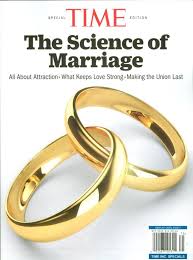
Time Magazine, Marriage is a Sacrament – Not a Science

Watch what you read. When it comes to sacred topics – particularly marriage – you may want to seek answers from among the great annals of wisdom available within the Church. For only in union with Christ can marriage achieve its true fulfillment.

time

I just picked up Time Magazine’s special edition issue on The Science of Marriage.

Interesting take. That is, if you detest the institution of marriage and choose to see it through the eyes of an  impassioned skeptic. Here’s the very first paragraph in the issue:


There’s a reason fairy tales always end in marriage. It’s because nobody wants to see what comes after. It’s too grim. Meeting the right person, working through comic misunderstandings and overcoming family disapproval to get to the altar — those are stories worth telling. Plodding on year after year with that same old soul? Yawnsville.
– p. 6

A few paragraphs later the attitude doesn’t improve:

Matrimony used to be an institution people entered out of custom, duty or a need to procreate. Now that it’s become a technology-assisted endeavor that has been delayed until conditions are at their most optimal, it needs to deliver better-quality benefits. More of us think this one relationship should – and could – provide the full buffet of satisfaction: intimacy, support, stability happiness and sexual exhilaration. And if it’s not up to the task, it’s quicker and cheaper than ever to unsubscribe. It’s not clear any relationship can overcome that challenge. – p. 6

This is what the world is hearing when it comes to the most beautiful and sacred union available to man this side of heaven.

The article goes on to assert that

“It’s not even clear anymore exactly what couples are signing up for. Marriage is the most basic and intimate of our social institutions but also the one most subject to shifts in cultural, technological and economic forces, many of which have made single life a completely viable and attractive proposition.”

Really? I submit that environmental factors have not lessened the success of marriage. Perhaps one of the problems is a mistaken understanding that marriage can be analyzed in the same way that you analyze a science experiment. That it can broken down into individual ingredients recipe-style; measured and stirred to create a concoction of some sort – whether a happy and fulfilling life enhancer or an abhorrently hideous Frankenstein’s monster, depending on the mix.

To be fair, this issue of Time is not all negative. It is primarily devoted to things like How to Make Your Marriage Last, or The (Real) Key to a Joyful Union – The problem is that these topics are discussed on a backdrop of negative commentary. The entire magazine is full of skepticism. Beauty is nowhere to be found. Yes, they talk about happy marriages; but the talk is pretty cheap. These writers may mean well; but it’s as though they are dissecting a dead body to look for its soul.  You will never find the key to marriage by sifting through all the parts. Nor can you relay an image of a true marital union by starting with a contractual understanding of the relationship. It’s no wonder these writers seem flummoxed.

When marriage is described as a crap shoot where you throw yourself in and who knows what you’ll get, it’s bound to draw disdain. But for that matter, if it’s described as a science, wherein you’ll get the outcome you want, provided you do a, b and c, there is something hollow in the advice. Either perspective is a sure sign that marriage has been horribly misrepresented and people are being duped  by the unpredictable “science” of love.

No doubt this secular perspective is the reason fewer Americans are tying the knot (20% of adults age 25 or older have never been married, compared to 9% in 1960). No longer is marriage seen as a Sacred Union, but rather as an individual choice, not unlike one’s choice of career. Gone are the days when marriage is universally presumed to be “’till death do us part.” In fact, this Time Special Edition, while sharing much data that demonstrates the benefits of marriage – greater happiness, health, wealth and stability, child development  (in all areas) – also includes a section called The Good Divorce. Including the words “good” and “divorce” in the same header misses the point of marriage entirely.

If you want to learn more about marriage, focus less on the science and more on the Sacramental. Even the Source and Summit of our Faith – the Holy Eucharist – has been referred to as “a nuptial sacrament,” in effort to illustrate the amazing union it confers between ourselves and Our Lord. A oneness akin to the sacred union that takes place between a man and his wife.

A sacramental marriage is a “fountain of grace,” according to Alice von Hildebrand in her introduction to (her husband) Dietrich von Hildebrand’s, Marriage: The Mystery of Faithful Love:

As a Sacrament, marriage gives people the supernatural strength necessary to “fight the good fight.” Every victory achieved together over habit, routine, and boredom cements the bonds existing between the spouses and makes their love produce new blossoms.

Also, because it explicitly and sacramentally unites the spouses with the infinite love that Christ has for each one of them, sacramental marriage overcomes the tragic limits of natural marriage and achieves the infinite and eternal character to which every love aspires. – p. xiv

Dietrich von Hildebrand asserts,

No natural human good has been exalted so high in the New Testament. No other good has been chosen to become one of the seven Sacraments. No other has been endowed with the honor of participating directly in the establishment of the Kingdom of God. – p. 3

And because of this amazing gift, we who are privileged to take part are called to a higher level of sacrifice:

In the supernatural sphere, God gives mankind grace in different measures and demands more from them according to the measure of grace received…So, too, marriage demands more from the husband and wife in the measure that their marriage as such approaches the ideal, and the more they harmonize as characters…

…Every hour they must recall anew the unspeakably precious gift which God has given in the form of the soul of the beloved. Never must they lose their sense of the wonderful mystery that the other person whom they love loves them too, that the other lives for them, and that they own something far above all other earthly possessions. – p. 35

But we get something priceless for all our efforts:

Let us add that Christian marriage also represents for both consorts a way to attain an ever-increasing union with Jesus. As the bond has been concluded in Jesus and toward Jesus, the increase of conjugal love also means a growth in the love of Jesus. The unique abandonment to the beloved, the life of love which one lives and should live, opens the heart and enables it to love more and more. – p. 75

And about the indissolubility of marriage:

It is considered by many as something oppressive and dispiriting, something which deprives love of its wings and gives it a coercive character. They think that love would vanish with the knowledge that the tie is binding whether love persists or not. But nothing is less true. For the real lover, the consciousness of being indissolubly united with his beloved in Christ, of forming an objectively indissoluble community whose validity is beyond all wavering and all human frailties, is a source of the highest satisfaction. For he wants to be one with his beloved, and he is grateful and happy that this unity can be realized to so great a degree and that it rises above all emotional changes. – p. 59

We are human beings. As such, we are bound to be affected by the words we read, as well as the examples we witness. Which words above call you to a higher appreciation for marriage as an institution? Which passages inspire you to love more, to give more? Which passages inspire a profound awe of your God-given vocation?

The bottom line? Watch what you read. When it comes to sacred topics – particularly marriage –  you may want to seek answers from among the great annals of wisdom available within the Church. For only in union with Christ can marriage achieve its true fulfillment, and only an understanding of that truth can allow for any accurate commentary on the subject. Case in point – Archbishop Fulton Sheen so accurately entitled his treatise on the sacramental nature of marriage, Three to Get Married; but if you ever hear that same phrase in the secular culture, you can be pretty sure the reference will be sacrilegious rather than sacramental.

If you’re looking for an accurate view on Marriage, skip the Time Magazine commentary and check out a few of these amazing resources:

Love and Responsibility by Pope John Paul II
Familiaris Consortio by Pope John Paul II
Marriage: The Mystery of Faithful Love by Dietrich von Hildebrand
Three to Get Married by Archbishop Fulton Sheen
Covenanted Happiness by Cormac Burke

Follow these Tips to Stop all that Complaining and Negativity – Your Soul will Thank You (and so will your loved ones)!!!

Sacred Scripture makes it pretty clear that our tongues were meant for building up the Kingdom – not for tearing it down; and yet, have you ever noticed how much conversation in a given day focuses on the negative?

Do everything without complaining or arguing. – Philippians 2:14

Sacred Scripture makes it pretty clear that our tongues were meant for building up the Kingdom – not for tearing it down; and yet, have you ever noticed how much conversation le_malade_imaginaire_argan_a_hypochondriac_complaining_of_wellcome_v0015124in a given day focuses on the negative?

So Many Complaints, So Little Time

Here is just a brief brainstormed list of conversation topics I have overheard or participated in on any given day. How many have escaped your lips today?

bad weather
bad service
bad food
bad leaders
poor sleep
lack of sleep
late nights
early mornings
lack of exercise
lacking the will to exercise
poor diet
lack of self-discipline
sickness
aches and pains
blemishes
messy home
too much to do
strained relationships
ugly culture
bad government
poor entertainment
cultural demise
your mistakes
the mistakes of others
your faults
the faults of others
obstacles in our day
financial difficulties
unmet goals
unattained dreams
disrespectful kids
frustrating neighbors
annoying relatives
your fears
your doubts
news
news
and more news

None of us likes to spend time with chronic complainers. They bring us down, and they tend to make for pretty miserable company. So given that we are readily annoyed when we spend time with friends or family who pour their energy into all that’s wrong with the world, why do we spend so much of our time on complaints and negativity?

Maybe because they work – in the short run.

Have you noticed that a negative comment can drive a conversation like nothing else? Try announcing at your next meeting that you arrived on time, without incident and even enjoyed a lovely prayer during the drive. Chances are, you’ll get a few smiles, and “That’s nice.” Or, depending on the culture in which you work, everyone may look at you like you’re nuts, even raising an eyebrow or two, before turning back to the more stimulating conversation at hand. However, when you rush in, complaining about the five car pile-up that stopped traffic for 30 minutes or you rue the horrible weather and the terror you experienced as you nearly ran off the road, people will hang onto your every word, riveted by all the excitement.

When you go negative, you have the floor.

In addition to offering something exciting to a conversation, doesn’t it seem that negativity provides a give and take of one-upmanship – often boiling down to a tennis match wherein we try to “outdo” others in sharing the trials and tribulations of life?

The 24-Hour News Cycle

It doesn’t help that the media provides us with fodder for negativity 24-hours-a-day. Clearly they “get” that our attention is riveted to the negative.

Once I heard a French priest talk about why he never listens to the news. “It take my joy,” he’d say in his beautiful accent. “Same news. Every day. Always sad. I no listen. But I pray. I know there is death. I know there is crime. I know bad things happen. I pray. But I no listen. I keep my peace. I keep my joy.”

I should take that advice. I’m sure my husband rues the day I learned I could have a News App on my phone – complete with notifications. It never fails that we’ll be enjoying a peaceful moment together when the familiar “ding” of a notification comes in, followed by my voice: “Oh my goodness! Violent protests to block free speech at X University?! Are you kidding me? What is this world coming to?!” Then comes my diatribe about youth of today and the horrors of our education system.

And of course, a story about protests inevitably leads to a discussion about politics – the ultimate in negativity.

Politicians Digging up Dirt

Think about all the ugliness in the political world this past year and a half. Campaigns seem to run on negative energy. And in each cycle someone ups the ante – the contest for who is most qualified to represent his fellow countrymen becomes a game of Who Can Dig up the Most Dirt. We, as citizens, express our utter shock and dismay – and then we turn around and talk about it with all our friends and acquaintances.

Politicians get it . And they capitalize on it. Rahm Emanuel, the Mayor of Chicago, once slipped, “You never let a serious crisis go to waste.” Sure, we all complain about campaign seasons or the media’s obsession with finding a new low (yet one more thing to complain about, of course); but secretly, we seem to relish in the latest gossip about the campaign antics of the day.

I don’t know about you, but I left this past election cycle with a nasty taste in my mouth. And today,  with all the talk of protests and anger in the streets, it seems to me that there is a distinct relationship between negative talk and negative action. What are we teaching our children with all this negativity?

Peace Amidst the Storm

Which begs the question – does all this negativity bring peace?

Does complaining or negativity improve our lot one iota?

I submit that the French priest spoke for me when he said, “It take my joy.” Negativity and complaining take my joy. And I’m willing to bet they take yours too. Yet even though we know all the negativity isn’t good for us, somehow we are drawn to it. And just like any bad habit, we need to take proactive steps to make changes…

Put the Power in the Positive

I wonder what the world would be like – what our souls would be like – if each of us stopped complaining? If we filled our minds and hearts with positive messages?

It’s almost daunting to think of centering our world on the positive. But let’s see if we can do it. Let’s start small. One day. We can all do one day, can’t we?

Here are a few suggestions to get us started:

1.Be Grateful.

First and foremost, gratitude brings peace. And how can we possibly complain about something for which we are grateful? It helps to remember that everything that happens – from our alarm clock failing to go off to a burnt dinner or a messy house – is allowed by God for His good purpose. And He assures us, that, come what may, we have reason to be thankful.

Have no anxiety about anything, but in everything by prayer and supplication with thanksgiving let your requests by made known to God. -Philippians 4:5-6

2. Say less. Listen more.

Maybe it’s just me, but in order to go through a day without mentioning any of the above, I might just have to be silent. Could it be that God had our temptation toward the negative in mind when he gave us the Psalms:

Set a Guard over my mouth, O Lord, keep watch over the door of my lips! -Psalm 141:3

Or Proverbs:

Even a fool who keeps silent is considered wise; when he closes his lips, he is deemed intelligent. – Proverbs 17:28

Instead of focusing on things to complain about, use that silence for prayer. The more you unite yourself to Christ, the more peace you are bound to find.

3. Turn off the news.

Spend the time you gained on spiritual reading. Spiritual reading has a way of bringing peace that we cannot find in the world, perhaps because of all the negativity inherent in the culture. In my new book, How to Read Your Way to Heaven, I talk about how spiritual reading “arms us for battle:”

…the more we fill our hearts with the love of Christ, the greater the light we bring to the darkness around us. Spiritual reading arms us for all those daily battles with negativity, temptation, and sin, filling our minds, hearts, and souls with truth, building us in Christ, and strengthening us for combat. (p. 16)

4. Disengage.

If your “friends” on social media engage in negativity or if they spew cutting remarks, sarcasm, block them or log off. And even if they don’t, Lent is a good time to get rid of excess “noise” and rest in the quiet of the Lord. You might be surprised at how much time you have to reflect in gratitude on all the gifts you’ve been given if you stop comparing yourself to your neighbor.

Be still and know that I am God. – Psalm 46:10

5. Avoid words like “Don’t.”

In my world, negative topics are not the only problem. Unfortunately, I even find myself saying the simplest things in a negative way. Whether telling my kids, “Don’t leave the door open” rather than saying, “Shut the door, please.” Or “Don’t eat with your mouth open, please” rather than “Chew with your mouth closed.” I heard once that when you direct your child in a negative way, it’s more difficult for them to obey because you force them to double think. First, they have to think about what you’re telling them not to do; and then they have to process the opposite; finally, they have to do the opposite. Way too much work.

6. Do something positive.

If the world is falling apart, don’t tell people about it; do your part to help put it back together. Think of that one thing that causes you the most frustration. Now do something about it.

You are the light of the world. A city set on a hill cannot be hidden. Nor do people light a lamp and put it under a basket, but on a stand, and it gives light to all in the house. In the same way, let your light shine before others, so that they may see your good works and give glory to your Father who is in heaven.- Matthew 5:14-16


Note: Need Biblical inspiration? Check out these verses and replace all that complaining with something positive: Philippians 2:14; Ephesians 4:29; James 5:9; Numbers 11:1-4; 1 Thessalonians 5:18; 1 Corinthians 10:10; Exodus 16:8; Philippians 4:11-12; Philippians 2:12-16; Isaiah 53:7; Proverbs 17:22; James 1:2-4; Colossians 3:12; Philippians 4:6; 2 Timothy 1:7; Proverbs 25:28; Colossians 3:17; Psalm 95:2-3; Colossians 2:6-7.


Art: Le malade imaginaire: Argan, a hypochondriac, complaining of his ailments to his nurse. ; Pen and ink drawing by L. Frölich, 1859.

This Year – Give Dandelions to God

Whatever you offer to God this Lent, may you present it with all the awkward generosity, sincere devotion and loving desire of a child.

There is something precious about a three-year-old presenting his mother with a bouquet of dandelions. No matter that the flowers handed over are a crushed and virtually the_fountain_-_with_jets_of_new_meanings_1870_14595484249unrecognizable sweaty clump of weeds. There is a sacred element to the gift as a result, not of its quality, but of the depth of the child’s desire to please. That desire is evident in the exuberant bounce of the step, the excited thrust of the gift into her open palms, the devoted gaze and the joyful anticipation of mother’s reaction as she receives such a loving gesture.

When we think about Lent, doesn’t it seem likely that this is what God desires for us as we approach this sacred season? For our own sakes, He doesn’t want  us to approach Lent with a show of indifference, where we give up something like caster oil or spinach and call it good.  On the other hand, He isn’t looking for heavy sighs and feigned martyrdom when we consider what we’d like to offer God this year. He doesn’t want us to spend the next 40 days trudging from here to there with gritted teeth, downtrodden expressions, sunken eyes and never-ending groans of agony until Easter morning. That said, He also isn’t looking for us to beat ourselves up because we commit to a mountain of resolutions and then fall short.

He wants the simple but joyful sacrifice of a child. More than anything, He is looking for the genuine desire to give what we have to Our Lord for his pleasure.

Lent is a call for penance, fasting and abstinence. Not for His sake, but for our sake. Just as a grateful and generous child grows in virtue in the very act of giving, Christians develop virtue and grow in holiness when they generously offer penance, fasting and abstinence as loving gestures in order to please God; not merely to fulfill an obligation.

It is no coincidence that Lent falls shortly after we celebrate the greatest gift of all time – the gift of the Incarnation, wherein God condescended to become Man in order to lead us to Himself. What is Christmas but the beautiful celebration wherein Christ offers himself as a gift for all mankind. According to Jean Danielou, S.J. in The Angels and Their Mission,

The true mystery of the Nativity is the self-abasement of the divine Person of the Word, a “little lower than angels” (Hebrews 2:7), p. 41.

Webster’s Dictionary defines self-abasement as “voluntary self-punishment in order to atone for some wrong-doing. Synonyms are “self-mortification, penance.”

From the moment of the incarnation, Christ offered Himself as a sacrifice. Lent, in a very special way, calls us to a new springtime of union with Him. A union wherein we cooperate in His sacrifice by giving of ourselves.  Where in all weakness and humility, we try to offer back to the God who has given so much to us. By His example and through His grace, we are able to offer our own self-mortification and penance. During Lent, we are given an opportunity to sacrifice.

What does it mean to sacrifice? Saint Teresa of Calcutta said it best:

“A sacrifice to be real must cost, must hurt, and must empty ourselves.”

These are words we should keep in mind as we approach Lent.

But there is a difference between emptying ourselves, and letting everyone know the cost of the emptying. Lent is about offering gifts to God. As is evident when we gaze upon a crucifix, the greatest gifts often come at the greatest cost. But when we offer ourselves and our gifts in love, we don’t count the cost.

When one loves, one does not calculate – St. Therese of Lisieux

Have you ever received a gift from a reluctant giver? Or from a giver who goes on and on about the cost or challenge in obtaining or sharing the gift? More often than not, most of us would rather that person had kept his gift than that he bemoan the difficulties sustained in its presentation.

Lenten resolutions bemoaned and endured turn us into victims. Resolutions offered in love, no matter the cost, are called sacrifices. Through a willingness to carry our crosses, we unite ourselves to Christ on His Cross. By eagerly giving of ourselves, our offering becomes united to His Offering. Our love is united to His Love. Our sacrifice is united to His Sacrifice.

Imagine the reaction when we run to God with our gifts, no matter how small they may be? Imagine His joy when we thrust them into His wounded palms, His pride at our humble willingness to look like fools for God – that our desire to give far outweighs our desire for perfection. Our desire to look good. Our desire to win.

Whatever you offer to God this Lent, may you present it with all the awkward generosity, sincere devotion and loving desire of a child.


Artwork: from The Fountain: with Jets of New Meaning, 1870