This Year – Give Dandelions to God

Whatever you offer to God this Lent, may you present it with all the awkward generosity, sincere devotion and loving desire of a child.

There is something precious about a three-year-old presenting his mother with a bouquet of dandelions. No matter that the flowers handed over are a crushed and virtually the_fountain_-_with_jets_of_new_meanings_1870_14595484249unrecognizable sweaty clump of weeds. There is a sacred element to the gift as a result, not of its quality, but of the depth of the child’s desire to please. That desire is evident in the exuberant bounce of the step, the excited thrust of the gift into her open palms, the devoted gaze and the joyful anticipation of mother’s reaction as she receives such a loving gesture.

When we think about Lent, doesn’t it seem likely that this is what God desires for us as we approach this sacred season? For our own sakes, He doesn’t want  us to approach Lent with a show of indifference, where we give up something like caster oil or spinach and call it good.  On the other hand, He isn’t looking for heavy sighs and feigned martyrdom when we consider what we’d like to offer God this year. He doesn’t want us to spend the next 40 days trudging from here to there with gritted teeth, downtrodden expressions, sunken eyes and never-ending groans of agony until Easter morning. That said, He also isn’t looking for us to beat ourselves up because we commit to a mountain of resolutions and then fall short.

He wants the simple but joyful sacrifice of a child. More than anything, He is looking for the genuine desire to give what we have to Our Lord for his pleasure.

Lent is a call for penance, fasting and abstinence. Not for His sake, but for our sake. Just as a grateful and generous child grows in virtue in the very act of giving, Christians develop virtue and grow in holiness when they generously offer penance, fasting and abstinence as loving gestures in order to please God; not merely to fulfill an obligation.

It is no coincidence that Lent falls shortly after we celebrate the greatest gift of all time – the gift of the Incarnation, wherein God condescended to become Man in order to lead us to Himself. What is Christmas but the beautiful celebration wherein Christ offers himself as a gift for all mankind. According to Jean Danielou, S.J. in The Angels and Their Mission,

The true mystery of the Nativity is the self-abasement of the divine Person of the Word, a “little lower than angels” (Hebrews 2:7), p. 41.

Webster’s Dictionary defines self-abasement as “voluntary self-punishment in order to atone for some wrong-doing. Synonyms are “self-mortification, penance.”

From the moment of the incarnation, Christ offered Himself as a sacrifice. Lent, in a very special way, calls us to a new springtime of union with Him. A union wherein we cooperate in His sacrifice by giving of ourselves.  Where in all weakness and humility, we try to offer back to the God who has given so much to us. By His example and through His grace, we are able to offer our own self-mortification and penance. During Lent, we are given an opportunity to sacrifice.

What does it mean to sacrifice? Saint Teresa of Calcutta said it best:

“A sacrifice to be real must cost, must hurt, and must empty ourselves.”

These are words we should keep in mind as we approach Lent.

But there is a difference between emptying ourselves, and letting everyone know the cost of the emptying. Lent is about offering gifts to God. As is evident when we gaze upon a crucifix, the greatest gifts often come at the greatest cost. But when we offer ourselves and our gifts in love, we don’t count the cost.

When one loves, one does not calculate – St. Therese of Lisieux

Have you ever received a gift from a reluctant giver? Or from a giver who goes on and on about the cost or challenge in obtaining or sharing the gift? More often than not, most of us would rather that person had kept his gift than that he bemoan the difficulties sustained in its presentation.

Lenten resolutions bemoaned and endured turn us into victims. Resolutions offered in love, no matter the cost, are called sacrifices. Through a willingness to carry our crosses, we unite ourselves to Christ on His Cross. By eagerly giving of ourselves, our offering becomes united to His Offering. Our love is united to His Love. Our sacrifice is united to His Sacrifice.

Imagine the reaction when we run to God with our gifts, no matter how small they may be? Imagine His joy when we thrust them into His wounded palms, His pride at our humble willingness to look like fools for God – that our desire to give far outweighs our desire for perfection. Our desire to look good. Our desire to win.

Whatever you offer to God this Lent, may you present it with all the awkward generosity, sincere devotion and loving desire of a child.


Artwork: from The Fountain: with Jets of New Meaning, 1870


A Lenten Retreat that will Last a Lifetime!

This world is a battleground, and we, the Church Militant, are called to fight evil – whether on a societal level or in the deepest recesses of our own souls – that we might grow in union with God and join Him for all eternity in heaven.

What do you say? The reading of these good books does not concern you? But I find this duty more incumbent on you than on those living in the security of the cloister. For you who sail on the open sea, whether you will it or not, are beset by a thousand occasions of sin. Thus the aid of spiritual books is for you a necessity. A religious cannot be wounded, because she is far from the combat. But you who are in the midst of battle, must protect yourself with the buckler of holy thoughts drawn from good books. – St. John Chrysostom, Discourse 3

This world is a battleground, and we, the Church Militant, are called to fight evil – whether on a societal level or in the deepest recesses of our own souls – that we might grow in union with God and join Him for all eternity in heaven. But the battle is difficult. And weak as we are, it is easy to get get wounded, to grow soft in discipline or get distracted from our mission. Sometimes we succumb to the world and all its demands and then look up to find that we are not where we hoped we’d be. Somehow we need to ground ourselves before we head out into battle each day. To retreat from battle that we might arm ourselves with the Sword of the Spirit (Ephesians 6:17), cling to the Pillar of Truth (1 Timothy 3:15), and fill ourselves with the buckler of holy thoughts, in order to face the enemy each day.

Prepare for Battle

What would you say if I offered you the opportunity to go on retreat for 15-30 minutes five days per week, directed by some of the greatest minds in the Church? This retreat will offer rewards like you’ve never dreamed. After 15-30 minutes of quiet, prayerful meditation, you will be ready to face your day like never before. If you embark on this retreat, I guarantee you will be equipped with everything you need to make progress in your spiritual life – progress that will be witnessed by your family, friends, colleagues and fellow pilgrims you meet each day.

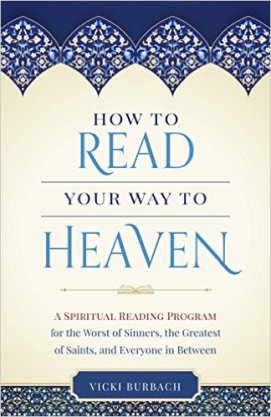
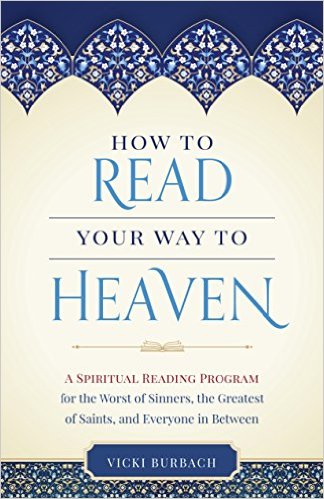
You’ll find this retreat in How to Read Your Way to Heaven: A Spiritual Reading Program for the Worst of Sinners, the Greatest of Saints and Everyone in Between.

book-cover

Sound like a far-fetched sales pitch?

Absolutely not! In just 15-30 minutes per day, you will

  • Meditate on Sacred Scripture
  • Read 1-2 paragraphs from the Catechism of the Catholic Church
  • Read a few pages from some of the greatest minds in the history of the Church

Spiritual reading is organized around the Four Pillars of the Catechism:

  1. The Profession of Faith – What we Believe as Catholics
  2. The Celebration of the Christian Mystery – Liturgy and the Sacraments
  3. Life in Christ – Man’s Vocation as a Christian
  4. Christian Prayer 

For the person who hasn’t done much spiritual reading…

this program offers a no-fail plan, sans dates or pressure, so you can get started right away, and pace yourself – while reaping great rewards found through Sacred Scripture, the direction of the Saints and  wisdom of the Early Church Fathers.

For the avid reader…

this program provides rhyme and reason to your spiritual reading. It puts order into what is often a random process, allowing for accelerated progress in the spiritual life. Spending concentrated time in each pillar allows you to learn from various perspectives and to practice what you’ve learned in your daily life for an extended time, before moving on to the next topic.

The Time is Now

Lent is upon us – do not delay. Make spiritual reading your Lenten resolution. How to Read Your Way to Heaven is a tool that will help you with all facets of the process. Make this your best Lent ever by uniting yourself to Our Lord like never before!

What’s Inside:

  • Why Spiritual Reading is critical to our lives as Christians
  • Important considerations when embarking on a Spiritual Reading Program
  • What is Syntopical Reading and how it can help you make great strides in your spiritual life
  • What kinds of works to read
  • How to read sacred scripture
  • How to structure your reading time
  • Specific assignments for a 1-Year, 3-Year or 5-Year Reading Program
  • Blank spaces each day so you can add or substitute books of your choice
  • Two Fabulous Book Lists: 99 of the favorite reads of notable Catholics; Fr. C. John McCloskey’s Lifetime Catholic Reading List
  • A lay-flat binding to ensure years of use


There isn’t enough space to extoll the benefits of spiritual reading – Rather than belabor the point, I’ll leave you with a final quote from Venerable Louis of Granada, favorite spiritual writer of St. Teresa of Avila, St. John of the Cross, St. Francis de Sales, St. Charles Borromeo, St. Vincent de Paul and St. Rose of Lima:

So great is the light and fruit of spiritual reading that we know from experience many person who have changed their entire lives by this means. When asked the root and cause of such a change, they responded that after reading such and such a book they resolved to amend their lives…

So sublime are the mysteries that the Christian religion proposes to man and so powerful for moving hearts that I would not be surprised if they effected a great change in anyone who attentively considers them. – Summa of the Christian Life, p. 7-8


What People are Saying about How to Read Your Way to Heaven:

Recently, Catholic radio host Allison Gingras of breadboxmedia.com, sent me a link to a recent program, where she and guest Cristina Trinidad had been discussing my book. What a fun show! All discussions about Lent and spiritual reading should be so joyful!! I hope you’ll check it out – let these ladies give you their perspective on the book:

A Seeking Heart – 2/17/17

Personal Message:

Just finished reading Rome Sweet Home and loved it. I’m also enjoying the Book of Matthew. I think it’s a great book to start with. I’m looking forward to my reading time early every morning. I thank God for giving me you…to show me the way to reading His Word. I love to read and this has been something I’ve wanted to do for a very long time.

Check out Amazon for Reader Reviews!

Editorial Reviews
McCloskey III profile photo

“If you want to develop a deep knowledge of our Faith, here is a reliable book that shows you how.” Fr. C. John McCloskey III


Aquilina profile photo

“We can read all day and read forever, and still feel as if we’re not making progress. Vicki Burbach gets us out of the rut and onto a track toward real spiritual — and cultural and intellectual — progress. This is the kind of book that can make life so much richer — by leading to many more books, and all in good order.” Mike Aquilina


Hendey profile photo

“Whether you’re a lifelong Catholic or a skeptical inquirer, you’ll find How to Read Your Way to Heaven by Vicki Burbach to be an indispensable gift for your intellectual and spiritual life. With this timeless treasure, Vicki has helped solve my so many books and so little time problem by providing a masterplan that’s both exciting and accomplishable.”
Lisa M. Hendey Founder of CatholicMom.com and author of The Grace of Yes


Burke profile photo

“Getting to heaven often requires that we rely on the wisdom of those who have gone before us. Vicki Burbach has done us a great service by providing an insightful reading plan and approach that, if absorbed and followed, will no doubt produce saints!”
Dan Burke, President of the Avila Institute


Is Your Marriage Lacking a Certain Chemical Element?

Do you watch all the ads with the lovey dovey smiles and the flirtatious eyes, and try to remember what that felt like? Do you recall the giddiness of being young fresh and so in love that even folding socks together was fun?

Valentine’s Day is upon us again.

Do you watch all the ads with the lovey dovey smiles and the flirtatious eyes, and try to remember what that felt like? Do you recall the giddiness of being young and marriage paintingfresh and so in love that even folding socks together was fun? Where even an accidental touch was electrifying and you called your love 100 times a day just to hear his voice?

If we’re not careful, love can become like a favorite shirt thoughtlessly tossed into the bottom of a drawer. Over time we tend to pile other things on top of it, passing it over from day to day without even thinking until some random thought, word or action sparks a reminder, and we realize that something very special is missing.

When I was in my early twenties, I began a cross-stitch project that I was sure would be a permanent focal point on my wall. It was a huge, colorful piece of country folk art, and it would have been beautiful. Today, six kids and fifty million ideas later, that piece of art has long been abandoned to the wasteland of forgotten projects.

Recently, my daughters and I were digging through my sewing box to find notions for their latest crafts. Sure enough, they found that old piece of material with the beautiful, but unfinished cross-section of a town, all neatly stitched in bright, bold colors. The finished portion would probably fill a 9×13 frame. They were awestruck. “Mom! This was sooo beautiful! Why would you leave it in a box?! Why don’t you finish it? How could you just put this down and walk away?”

How to explain that things came up? That I was too busy holding babies, doing laundry and feeding kids? And as time passed, my obligations only became greater, running kids from here to there. Other goals. Other plans. I never intended to set it aside for good. In the beginning, I only put it away during a busy time in my life. But then along came something else. And pretty soon, it was relegated to an old sewing box as I focused on making new curtains, pillows and bedspreads for our first house. And then along came the children and there were the sports and the play dates and school. There was always something that kept me from picking up that project.

And now?

I’m no longer interested.

Sadly, many marriages end up in the predicament. Sometimes we cast them aside, with every intention of getting back to them “later,” when life calms down. But then things don’t calm down, and our marriage becomes faded and dingy, lacking the bright color and excitement it once had.

Has our love dwindled?

No.

It’s there; but it might be a little lethargic, perhaps suffering from a lack of oxygen.

It might do us good to breathe a little life back into our marriages – both body and soul.

While challenges in marriage can be complicated, the action of loving is not. Love is a verb. And we must take steps to love our spouses, no matter the condition of our relationship. A simple love offering can go a long way toward reviving that spark. Take some time this week to spend some special time together, sans distractions. And make that a habit. Talk. Listen. Pray together. Attend adoration together. And more than anything else, recognize the privilege you’ve been given by virtue of your sacred union.

There is no magic pill that will liven a marriage relationship. Love takes time. It takes sacrifice. And it takes commitment. Here are just six thoughts to keep in mind regarding this amazing sacrament that is marriage on this very special day. Perhaps contemplating the profound nature of your relationship will help to ignite the flame of desire and spark the passion of commitment:

  1. You have been chosen and called, therefore, as husbands and wives to be for one another the living experiential sign and expression of God’s love by sharing with each other the gifts of uncompromising love, unconditional acceptance, ceaseless dedication, total fidelity, and untiring service. These are the signs of God’s love, and this is what makes God present in the Sacrament of Matrimony. — Dietrich von Hildebrand, Marriage: the Mystery of Faithful Love

  2. How can I ever express the happiness of the marriage that is joined together by the church, strengthened by an offering, sealed by a blessing, announced by angels and ratified by the Father?!!! How wonderful the bond between two believers, with a single hope, a single desire, a single observance, a single service! They are both brethren and both fellow servants; there is no separation between them in spirit or flesh. In fact, they are truly two in one flesh, and where the flesh is one, one is the spirit. Tertullian, quoted in Familiaris Consortio, by Pope John Paul II

  3. The basic error of mankind has been to assume that only two are needed for love; you and me, or society and me, or humanity and me. Really it takes three: self, other selves, and God; you, and me, and God. Love of self without love of God is selfishness; love of neighbor without love of God embraces only those who are pleasing to us, not those who are hateful…Duality in love is extinction through the exhaustion of self-giving. Love is triune or it dies. —Archbishop Fulton Sheen, Three to Get Married, p. 43

  4. In spousal love, the body of the beloved assumes a unique charm as the vessel of this person’s soul, and also as embodying in a unique way the general charm and attraction which femininity has for man, or virility has for woman. Spousal love aspires to the bodily union as a specific fulfillment of the total union, as a unique, deep, mutual self-donation. — Dietrich von Hildebrand, Man and Woman: Love and the Meaning of Intimacy, p. 47

  5. Romance is almost sure to die; love, however, does not have to die with it. Love is meant to mature, and it can do so if that readiness for sacrifice implied in the original self-giving of marital consent is alive or can be activiated. The idea that true love is prepared for sacrifice strikes a chord that perhaps our preaching needs to touch on more. As Pope John Paul II says, “It’s natural for the human heart to accept demands, even difficult ones, in the name of love for an ideal, and above all in the name of love for a person.— Cormac Burke, Covenanted Happiness, pg. 24

  6. Matrimony crushes selfishness, first of all, because it merges individuals into a corporate life in which neither lives for self but for the other; it crushes selfishness also because the very permanence of marriage is destructive of those fleeting infatuations, which are born with the moment and die with it; it destroys selfishness, furthermore, because the mutual love of husband and wife takes them out of themselves into the incarnation of their mutual love, their other selves, their children; and finally it narrows selfishness because the rearing of children demands sacrifice, without which, like unwatered flowers, they wilt and die.— Archbishop Fulton Sheen, The Cross and the Beatitudes, p. 41-42

  7. Do not forget that true love sets no conditions. It does not calculate or complain, but simply loves. – Saint John Paul II, Jubilee of Youth

The Real Value of Work

We learn through work that patience matters. That, eventually, given great effort day after day, year after year, we’ll see results. Through our experience in work, we can deduce that that progress in the spiritual life is slow, but that it will pay off. We learn that we don’t necessarily have to see the big picture in order to know it’s there.

Recently I heard some horrific statistics regarding young men and their participation in the work force. The host of a national radio program cited an article from The Washington Post 800px-gustave_courbet_-_the_stonebreakers_-_wga05457that referred to recent research demonstrating a growing tend in America. Apparently, not only are about 20% of young men between 21-30 years of age out of work, but they aren’t too upset about it. Instead, they are finding satisfaction in video games, computers and television, while living in their parents’ basements. Most in this group have not held a job of any kind in at least a year.  Staggering. As such, this is the first generation to feel no guilt about a virtual no-show in the work force, or about being dependent upon parents or the government dole.

While this news is shocking, the astute have been warning about this problem for the past several years. In Bill Bennet’s, The Book of Man, published in 2011, he quotes another author,

There is trouble with men today. For example, after studying today’s workforce data, author and commentator David Brooks observed that “in 1954, about 96 percent of American men between the ages of 25-54 worked. Today that number is around 80 percent. One-fifth of all men in their prime working ages are not getting up  and going to work.”

There are many reasons for this change in society. Bennet, himself, cites video games, single parenthood, corrosive entertainment and a lack of religion, among other things.

Whatever the cause, I want to discuss one particular concern among the many overwhelming consequences this lack of discipline and drive among our young men will reap on their souls. One young man profiled in the Washington Post article – who holds an Associates Degree, by the way – had some words that should give us great pause:

 “When I play a game, I know if I have a few hours I will be rewarded” he said. “With a job, it’s always been up in the air with the amount of work I put in and the reward.”

That quote got me thinking about the true value of work.

Of course, there are the obvious things. Work is necessary in a civil society, allowing us the ability to support ourselves and our families – as such it is often the conduit through which God provides our daily bread. Work is good for us both physically and intellectually. God called man to work, telling Adam, “in the sweat of your face you shall eat bread” (Genesis 3:19).

But what concerns me most is how much work provides for us spiritually, how perfectly our experience with work can reflect our spiritual journey, and how this disconnect with work is will result in an even greater disconnect with the spiritual in our young men.

Labor is a physical manifestation of the spiritual effort we must continue faithfully throughout our lives in order to obtain union with God.

Just as the carpenter must continue to hew the wood, patiently carving, hour upon hour, day by day, seeing the end product only in his mind’s eye, so too, we must continue to pursue heaven, trusting that, indeed, “no eye has seen, nor ear heard, nor the heart of man conceived, what God has prepared for the who love him” (1 Corinthians 2:9).

Just as the bricklayer lays brick after brick, taking care to place each and every one exactly to plan, not seeing the end of his work, but only trusting in the plan of the architect, so we, too, must continue to pursue excellence with every step, trusting the architect of our lives to create something magnificent from the application of our best efforts to some of the most mundane tasks, day after day after day.

If the carpenter quits before seeing the final product, it will be forever hidden within the confines of the wood. In that case no one will ever see the beauty hidden within. And the wood will never realize its intended end.

If the brick layer allows himself to get tired on the job, his work will be sloppy, and his building will not be up to par. The plan may have been correct, but the brick-layer’s carelessness will cause problems for him, for anyone who works beside him, or anyone who plans to use that building that he so carelessly built. We, too, must apply the utmost care every step of the way, for our work affects those around us in ways we may never witness.

In our vocations as fathers, mothers, husbands, wives, priests, consecrated singles and others, we must not simply plod along, but rather work with passion and purpose – and great care – from hour to hour, day to day. Never mind the monotony; never mind the challenges; never mind the tiresome little crosses we must bear.

We learn these things through a consistent experience with work. Not necessarily paid work. As a stay-at-home mom, I certainly see the connection between my work life and my spiritual life. I toil day after day, trusting in God’s plan for my children. I see glimpses here and there, but so often as a mother, I am tempted to throw my hands up at what appears to be the futility of the work. I’ll never be able to do this job right. This is too much. It is too thankless. It will never be finished. Too often I fail to see the fruits of my labor.

No matter. I am only called to lay the bricks according to God’s plan. I must trust that He will work everything out for the best. Day after day, I must rejoice even in the mundane. I must bring my all to the job that, frankly, doesn’t always offer positive feedback. But there is one way that my experience differs from that of the bricklayer. The architect may not be standing alongside the bricklayer, assuring him and encouraging his progress. In our case, Christ is with us. He helps us to lay that brick. He applies the mortar so all our efforts build toward the finished product, which is the eternal happiness of heaven for ourselves and our families.

If we ignore the architect, if we lose faith in the finished product, if we try to follow our own plans, we will look back and wish we would have paid closer attention, that we would not have trudged along with such half-baked effort. For our lives will be scarred reflections of our own sloppiness, our lack of patience, diligence and discipline.

We learn through work that patience matters. That, eventually, given great effort day after day, year after year, we’ll see results. Through our experience in work, we can deduce that that progress in the spiritual life is slow, but that it will pay off. We learn that we don’t necessarily have to see the big picture in order to know it’s there.

Ultimately, work gives us evidence in the physical realm of what religion can do for us in the spiritual realm. According to Saint John Paul II,

(9) Work is a good thing for man-a good thing for his humanity-because through work man not only transforms nature, adapting it to his own needs, but he also achieves fulfilment as a human being and indeed, in a sense, becomes “more a human being”. – Laborem Exercens

To the extent that our young men are not “achieving fulfillment” as human beings, we cannot possibly achieve fulfillment as a society.

Even more importantly, if we do not teach our young men to have patience to perform a good job in pursuit of long-term satisfaction on earth, how will they ever be able to pursue the long-term satisfaction of heaven? If the immediate feedback from a video game trumps the long-term satisfaction of a job well-done, how will they ever be willing to do the work necessary on earth now, that one day they might hear these glorious words from heaven:

Well done, my good and faithful servant…enter into the joy of your master.”


The Advent that almost Wasn’t.

Despite our best intentions, by their very force the material obligations of the Christmas season can push the more spiritual Advent activities aside.

Most of us aspire to lofty ideals during Advent:

“O, Lord, I anxiously await your coming and offer all that I am and all that I do for love of You, looking forward with all my heart to uniting myself to You in the celebration of your Incarnation.”advent-wreath

But often we fall somewhere between the ideal and the overwrought, overstressed, if not practical sentiment:

“Lord, could you just hurry up and come already, so we can get back to a regular routine?!”

And yet, who can blame us? Many of us already feel like we’re drowning, barely afloat amidst the trials, tribulations and regulations of every-day family life – getting little Joey to piano, Susie to violin, Harvard to debate practice and – in our case – homeschooling from morning till night, along with meal planning, grocery shopping, housekeeping and more. Then – every year around this time – here comes a great millstone of joy around our necks – otherwise known as Christmas lights strung from here to high heaven, perfectly appointed trees and wall to wall decor, shopping, hospitality, parties, family pictures, cards and letters, never-ending trips to the post office, planning, budgeting, charitable giving, baking and traveling. (Sometimes don’t you just want to curl up in your empty manger and hide from all the demands of boxes, bows and bounty until it’s all over?)

And after all the material traditions are said and done, we’re supposed to do what? Advent wreath? Candles? Special attention to Sacraments? Added Prayer? Sacrifice?

Sadly, despite our best intentions, by the inherent force of their nature,  the material obligations of the season often push the more spiritual Advent activities aside. To the point where we look back around Gaudete Sunday and realize that all those candles and Jesse tree ornaments, prayers, extra Masses, rosaries and reflections have been lost along the road of good intentions, somehow caught up and blown away in the wind before we even realized they were gone.

At least that’s what happened to our family this year.  And from the looks of all the beautiful houses and the over-the-top parties and show-stopping hospitality – where every dessert is perfection and the air is filled with the scent of pine needles and cranberries – I’m probably not the only one.

It seems that Advent has ceased to be about, well, ADVENT. Yes, it’s still about getting ready for Christmas.But it’s not about getting ready for Christmas.  There is no time of year when the contrast between how we look on the outside and how prepared we are on the inside can feel more stark. Sometimes, with all the joy surrounding the exterior, the lack of attention I’ve paid to my interior life is that much more highlighted for me. I begin to wonder if I’m not one of those “whitewashed tombs, which outwardly appear beautiful, but within they are full of dead man’s bones and all uncleanness” (Matt. 23:27-28). Maybe it’s not that bad; but often it comes pretty close.

This is particularly the time when we should shed all the excess and train our eyes on heaven. On the things that really matter. Instead, every year the celebrations get earlier and earlier; the bar gets higher and higher; the obligations pile on and on.

Why do we do this to ourselves?

Unlike Lent, which lends itself to reflection and sacrifice, coming as it does before Spring  and at the end of the long, drawn out quiet of winter, Advent is often glossed over by all the demands of the season.

What is the solution? And when I say “solution” I mean “practical solution.” Because chances are, all the obligations are not going to go away. Sure, we can disband everything that is not necessary; but for most of us, many of these traditions are here to stay. Try as we might, we’re still going to have decorations, get-togethers with extended family and friends, family pictures, Christmas cards, shopping and the like.

Yet, Christ is still calling. Whether we listen or not.

In our home, we have always had two Advent traditions. Every morning we read the stories of salvation history and place our special Jesse Tree ornaments on the Tree. Every evening we light a candle on the Advent wreath and read from one of Arnold Ytreeide’s Advent books.

But not this year.

Somehow what we used to think were crazy Christmas schedules for us as a family have multiplied into several crazy Christmas schedules – one for the family, and separate ones for each of our three teens, who all have their own Christmas obligations, whether through school, work, youth groups, or other affiliation. With everyone running around  we’ve not been able to schedule “family time” for much of anything. In fact, this year I hadn’t even found our Jesse Tree ornaments until a few days ago. And that was only because I’d had a huge awakening.

On Gaudete Sunday, it occurred to me that Advent is half over. I was shocked to realize that through the first two weeks of Advent, we had yet to light a single candle. My youngest children have had no reference to Advent other than the pink and purple candles sitting front and center in Church,  or the words we speak at prayer time or during open discussions around the table. Other than random moments, there has been no effort –  organized anyway – to help them prepare their hearts and minds for Christ.

It actually hit me that perhaps we should just give it up this year. Why not just get ready for Christmas and give Advent another try next year? I mean, what else can we do when the demands of the world won’t STOP?

But something about that idea just didn’t feel right. After all, what is all this “stuff” for, anyway? If we give up, aren’t we just releasing the most important if least demanding Person of the season? The One quietly waiting to gain our attention? Can I actually look myself in the mirror if my solution to the busyness of the season is just to put away the Advent candles and save my prayers for less demanding times?

No, I can’t.

So I looked at the calendar. Realizing we still had ten days left, tonight, we took action.

My husband pulled out the wreath and the kids lit the candles. One teen was at work; another was somewhere studying for a test. But four kids sat around the table and gazed at the three candles flickering before them.

Tonight, we spent time reflecting on the story of salvation history. We talked about the creation and the fall; We read about how Christ represents the Second Adam. How Mary is the new Eve. In brief passages, we read about God’s covenant with Noah; with Abraham. We placed our Jesse tree ornaments on the Christmas tree. Not the second tree we normally put in the classroom, but the family tree. And we didn’t read the Advent book we normally read; we focused on the story of salvation. In other words, we changed things up a bit in the interest of time. But that’s OK.

We gathered. And we read together. And those teens who weren’t around? They noticed the Advent wreath on the table when they returned. They may not have been a part of the conversation, but they remained part of the tradition. The reminder brought back all the years they had sat around the Advent wreath. They noticed.

For the next ten days, our family may not STOP. But we are going to PAUSE. If not twice a day, at least once. We’ve found the wreath; we’ve found the ornaments. We’ve made time for the sacrament of Confession. We are moving forward.

Our Advent may be brief. It may not be perfect. It may be missing some piece that would be “just the thing.” But it will be Advent nonetheless.

It will be a PAUSE.

And that PAUSE will matter.

Because that PAUSE will allow us to put all the other “stuff” into perspective. Rather than wait for the “perfect” opportunity to pull out the Advent wreath or the Jesse tree ornaments, we will schedule time each day – the same time. No matter that one family member is at work or another out with friends. Anyone home will be invited to participate. But if we wait for everyone to be ready, we’ll never be ready. If we wait for all the stars to align and the the time to be right, they will never be right.

We’ve lit our candles. And we plan to keep lighting them. Until the moment comes when we get to meet the bridegroom (Matt. 25:1).

The Advent that almost wasn’t…is here.


My Exciting Pre-Announcement and Why You Haven’t Heard From Me Lately!!!

Not merely another book to read, How to Read Your Way to Heaven is designed to be an invaluable tool for guiding and organizing your reading to help you on your journey to become a saint.

Lately I have been off-line. I have had insights and inquiries I wanted to discuss with you; but instead I have used any time on my computer to put the final touches on my latest project. In that regard, and in the interest of the delicate balancing act that is the life of a mother, I have neglected the youngest of my children. Yes, I consider this blog to be my infant child – barely a year old, it has been left to flounder for most of the past two months. Between preparing for holidays and finishing other projects, our conversation about sacrifice has been left on the back burner. Sacrificed, so to speak.

So what’s been taking so much time that I couldn’t spare a minute to check in here and there?

Well, I’m pleased to announce that my first book just went to the printer!!! How to Read Your Way to Heaven is available for pre-order and will be formally released by Sophia Institute Press on January 26th!

book-cover

That’s right! I’ve spent the last month or two plugging away at small details here and there, hoping to make this a spiritual reading program well worth your time and energy. And, while I am humbled by the opportunity to pull this together, I must say, I do think it has turned out to be quite a valuable resource.

From the back of the book:

Wouldn’t it be great if we really could read our way to heaven?

Many of us commit to some form of spiritual reading, but we find that our book choices are sporadic and often based on a whim rather than following a purposeful plan. Designed for individual or group settings, How to Read Your Way to Heaven will guide your quest to delve deeper into a relationship with Christ by meditating on the written word while organizing your reading around the four pillars of the Catholic Faith – the Creed, the sacraments, morality and prayer.

Not merely another book to read, How to Read Your Way to Heaven is designed to be an invaluable tool for guiding and organizing your reading to help you on your journey to become a saint.

Following this plan, you’ll meditate daily on Sacred Scripture and read the entirety of the Catechism over the course of the program. You’ll be introduced to a treasure trove of the greatest Catholic books ever written, and you’ll learn prayerful reading methods such as lectio divina and find time-tested advice on where and when to read.

A couple of additional notes:

  • This book is an integrated 1-,3- or 5-year spiritual reading program, complete with a checklist, specific assignments and a magnificent book list that is fully in line with the Magisterium of the Church.
  • A sample page from the reading program:


screen-shot-of-book

  • Daily assignments include brief readings from Sacred Scripture, the Catechism of the Catholic Church and some of the greatest Catholic books ever written. Readings generally take 15-30 minutes per day, or can be split between two days, if time is limited. The program is completely adaptable to the schedule of each individual reader.
  • The four pillars of the Catholic Faith as described in the Catechism of the Catholic Church are the foundation on which this reading program is built: What we believe (Profession of Faith); liturgy and the sacraments (Celebration of the Christian Mystery); life of Christ; prayer.
  • SO excited about this one  – We asked Catholics to whom many of us look for wisdom, guidance or support on our spiritual journeys to share their favorite books from each of the four pillars of Faith. Many responded. We have recommendations from Dr. Peter Kreeft, Jennifer Fulwiler, Mike Aquilina, Fr. Mike Schmitz, Fr. Timothy Gallagher, Tim Staples, Trent Horn, Jason Evert and many others. Additionally, we included Fr. C. John McCloskey’s Catholic Lifetime Reading List, which includes over 100 books for your spiritual reading pleasure and enlightenment.
  • Hundreds of quotes by saints and other great and holy minds are sprinkled throughout the text for your meditation and contemplation on each of the four pillars.
  • The main text includes the story of my spiritual reading journey as a Catholic convert, including five things I’ve learned about spiritual reading, and why it should play a critical role in our lives as Catholics.

I’m so excited to share this resource with you! I hope you’ll check it out and let me know what you think!!!

The Implacable Power of the WILL

Of all the lies being told by the world, perhaps the most dangerous are those that seek to convince us that will power is a myth. For upon our will depends our cooperation with the grace of the Good Lord in procuring our salvation.

Let’s talk about will power. What exactly is it, you might ask? Most of us know in our gut what it is. But for the purposes of this discussion, I looked up the definition:

cupid-overcoming-pan
According to Webster’s Dictionary, will power is the ability to control yourself : strong determination that allows you to do something difficult.

According to psychologists, will power consists of the following:

  • The ability to delay gratification, resisting short-term temptations in order to meet long-term goals.
  • The capacity to override an unwanted thought, feeling or impulse.
  • The ability to employ a “cool” cognitive system of behavior rather than a “hot” emotional system.
  • Conscious, effortful regulation of the self by the self.
  • A limited resource capable of being depleted.

Of late, our culture seems to reject the very notion of the will. Everywhere we turn, comments and references treat human beings as mere animals, with little but base instincts, as opposed to persons, each endowed with a will formed in the image and likeness of God.

Of all the lies being told by the world, perhaps the most dangerous are those that seek to convince us that will power is a myth. For upon the will depends our cooperation with the grace of our Good Lord in procuring our salvation.

But the lies persist nonetheless; just take a look at these excerpts from an article originally published in the The Roanoke Times, which refers to studies which denounce the very notion of will power:

Parents, teachers, coaches and ill-tempered sergeants had insisted that the disciplined exertion of willpower against the baser temptations of sloth, gluttony and other moral frailties was essential to building sufficient character to overcome most adversity. What adversity couldn’t be overcome should at least be borne with a modicum of quiet longsuffering, if not grace. Imagine my relief to read of the scientific evidence that willpower is really a myth, especially as it relates to such primal endeavors as dieting. A number of psychologists around the country consider the entire notion of willpower to be just another artifact of quaint but misguided folklore…

In other words, if you keep raiding the refrigerator every night for six extra scoops of megachocolate ice cream, you’re not a pathetic, undisciplined, weak-willed glutton. You’re merely cooperating with the brain-chemical imperative as nature intended. You can’t help it. The chemicals made you do it. 

The above is about as blatant as messages come. But there have been subtle messages going on for decades. And they are severely affecting private behavior as well as public policy. Case in point: How long have advocates been insisting that birth control be made readily available in the schools? Kids are going to do what kids are going to do; they don’t have any self-control – the least we can do is help them be prepared… (Arguably, students have lived up to expectations).

Then there are seemingly innocent memes like the following:

lose-weight-meme

Very cute; definitely funny; but is this the message that we should be sharing en mass on social media? And yet, countless are passed along day in and day out.

Examples abound. I’m sure you could add several to the few I’ve offered here. Regardless, the result of both subtle and not-so-subtle messages about the weakness of the will has been absolutely destructive. What one might call a self-fulfilling prophecy. Just think of a few statistics:

  • According to the Centers for Disease Control (CDC), more than a third of the adults in the U.S. suffer from obesity (36.5%). This number is up 10% since 2012 (26.2%).
  • Ashley Madison, a website that “caters to married people looking for an affair” boasts  a client list of 37,000,000. (Not a typo – that’s 37 million people that have registered with this web site!)
  • One in three Americans has absolutely no retirement savings (Time Magazine).
  • As of May 2016, consumer debt reached a whopping $3.6 trillion.

And in the world of religion,

  • According to Pew Research, across our nation, the number of people who pray and attend religious services consistently has dropped 3% across the board since 2007. And younger people observe religious practices significantly less than older populations.
  • On a more personal note, another Pew Research report shows that people are leaving the Catholic Church in droves – there are three million fewer Catholics today than in 2007 – could this have something to do with the notion that, unlike other Faiths, the will – particularly uniting our will to that of God – plays a key role in the in the teaching of the Catholic Church?

People point to this or that reason for declining participation in Christian churches, but isn’t there likely a huge correlation between the lack of interest in the area of religion and the decrease in control of our baser desires? And my point here is not that one has caused the other; but perhaps all areas have been driven by the deeper message that we’ve been hearing in the world – that we cannot control ourselves; whether eating, drinking, smoking, lust, language – you name it – we are destined to live with our own powerlessness, and must simply go along for the ride, despite that fact that both we and our progeny must find ways to cope with the devastation left in our wake.

What a tragedy.

God gave us free will out of respect and generosity, allowing us the opportunity to choose Him, rather than forcing our allegiance to a Supreme Being through His almighty power. That choice is not a momentary decision, but rather countless daily, even moment by moment decisions to grow in love and virtue; to participate in prayer and the sacraments, cooperating with the grace of God to become better versions of ourselves.

And those choices? Made every moment of our lives? They can only be made through continual acts of The Will.

It is often said that the devil’s greatest coup would be to convince the world that he doesn’t exist. That may be true. But his second greatest coup?

Could it be to convince you that you are helpless?

To make you believe that, in this moment, you cannot put down that doughnut. You will never lose that last ten pounds. You cannot limit your coffee intake to one cup a day. You cannot succeed long-term with an exercise routine. You cannot control that temper. You cannot resist that affair. You cannot afford to save for retirement. You cannot find the time to attend Mass today. You are too busy to pray the rosary. In fact, prayer in general is just too difficult. And the idea of making voluntary Sacrifices – are you kidding me?!

But these are all lies, lies, lies. The truth is that your will is in tact. In fact, according to Archbishop Fulton Sheen, it is the only thing you have that is truly yours:

There is only one thing in the world that is definitely and absolutely your own, and that is your will. Health, power, possessions and honor can all be snatched from you, but your will is irrevocably your own, even in hell. Hence, nothing really matters in life, except what you do with your will. — Archbishop Fulton Sheen, Seven Words of Jesus and Mary, p. 25

Despite what the media says, despite what the “professionals” in the world of psychology say, regardless of what your best friend tells you,

you can put down that doughnut. You can lose that last ten pounds. You can limit your consumption. You can find time to exercise today. You can control you temper. You can resist that affair. You can save for retirement. You can find time to pray. You can grow in virtue. You can become a saint!

In order to obtain heaven, two ingredients are required:

God’s grace.
Your will.

The world has done a great job of convincing us that neither exists.

But the world is wrong.

But my will is weak, you say. Yes. I’m sure it is. There is only One Perfect Will. And while we share in God’s image, our fallen nature, like a leaden weight, seems destined to keep us from soaring to great heights.  But your will is there. And God’s grace is the chisel that will cut away the lead; for through Him all things are possible (Matthew 19:26). And His power is made perfect in weakness (1 Corinthians 9).

By convincing us to disengage the will from our decisions, as opposed to actively directing the “self” toward the good, the devil has triumphantly succeeded in weakening it, if not destroying it altogether. (Ever heard the phrase, “use it or lose it“?) But just as not exercising the will causes it to become listless and weak, stepping up to the plate and engaging the will, even in small ways, will strengthen it. We can strengthen the will by actively pursuing good, and by developing habits and relationships that reinforce that pursuit and encourage us in our progress.

Freedom makes man responsible for his acts to the extent that they are voluntary. Progress in virtue, knowledge of the good, and ascesis enhance the  mastery of the will over its acts. (CCC #1734) (emphasis mine)

The will plays a pivotal role in both our physical and spiritual lives. Do not believe the lies. Not only does your health depend on your ability to see the lies for what they are; your salvation depends upon it as well. For how can you unite your will to God’s if you believe you have no power to do so? God is faithful. He has provided us with everything we need in order to pursue sanctity. And the gift of the will is a necessary component:

God does not require of us the martyrdom of the body; He requires only the martyrdom of the heart and the will. — St. John Vianney


Artwork: Cupid Overcoming Pan by David Teniers the Younger (1610-1690)

5 Things I Wish Someone Had Told Me About Raising Catholic Children

Like all parents, there are several things I wish someone had told me when I began parenting. I’m learning little by little; but perhaps some of my experiences might help those who are just getting started with little ones before they, too, look up and realize their time and influence may be fleeting.

Our oldest son is a senior year in high school this year. This is an exciting time for him. But as parents, we count the days we have left with him before he leaves for
Holy Family - United Kingdomcollege. The next two kids won’t be far behind – in less than five years, half our children will have graduated from high school.

This time in our lives has been the impetus to much reminiscing on my part.

Like all parents, there are several things I wish someone had told me when I began parenting.  Particularly about how to raise kids who leave our home with a desire and will to follow Christ in their thoughts, words and deeds. I’m learning little by little; but perhaps some of my ups and downs might help those who are just getting started with little ones before they, too, look up and realize their time and influence may be fleeting.

The advice may be worth what you pay for it; but here are my top five tips to parents with little ones:

1. Don’t be so paranoid.

We kept our kids from things like Pokemon and from Harry Potter, etc. because I’d seen all the questionable articles. I wanted to play it safe. (I say “I” because my husband would have been a little more laid back about these things.) A few months ago, our family went out for ice cream, and the shop we were in was showing Harry Potter on TV (why there was a TV in an ice cream joint is a discussion for another time:)). My teens joked at the time about how I never let them read or watch anything when they were young; shortly thereafter, my 17-year-old read all the Harry Potter books. He said they were pretty good. Not worth all the hype, but enjoyable. I don’t remember what all the fuss was about years ago, but I’ve seen no repercussions thus far. And he’s already moved on to other things.

Shortly thereafter, Pokemon Go became all the rage. My boys were right in the middle of it all (I’ve lightened up in my “old” age). But their interest faded within a week and they’ve both moved on in this area as well.

When my kids were little, I drove myself crazy trying to make sure they weren’t involved in anything that might make them stray from the Faith or might lead to other dangers.  BUT… I knew other moms who let their kids do plenty of things that I restricted (within reason) and their kids grew out of them almost as soon as they tried them.  Now those kids are well-adjusted and seem to make good decisions where they count.

Not only have I noticed that a little bit of gentle “openness” on the part of moms doesn’t seem to have harmed their kids, I’ve also learned that a more anxious approach to the world can have damaging effects that I hadn’t anticipated.

Case in point, I think my oldest especially (17), but to a certain extent my second too (15), have sort of written me off as “paranoid” and not particularly the voice of reason about things related to the culture. They haven’t been disrespectful about it, but I’m definitely getting that vibe.

Not only am I not their “go-to” person regarding cultural issues, but I don’t know whether I’ve really prepared my older kids to confront the “big” issues they will face in the world.  Are they capable of discerning right from wrong on their own? Of saying “no” themselves when all their friends are saying “yes”? I hope they’re ready, but I am beginning to second-guess my original strategy.

While second-guessing myself does me no good, I have to say that I wish I had been relaxed about more things when my kids were younger. Even when I didn’t let them do things, I wish I would have been more “sneaky” about it – redirecting instead of saying “no.”   (Lest you think that “no” is the problem – I did substitute the things I wouldn’t let them do with positive things.  But they remember the “no”s.)

If we do our best to completely control their environment for them when they are young, when are we teaching our children to use their own judgement?  In my case, I taught my kids right from wrong, but when kids are young and mom controls the environment – with a penchant for the word “NO”-  is she helping them to check things out and discern for themselves when the stakes are low so that they can make good decisions when they are high?  But the stakes are high, you might say.  Yes, I always thought they were high, too. In my mind, they were high for everything from books to movies to shows to video games to friends to school to (insert issue here).

However, now they really are high. Driving, alcohol, drugs, sex, pornography, etc.  And while my kids have yet to fall in those areas (at least to my knowledge), if they do come across challenges, I don’t know that I’ll be the first one they turn to for advice, frankly because they may be worried about my reaction. Additionally, I sometimes wonder if by making everything a big deal, I’ve made nothing a big deal – in other words, is it possible that my dependability for insight has been watered down? Am I the mom who cried “wolf” one too many times?

Bottom line – if my eight-year-old brought home a Pokemon card (or some other questionable toy or game) from a neighbor today, I would treat it no differently than any other toy  (granted, there are exceptions to this rule; e.g. Ouija Board.)  And I’m sure it would disappear within a day or two.  If it didn’t, I would probably use the same technique they recommend for toddlers – get rid of the card when he wasn’t looking and then redirect his attention to something fun and good, without using the word “no”.

2. Help more; require less.

Let me preface this commentary by saying that my parents are both retired military, with over 20 years of service each.  That should give you some understanding of my own upbringing.  Needless to say, when my older kids were little, I had chore charts, responsibilities and expectations. I wanted to raise independent children who could do for themselves.  When I dropped them off with a babysitter, they waved goodbye and ran to play. (I was put off by those little kids in play groups who wouldn’t let go of their mothers’ legs.  I thought MY kids would never do that.)  The first three could all read at age three – no lie.  They were capable and very independent. When they asked for help, if I had taught them the task in the past and I knew they could do it, I would explain that they needed to do it themselves.

Perhaps you can already see the problem with that angle.

While I may have taught my older kids a great sense of independence and a strong work ethic, did I model a sense of compassion or a helpful spirit?  Thankfully, some of my kids are naturally helpful.  But in some cases they do not bend over backwards to help siblings, and frankly, with my expectation that they do for themselves, I may have failed to teach by example in that area.  They all help if I ask.  And they’ll do any chores required of them.  But ideally, they would all help when not asked. They would look for places to serve (whether at home or in the world). And they would be joyfully willing to help when asked by a sibling  (I’m treading on thin ice here, because there are times when they all serve and some of them always serve).  But I have a feeling I could have better cultivated a sense of service and cooperation, and am trying to make up for it now. By the way – on a selfish note –  all those kids I knew who were so attached and needy of their mothers when they were young? They are still attached, if not needy. That concept is awfully attractive to a mother with a senior who can’t wait to become an independent entity. He is capable of taking care of himself and more than excited about demonstrating his ability. We are definitely proud of his accomplishments. But right now, I’d give anything for a little attachment🙂.

3. Make family time FUN.

When my kids were younger, we celebrated what we called “Family Fun Night” every Friday.  I planned various activities, whether a craft, bike ride, board game, or what our family calls “Tickle Monster.” Those nights are some of the best memories our family share together.  But as the family grew and the age gap from top to bottom widened, I took my foot off the gas. Partly because I was busy and tired. The last thing I wanted to do every Friday was plan family entertainment on top of an over-scheduled week. Family Fun Night morphed into movie night – easy and low stress – which in the grand scheme of things, has not produced many memories. Movies run together in our minds and there is little family interaction when everyone hangs out with their eyes glued to the television.

My advice? Keep the FUN in Family Fun Night. You’ll never regret it. If necessary, let something else go. If you don’t, you’ll have teens who find friends more important than movies and going out more important than staying in. Movies don’t strengthen relationships. Laying out blankets in the grass and counting the stars – does. Serving finger food in various shapes for dinner and having everyone make pictures with their food – does. Hanging out around a campfire and roasting marshmallows – does. And even if you argue that those things still won’t entice the teens – they may and they may not. It depends on the teen. But even if they don’t, the older kids will be able to reminisce on great memories when they walk in on the fun, and they may just surprise you and join in.

And what does family fun time have to do with Faith? As a Domestic Church, the family is a child’s first and most important contact with God and with Godliness. Is there anything more attractive and inspiring than joy?

4. Place God at the center in action – not just word. He is a Person, not a belief system.

I remember listening to an atheist professor in college. He told us some crazy things. Among them, he said that Christianity was created to suppress the poor, and that the rich pooled the New Testament to encourage sacrifice as a “virtue” among the downtrodden.

Having very little foundation in Christianity, what that professor said seemed reasonable to me. I hadn’t been to church much growing up. So I was tempted to take him at his word. After all, he had the PhD.  But I thank God nearly every day for the two students in our class who questioned his theories. They were certain and confident that what he was saying was wrong. They weren’t argumentative. They weren’t disrespectful. But they asked questions that pointed out the irrational nature of his conclusions. I was amazed. I remember thinking as I sat there, “I wish I had their faith. Even if believing in God is only a crutch, I want that crutch.”

Years later when I converted to Catholicism, I was determined that my children would not only know what to believe, but they would know why they believed, like those college students years before. Whatever happened, I did not want them to doubt. I wanted them to KNOW, as I finally know, that Christ is The Way. So I talked to them early and often. I read to them. I catechized them.

But now that our influence over our older kids wanes and our days together dwindle, I often wonder – have I shown them?

Have I been joyful?

Have I been at peace?

Have I been generous?

Have I loved?

I taught my kids plenty of prayers; and I taught them frequent participation in the sacraments; but did I teach them to know Jesus as their best friend? Have I demonstrated that He is mine?

My oldest knows all the right words to say. He knows what we believe and why we believe it. (And that’s one thing I wouldn’t change – so if you are leaving the catechesis of your children to Mass attendance or to their religious education class, then I’d add an additional tip — make sure your children know their Faith. You are their first educator; their faith is too important to leave to chance.) But when my son gets out in the world and is tempted to turn away, the choice to remain faithful will be easier to make if he feels that he is being faithful to a Person, a Friend.  Have I properly introduced him to that Friend; and have I helped to cultivate a lifelong friendship? Or have I been so focused on the What and the Why, that I neglected the Who?

DO teach your kids to KNOW. But make sure you imbue them with a knowledge of the heart, not merely a knowledge of the head.

5. Remember that No family is perfect but YOU are Perfect for Your family.

I know this is an obvious point in theory; but often our emotions don’t follow the obvious. I spent years thinking that everyone else knew more than I did about how to be a good parent. There are times I’ve actually asked God, “Why did you give Child X to me instead of to that person over there?” Not because I was frustrated with my child, but because I felt the virtue I saw in another person would lead my child to holiness a lot faster than my vices would.  But the truth is that we all see the challenges and the sin in our own home and wonder what we are doing wrong.

The older I get, the more I realize that we are all learning how to be parents. Your weakness may be another parent’s strength. But other parents are watching your family and wishing for the strengths they see in you. We are all fallen creatures. There is no perfect family. (For more thoughts on that subject, read here.) God has a plan for your family. There is no home in the world that will contribute to the sanctity of your children like yours. God wants them in heaven; but He has entrusted their souls to you. That is no mistake. Our Lord has great faith in your ability to seek His grace daily and to turn to Him when you fall. Thank goodness for that, because there is nothing like parenthood to bring you to your knees.

Parents’ Prayer for Their Children

O God the Father of mankind, who hast given unto me these my children, and committed them to my charge to bring them up for Thee, and to prepare them for eternal life: help me with Thy heavenly grace, that I may be able to fulfil this most sacred duty and stewardship. Teach me both what to give and what to withhold; when to reprove and when to forbear; make me to be gentle, yet firm; considerate and watchful; and deliver me equally from the weakness of indulgence, and the excess of severity; and grant that, both by word and example, I may be careful to lead them in the ways of wisdom and true piety, so that at last I may, with them, be admitted to the unspeakable joys of our true home in heaven, in the company of the blessed Angels and Saints. Amen.

O Heavenly Father, I commend my children to Thy care. Be Thou their God and Father; and mercifully supply whatever is lacking in me through frailty or negligence. Strengthen them to overcome the corruptions of the world, whether from within or without; and deliver them from the secret snares of the enemy. Pour Thy grace into their hearts, and strengthen and multiply in them the gifts of Thy Holy Spirit, that they may daily grow in grace and in knowledge of our Lord Jesus Christ; and so, faithfully serving Thee here, may come to rejoice in Thy presence hereafter. Amen.

(Prayer borrowed from Catholic Online)

So What Have You Been Reading this Summer?

Have you decreased your use of technology and increased your reading? If so, how’s it going and what have you been reading this summer?

cropped-photos-8-7-503

Three months ago, I wrote a post about setting aside technology, turning off the television and sitting down with a good book. In that post, I invited you to come back on August 1, and chat about how that’s worked for you and what you’ve been reading this summer.

Well, here we are! Time sure flies, doesn’t it?!

On my end, I did turn off the media. Or at least I tried to avoid it, without deleting my apps or canceling my accounts (sort of like keeping that one credit card…for emergencies). And I was successful. At first. But of course, as a window left open the slightest bit will still allow the rain to seep through, sogging the carpets and rotting the wood, little by little my social media usage trickled back in, stealing my time and interrupting my productivity.

Thankfully I have been able to ward off the assault a good degree, using my time for productive activity, if not always for reading. But then, that’s what mothers do regardless, isn’t it – productive activity?

To be completely honest, I have probably read less so far this summer than I would in the same time period during the school year – summers seem conducive to crazy schedules and lots of driving (And before you recommend books on tape, I’ve done that, but great works like  Tales of a Fourth Grade Nothing by Judy Blume probably don’t count. Or do they?

In the free time I’ve managed to thread amidst all the camps and other activities, I’ve been working on a project. I suppose I can confide in you at this point – I am in the process of wrapping up my first book. Shhhh. This is the first I’m mentioning this publicly, so please keep it on the down-low for now – although your prayers would be much appreciated. The fact of the matter is that suggesting a reading binge was probably pretty foolish of me this summer, considering the deadline for my book is in September. I don’t know when I thought I’d EVER be sitting around this summer.

Prayers, more prayers and fingers crossed – talk is that my book will be published for Lent 2017. What’s it about, you ask? Why, spiritual reading, of course! If you haven’t checked out our spiritual reading book club on spiritualdirection.com – please do! And keep your eyes and ears peeled around the first of the new year – hopefully I’ll have something to offer that will serve you through a lifetime of spiritual reading!

But back to the subject at hand –  our Summer of reading…

I must admit I’m a bit embarrassed about my list. Not long. And for the most part not profound. Some of my books are the result of taking pictures of the popular books at Costco and reserving them at the library. That may be the first and last time I try something like that. For those who are interested, here’s what I’ve read thus far:

The Nightingale by Kristin Hannah – OK. Not nearly as good as All the Light We Cannot See by Anthony Doerr (both are novels set in WWII).

Night by Elie Wiesel – Elie Wiesel passsed away in July, prompting me to seek out this book. It was very moving. Sad. Unbelieveable. Unconscionable. And an absolute must-read.

Luckiest Girl Alive by Jessica Knoll – A lot of crassness (is that a word?). Story got interesting, but I had to work to get there. A few suspenseful moments kept me going. Once I made it past the yuck, I had to finish the book, at which point the “yuck” became almost understandable.

Life of Christ by Archbishop Fulton Sheen; I’m on pg. 386 – still reading this magnificent book for our book club. It may just be one of my favorites. Lots of commentary about the Soviets, socialism and communism. Very apropos today.

Me Before You by Jojo Moyes – Had to read this to see where the author went. Another activist book that paves the way for assisted suicide being considered as compassionate and obvious as the notion of actually saving a life. Very sad. For more commentary on it, see this previous post.

Mother Angelica: Her Grand Silence by Raymond Arroyo – I found this book to be very good. I wrote a post on this one too.

The English Girl by Daniel Silva – I’m reading this now. Not my type of book. I need more literary stimulation. This one is all story and I just can’t get into it.

That’s it. The sum total of my literary adventures of Summer 2016.

Now it’s your turn! Have you decreased your use of technology and increased your reading? If so, how’s it going and what have you been reading this summer?

God bless you!!!!

Greatest Predictor of Success: Science and the Bible Agree

You might be surprised to know that God and science agree on the key to success. Read more to find out how you can be successful in this life and the next.

Ever wonder just what might be the greatest predictor of success? And when I say success, I mean the whole enchilada – happiness, financial security, relationships – everything. Well, Science has found the answer.

Go ahead and guess.

prosperityRich parents?

Intelligence?

Hard work?

Good Looks?

None of the above. It turns out the greatest predictor of success in this life is….

The Ability to Delay Gratification.

That’s right. And it’s been tested. Several times.

In a recent Stossel in the Classroom segment, John Stossel talked about a study done with marshmallows that demonstrated the value of self-denial. There’s a TED talk about it too.

Apparently, for the study, originally done in the 60s, social scientists took four-year-old children and placed them each in a room. The moderator would say, “I have a marshmallow for you. You may eat it right now. OR, if you can wait until I return in 15 minutes, I will give you a SECOND marshmallow. In the original study and in every reproduction to date, only one third of the kids were able to avoid eating their marshmallow. (Videos on the TED Talk of kids trying to wait are priceless).

Researchers followed up on the kids. 15 years later, 100% of those children that had not eaten the marshmallow were successful. According to Stossel, the kids who did not eat their marshmallow within the 15 minute time period scored an average of 213 points higher on their SATs. They were happier and healthier. Years later, “they make more money, they are happier, they have better relationships, and they are less likely to get into trouble” than those kids who had not been able to resist the treat.

Research showed that kids who did eat the marshmallow were more likely to struggle in life. On average, they had more relationship troubles, didn’t do as well financially and tended to be more unhappy.

The truth is, as much as the ME-culture of instant gratification and self-indulgence would like us to believe that it is guiding us to the greener pastures of personal fulfillment and joy, no one is brought to greater happiness through self-indulgence. Like sin, the ME-culture sucks us into a cavern of darkness which leads us deeper and deeper into the blackness until we are so lost we cannot find the light.

For those of you who were doubtful, it turns out – according to the omnipotent and all-knowing halls of science –

Self-Denial is Good for Us.

Self-denial is not  – contrary to popular belief – about shackling ourselves to an earthly life of misery and unhappiness. It doesn’t mean torturing ourselves to lead lives of drudgery and self-imposed sacrifice.

Maybe self-denial – even in this world – is about opening doors and widening our options. Because apparently, self-denial begets success. Self-denial begets happiness.

Which brings us to our Faith.

What is the great command of discipleship – as symbolized by the very Cross upon which our Salvation hung?

From the mouth of Christ,

If any man would come after me, let him DENY HIMSELF and take up his cross and follow me.” (emphasis mine) (Matthew 16:24) (Mark 8:34) (Luke 9:23)

In the words of Saint Paul,

I appeal to you therefore, brethren, by the mercies of God, to present your bodies as a living sacrifice, holy and acceptable to God, which is your spiritual worship. (Romans 12:1)

We are called to deny ourselves in this world, that we might enjoy eternal happiness in the next. What is that denial but the ultimate in delayed gratification?

Most interesting about this scientific finding is that in virtually all circles, we hear that this world and the next do not value the same things. Either you can live for this world, or you can live for heaven. But you cannot do both. In Scripture, we are warned about the temptations of this world. But while there is a culture out there promoting the opposite of self-denial — self-indulgence, instant gratification, gluttony — that culture is contrary to the truth that is engraved on the heart of every one of us. How could the laws of this world ever truly contradict the laws of Him Who made this world?

They couldn’t. Happiness in this world and happiness in the next must be consistent. Because happiness can only be found in Good.

So the next time you hear the above verses, don’t moan and complain as you drag that cross along behind you or slump sulkily up onto that altar. Remember that when you wail about self-denial you are as amusing to God as a small child at nap time who denies with his whole being that sleep is good for his peace and contentment.

Your happiness in the next world is contingent upon your denying yourself in love. For God. But here’s the amazing thing. Your goal is not merely greater financial gain. But research shows that you’ll probably have it. Your goal is not merely better relationships. But research demonstrates that you’ll probably have them. Your goal is not ultimately happiness in this world. But the science shows that you’ll probably have it.

I know what you are thinking. As Christians, we know there is no guarantee that if we deny ourselves we will reap worldly rewards. True. But could it be that we have been so frustrated by the wrong-spiritedness of the “Prosperity” Gospel (Just have faith and you can have whatever you want) that we make following Christ out to be just the opposite? A joyless duty? Could it be that in effort to avoid the silliness of the that false teaching, we’ve pushed back too far?

Apparently, it just isn’t true that you must be miserable here in order to be happy in eternal life. Apparently, if you live for God in this life, you need not wait for eternity. You will most likely enjoy greater success and happiness here on earth as well.

Bottom line, on this subject Science and God are preaching the same message:

Self-Denial will reap great rewards.

Pick up your cross. You’ll be glad you did – maybe sooner than you think.