Mother Angelica and the Power of Old Age

If you ever wanted to illustrate the beauty and gift of suffering for a friend or family member – or even witness it for yourself in living color – I highly recommend this book. Written in a casual voice that is easy and enjoyable, Arroyo hits home when it comes to relaying, through Mother’s experiences, our close connection with the spiritual world.

On the eve of the Solemnity of the Most Sacred Heart of Jesus (that would be last night), I finished reading Raymond Arroyo’s Mother Angelica:Her Grand Silence, his final chapter sacred heart paintingon the last years of Mother Angelica‘s amazing life. I could have read no better book as a “novena” of sorts leading up to the day of one of my favorite feasts.

Particularly for those who do not “get” the concept of redemptive suffering, this book illustrates the beauty and value of suffering and sacrifice in Mother Angelica’s straightforward and no frills way.

Mother’s story is compelling in its simplicity. The words do not merely relay church teaching, but rather provide an intimate recording of the profound and powerful nature of sacrifice made in the August of life.

Mother Angelica’s personal story will resonate with another mother very close to my heart. My own. She has had some medical issues lately. Nothing life-threatening. But we have been talking a little more about end-of-life-stuff. Of course, there has been a recurring theme throughout our conversations, and she wouldn’t mind if I shared it with you:

My mother does not want to suffer.

Of course, I don’t want to suffer either. And – I’m willing to bet – neither do you. So what’s the big deal, you ask?

Well, my mother has the attitude that she would not want to live if she couldn’t take care of herself (not an uncommon sentiment these days). Extremely independent, she would consider it the worst of all fates if her children or a caregiver had to care for her in her later years. Or if she couldn’t walk or drive or see (she has macular degeneration) or worse.

But Arroyo illustrates, through Mother Angelica’s example, the spiritual power that one can have, particularly because of her physical weakness:

Mother was – spiritually speaking – stronger than iron, and yet she couldn’t stand or feed herself during the last few years of her life. Her final bittersweet act was in some ways a conscious oblation of self. In 2000, following a near-death experience, she shared with me a prayer she had been offering to God: “Lord, I want you to use me in any way you want. I don’t care what it is. Just don’t let me see the fruit.”

For the most part, she wouldn’t see the fruit. But having always considered redemptive suffering a gift, she embraced this last drawn-out trial as she had all those that preceded it. “Whether I am suffering in a physical, mental, or spiritual manner, I resemble Jesus at those moments – and the Father looks at us in our pain and He sees His son in the most beautiful way. That’s what makes you holy. Don’t rebel,” Mother taught. “Our pain only has meaning when we unite it, out of love, to the suffering of Christ. -p. 219

For some people – my mother, for instance – stuffy language and beautiful doctrine crash like a clanging cymbal on deaf ears. But you’ll find none of that here. Only a little lady who, through great faith and hope, united herself completely to the cross of Christ, and took whatever He offered with great grace and humility.

If there’s anyone who could show my mother the value of suffering and the sheer beauty of uniting one’s cross to Christ’s, it’s Mother Angelica. Rather than pour on the schmaltz, Mother told it like it is:

“One of the lessons I’ve learned is that suffering and old age are most precious. You know why? Because at that point in our lives we’re powerful.” p. 185

Arroyo extrapolates:

Mother meant that the elderly and infirm enjoy long hours with God alone, hours to pray and intercede for others. It is a mysterious power, but it is a power nonetheless. Just as their bodies weaken, their spirits are emboldened. As death draws near, fears diminish. So does interest in the material world.

If you ever wanted to illustrate the beauty and gift of suffering for a friend or family member – or even witness it for yourself in living color – I highly recommend this book. Written in a casual voice that is easy and enjoyable, Arroyo hits home when it comes to relaying, through Mother’s experiences, our close connection with the spiritual world.

As it happens, this morning while getting ready, I decided for the first time ever to pull up a YouTube video of an old Mother Angelica Live Classics show  – this after reading several letters people have written about her impact on their lives, even in her later years when they found re-runs of this nun speaking in her animated and joyful way. Sadly, I’d never watched Mother Angelica when her show was on live. But that will change now that I’ve found the “Classics.”

Surprisingly, I found a video on the Sacred Heart of Jesus. Mother mentions in the video His words to St. Gertrude:

“Whenever you willingly offer yourselves to me, you truly glorify me.”

If anyone ever truly glorified Our Lord, it was Mother Angelica, through her complete offering of self – particularly in the last years of her life. This paradox of power and strength resonating in humility and weakness will convince even the most stubborn skeptic that suffering, when offered in love, can have great merit.

I thought you might enjoy her talk about the Sacred Heart on this special day:

An Open Letter to Engaged Couples

You’ve been dreaming of this day for so long, and now it’s only a heartbeat away. No doubt at least one of you has spent countless hours working out every microscopic detail to ensure that your amazing day is everything you’ve imagined it to be. But while all the particulars have their place, your special day will be gone in the blink of an eye. After that, you will stand hand in hand, looking down the winding road that is your future, ready to travel every step of the way together. “If true love and the unselfish spirit of perfect sacrifice guide your every action, you can expect the greatest measure of earthly happiness that may be allotted to man in this vale of tears.”

June will soon be upon us. That means wedding planners are working overtime, brides are getting overwhelmed as they count the days and grooms are looking forward to the honeymoonhoneymoon. Or at least that’s how it was 21 years ago when I got married. Could be that these days grooms are getting overwhelmed and brides are looking forward to the honeymoon (I did hear the term “groomzilla” for the first time this year).  Most likely it’s a little of both.

Whatever the case, this letter is for you – the bride and groom. You’ve been dreaming of this day for so long, and now it’s only a heartbeat away. No doubt at least one of you has spent countless hours working out every microscopic detail to ensure that your amazing day is everything you’ve imagined it to be. Perhaps you have Say Yes to the Dress and Four Weddings DVR’d and your reception hall on speed dial. And if the days leading up to your wedding are anything like ours, you must be up to your veils and bowties in flowers, programs, music and invitations.

But while all the particulars have their place, your special day will be gone in the blink of an eye. After that, you will stand hand in hand, looking down the winding road that is your future, ready to travel every step of the way together.

Your final destination? Heaven.

Whoever said life is about the journey is wrong. Life is about the end game. Your mission in marriage is to lead each other to heaven. And along the way, that winding road may lead you in directions yet foreseen.

Twenty-one years ago when I married my husband, we were excited, joyful and madly in love. Could we have imagined what our lives would bring over the next two decades? Surely I could never have guessed the joys and wonders that would more fully unite us as we were blessed with six amazing children to raise. But intermixed with the joy came job loss, financial strain, the grief of five miscarriages, the death of friends and family members, our crazy spur-of-the-moment decision to homeschool in a world of two incomes (to date we’ve persevered for 14 years), living in four different states, and hanging our hats in seven homes thus far.

But much to my surprise, every challenge has produced increased joy and a stronger commitment to one another. I was surprised because, you see, unlike my husband, I did not grow up with two parents who were married for the entirety of this earthly life. While I had the best of intentions,  I had no idea what marriage was supposed to look like. Chances are, at least half of you are in the same spot. It is for you that, in all humility and openness, I’d like to share an experience I had with my husband many years ago, before we were married.

Shortly after our engagement, I was concerned because my then fiancé was not overly affectionate with me. We rarely held hands and we behaved more like close friends than the adoring lovers I’d seen in the movies. I raised the issue with him. Almost pouting, I asked (in all sincerity), “If this is how affectionate we are now, imagine what things are going to be like in twenty years?  I mean, this is supposed to be the most romantic and wonderful time of our relationship – when it’s new and exciting!  Love only goes downhill from here.”

I can still see the expression he gave me.  One of puzzled amusement.  His eyes sparkled and his mouth turned up slightly as he took my hand.  “Vicki,” he said.  “My parents have been married for nearly forty years.  They are probably more affectionate now than they have ever been.  Now that the kids are grown and they are each other’s sole companion through life.  I absolutely guarantee you that they love each other now a thousand times more than they did when they were first engaged.”

He must have seen the doubt in my eyes, because he took my other hand too, before he continued.  “Think about it.  My parents have raised children together.  They’ve watched neighbors experience the tragedy of losing everything they had through the eighties when farming was at its low. They have been through good times and terrible times.  They have gotten to know each other’s families in an intimate way so that it’s not just the two of them, but a web of relationships that solidifies their own.  They have seen each other at their worst. They have seen each other at their best. They have forty years of memories together, both good and bad.  They buried a baby together.  They can honestly say that they know each other better than anyone else in the world.  That in itself ties them together.  I can assure you that my parents are absolutely one hundred percent in love, and they would take their relationship today over their little flirtations forty years ago any day of the week.

I knew, listening to my future husband in that moment, that I was learning something new.  Something I’d never heard before, but that was absolutely true.  I had been raised to believe that love was about emotion, not experience.  That love was about affection and not comfort.  But I knew that he was right.  I knew that when he married me, his love would only increase over the next forty years.  That, in itself, was a lesson I have carried with me through more than twenty years of good times and bad. Through moments where we were so annoyed with each other that I looked forward to his going to work, and I’m sure he looked forward to going. But despite the space we needed to work out our frustrations, we both knew that the tension was only temporary. (Very Important Note: That realization in itself is enough to dissolve most issues before they have a chance to dig in.)

You will love your spouse more over time, not in spite of your problems, but because of them.  Because you, too will each know going into this mystery that is Christ’s love, that your commitment is for life. And it is by sharing this life’s struggles that you will help each other to the next.

The greatest means of accomplishing your goal? Without a doubt, remember always that this relationship must find it’s security in the Love of God, Himself. For without God’s grace, the selfishness bubbling within our hearts from the sin of our first parents leaves us helpless to offer ourselves as a perfect sacrifice.

And sacrifice is the key to a happy and long-lasting marriage.

Recently I heard a speaker mention the following exhortation, so I looked it up. Before Vatican II,  this exhortation was read at every Catholic wedding. In those days, the priest did not take time in the Mass to offer a homily about the time he’d spent with the bride and groom, or make jokes about marriage preparation. Instead, he read the following. It is straightforward. It is a little scary (note how many times the word sacrifice is used). And it is A LOT beautiful.

Most importantly, it is true.

Exhortation Before Marriage
(All italics mine)

My dear friends: You are about to enter upon a union which is most sacred and most serious. It is most sacred, because established by God himself. By it, he gave to man a share in the greatest work of creation, the work of the continuation of the human race. And in this way he sanctified human love and enabled man and woman to help each other live as children of God, by sharing a common life under his fatherly care. Because God himself is thus its author, marriage is of its very nature a holy institution, requiring of those who enter into it a complete and unreserved giving of self. [But Christ our Lord added to the holiness of marriage an even deeper meaning and a higher beauty. He referred to the love of marriage to describe his own love for his Church, that is, for the people of God whom he redeemed by his own blood. And so he gave to Christians a new vision of what married life ought to be, a life of self- sacrificing love like his own. It is for this reason that his apostle, St. Paul, clearly states that marriage is now and for all time to be considered a great mystery, intimately bound up with the supernatural union of Christ and the Church, which union is also to be its pattern.]

This union, then, is most serious, because it will bind you together for life in a relationship so close and so intimate, that it will profoundly influence your whole future, That future, with its hopes and disappointments, its successes and its failures, its pleasures and its pains, its joys and its sorrows, is hidden from your eyes. You know that these elements are mingled in every life, and are to be expected in your own. And so not knowing what is before you, you take each other for better or for worse, for richer or for poorer, in sickness and in health, until death.

Truly, then, these words are most serious. It is a beautiful tribute to your undoubted faith in each other, that recognizing their full import, you are, nevertheless, so willing and ready to pronounce them. And because these words involve such solemn obligations, it is most fitting that you rest the security of your wedded life upon the great principle of self-sacrifice. And so you begin your married life by the voluntary and complete surrender of your individual lives in the interest of that deeper and wider life which you are to have in common. Henceforth you will belong entirely to each other; you will be one in mind, one in heart, and one in affections. And whatever sacrifices you may hereafter be required to make to preserve this mutual life, always make them generously. Sacrifice is usually difficult and irksome. Only love can make it easy, and perfect love can make it a joy. We are willing to give in proportion as we love. And when love is perfect, the sacrifice is complete. God so loved the world that he gave his only-begotten Son, and the Son so loved us that he gave himself for our salvation. ” Greater love than this no man hath, that a man lay down his life for his friends.”

No greater blessing can come to your married life than pure conjugal love, loyal and true to the end. May, then, this love with which you join your hands and hearts today never fail, but grow deeper and stronger as the years go on. And if true love and the unselfish spirit of perfect sacrifice guide your every action, you can expect the greatest measure of earthly happiness that may be allotted to man in this vale of tears.

The rest is in the hands of God. Nor will God be wanting to your needs, he will pledge you the life-long support of his graces [in the Holy Sacrament which you are now going to receive].

God’s blessings upon you as you embark on this exciting journey together. Decades from now, may you look back on this time in your life and smile at the love you shared today, knowing that it has grown exponentially every day since. I can promise you that life will not always be easy. But in the profound words we just read, if true love and the unselfish spirit of perfect sacrifice guide your every action, you can expect the greatest measure of earthly happiness that may be allotted to man in this vale of tears.

In Christ,
A Fellow Traveler


Mother: The Most Beautiful Word

Is there anyone who can look forward to the Last Judgement with more confidence than a mother? The crown of eternal glory is awaiting her.

Inspiration from Cardinal Mindszenty’s beautiful work, The Mother:

The Most Beautiful Word

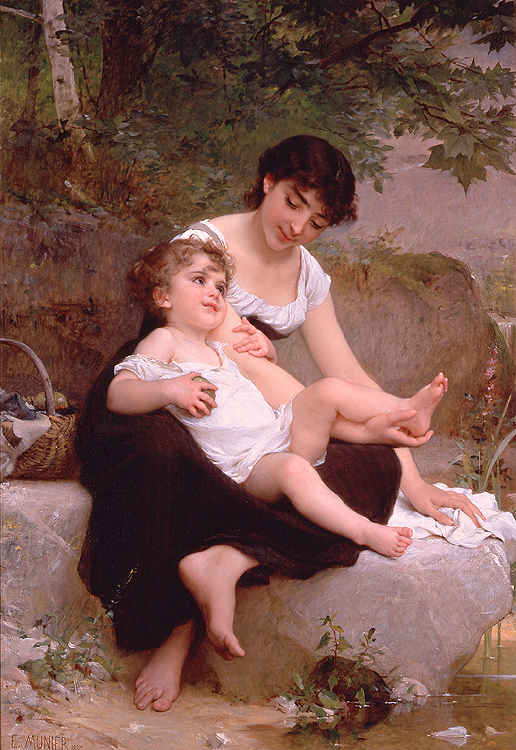
A number of children are tired of their game. They want to learn a new game. So they decide on this. “Everyone must try to find the most beautiful word in the Émile_Munier,_1892_-_Mother_and_childworld,” one suggests and continues: “When father comes home he will decide who has found it.” All agree.
Both boys and girls take pencil to paper, look for a quiet corner where no one can see what they write. They think and ponder and finally put down the chosen word. After the evening meal, father is to make the final decision. After a pause he says: “The most beautiful word is mother.” The little seven-year-old boy has won.

Tell me can you find a word,
replete with music and sound,
adorned with legend and song,
full of smiles and tear drops,
wrought of treasures and fine pearls,
bright with sun rays and moonbeams,
that reflects the sea, with the scent of roses,
yet full of tearful yearning and longing,
search the world, ne’er will you find another
word, as precious, fine and pure as, “mother.”
(Vitnyedi Nemeth Istvan)

This word has its own special sound in every language. It weeps and laments like a distant magic trumpet, it rejoices like the small golden bells in the chimes, and when we pronounce this word our heart is on our lips. There is in it the laughter of childhood, even when spoken by an old man. Is there a creature to whom we are bound more intimately, heart and soul, than mother? Is there another word that can move us more deeply? The longer we live, the more the world unfolds before us, the more we are overcome with the wonder of motherhood. The more we learn about life, the more beautiful and more replete with meaning is the word “Mother.” What is mother?

Thou art the source from which I sprang
Thou art the root from which I grew.
Thou, O mother, art the threshold
Over which I passed into life.
(Bisztray Gyula)

The mother – so I read – is the fire, the children are the light. By the brightness of the light, we know how great is the fire.

The mother is the vine, the children the branches. By the branches we judge the value of the vine.

The mother is the tree of life, the children the fruit. The Savior said: “By their fruits you shall know them.”

The mother is the clock, the children the hands. They point out the time.

The mother is the pen, the children the script. By the writing you recognize the writer.

The mother is the rudder, the children the boat. The boat goes wherever the rudder directs.

The mother is the queen, the children the subjects. Under the scepter of a wise mother, the children are satisfied and happy.

The mother is the great enigma and mystery. the happiness of mankind, the sufferings of mankind vibrate and tremble in that one word, Mother.

[Blessed is the Merciful Mother]

…Is there anyone who can look forward to the Last Judgement with more confidence than a mother? The crown of eternal glory is awaiting her. St. Paul, speaking of woman, says: “She shall be saved through childbearing.” 1 Tim. II, 15. Motherhood is not limited only to giving life of the body to the child; the mother also gives her child the life of the soul, by leading it to God and to Christ. She again becomes its mother by unfolding before her child’s mind the wonders of existence.

In the blessedness promised by St. Paul, we seem to hear the blessedness promised by Our Lord in his sermon on the mount when He said: “Blessed are the merciful, for they shall find mercy.” The hands of mother have brought music as from the registers of an organ, by all the spiritual and corporal works of mercy. She fed the hungry, gave drink to the thirsty, clothed the poor, housed the stranger, visited and tended the sick. She admonished the sinner, counseled the doubtful, instructed the ignorant, consoled the sorrowful, was patient with the foolish and was incessant in prayer for the living and the dead.

The mother is God’s co-worker, the first and the best apostle of the Church. She is a ray of light from the Mother of Mercy.

“Mama’s beauty never dies”…and life on earth will be beautiful as long as there beats a mother’s heart.

– Passages above were borrowed from  The Mother, by Cardinal Mindszenty.

Rekindling a Romance with Reading

Yes, FB keeps me informed about how to keep my kids from becoming bullies or on the five things I should be doing every day as a Catholic, but Father Lovasik’s Hidden Power of Kindness has had a much greater impact. And Intro to the Devout Life has resonated with more profound meaning. Yes, there are blogs I like to follow – and of course, I write for two of them – but truth be told, the majority of my time on social media is spent scrolling through headlines. All in all, much of it has been a mindless waste of time.

cropped-photos-8-7-503

Recently, I found a sheet of paper in an old file cabinet when I was cleaning. On it was a list of books I read in 1999. This was before children when I was meticulous enough to keep track of things like that. Without giving numbers let’s just say that the list was probably five times the length I might accumulate this year, based on my current pace – And yet I still love to read!

Or so I say…

I do believe there’s something to be said for a great story. But these days, those stories are more often found under the auspices of theater, television, or YouTube videos. Wherever you look, more and more information is being transmitted via video. And I have to confess to breathing a sigh of relief when I open a post to find a three minute video rather than a 1,000 words. It’s so much easier to watch than to read! That said, even when we find a topic interesting enough to warrant actually reading an article, studies show that we tend to skim headlines and highlights rather than read word for word. Apparently we’re more interested in getting the main idea than grasping the details.

Our ability to read with any semblance of focus and comprehension has deteriorated significantly with the advent of smart technology. One need only review standardized test scores to understand the consequences to our children’s educations.

I recently saw a headline from The Washington Post that read SAT Reading Scores Drop to Lowest point in Four Decades. ACT Scores have dropped as well, particularly in the Reading and English sections. While schools have increased the time and resources spent in the areas of Science and Math, a focused effort on reading skills – something arguably necessary for a basic standard of living – has been lacking. But we can’t entirely blame the schools. After all, reading is a skill honed by practice. Who’s practicing anymore?

I don’t know about your teens, but mine used to read all the time – right up until they had access to iPods, iPads and iPhones. I am embarrassed to admit what little time any of them has recently spent delving into books that weren’t required reading.

It was bad enough when television was the distraction. But now it’s like we are in a candy store of stimulation 24-hours-a-day. Wherever we turn, there is something to watch. In this environment, it can be difficult to pull our eyes away from all the glitter and glitz for a pastime that requires anything resembling effort.

Speaking for myself, I’ll be the first to admit that my phone has seriously cramped my reading time. As a mother my reading has always been done in five to ten minute increments. But you can’t get more convenient than a smart phone to kill time in small increments. So much for reading. No matter where I am, if I’m looking for a little intellectual stimulation, my phone is all I need. In a split second I can check unread email, pop into my FB feed or Twitter, my news app, Pinterest – there are unlimited things one can find to do on a little phone in the brief span of time it takes to wait in line at the grocery store.

While I’ve never had a lot of focused time to devote to reading, those small increments add up. In the past, busy or not, I could usually get through at least a book or two every month. As I think about all the accumulated moments I spend on my various social media feeds these days I am sick at all the time I’ve wasted. Reading a good book is a calming and relaxing experience that builds the reader both intellectually and spiritually. Reading about current events tends to build nothing but anxiety.

Yes, FB might keep me informed about how to keep my kids from becoming bullies or on the five things I should be doing every day as a Catholic (two posts I glanced through today), but Father Lovasik’s Hidden Power of Kindness has had a much greater impact. And Intro to the Devout Life resonated with more profound meaning. Yes, there are blogs I like to follow – and of course, I write for two of them – but truth be told, the majority of my time on social media is spent scrolling through headlines. All in all, much of it has been a mindless waste of time.

It will be difficult, but I am going to challenge myself to set my phone aside in favor of reacquainting myself with a good habit. Reading.

Summer is coming. Perhaps you’d like to join me in this endeavor? Let’s see what we can do between now and August – when all the fall activities begin. That gives us about 100 days to focus on reading and 100 days to put social media on the back burner. Maybe not altogether, but why not place it further down the priority list?

There is no question this will be a sacrifice. My phone has become like an extra appendage. I can only imagine how difficult it will be to break the habit of turning to it every time I have a minute to spare. But I’m going to give it a shot! How about you? Come on! Let’s dispense with making our phones a primary source of entertainment in favor of something better (Or perhaps for you the problem is TV or a computer?).

What to read? Grab a spiritual reading book. If you’re looking for a book club, hop on over to spiritualdirection.com and join us – we just started reading Life of Christ and it’s already amazing!!

Mark your calendars for Monday, August 1, 2016 – let’s meet here on that date and chat about what we’ve read and whether we’ve made a change for the better!

Happy Reading!

Three Books and a Revelation: What Ayn Rand Got Wrong

There is no love without sacrifice. And in a political system, sacrifice without love becomes a distorted perversion of the sacred, used by the few to control the many. 

Book Number One

Not too long ago, I read Atlas Shrugged by Ayn Rand for the first time. A heroin of many conservatives, Rand wrote Atlas Shrugged specifically to demonstrate the foolishness of any political system where the Atlas_Shrugged_4887943033means of production are managed by the state. As a freedom-loving, American capitalist, I have to say that through most of it I was riveted and cheering Rand on as she masterfully illustrated that capitalism is by far the best economic and political system around. It’s not that I thought her book was perfect, but she definitely made her point.

A staunch advocate for capitalism, Rand, herself, escaped communism as a young adult and was determined never to return. Her mission as a writer was to decry the evils of government control and to extol the virtues of capitalism as well as the importance of individual freedom. Having experienced the former in the early 1900’s – she was a high school student in Russia during the Bolshevik Revolution of 1917 – Rand considered the resulting state power to be absolute evil.

Lately it seems the political climate in the United States is not completely alien from that of Russia in the early twentieth century. Governmental corruption is rampant, as is the inefficiency of the huge bureaucracy which is the federal government. Like the Russians on the cusp of 1917, Americans are war weary and there has been great unrest regarding a lack of opportunity, low wages and disparate conditions.

Over the last eight years these problems seem to have intensified and multiplied or, if nothing else, have been magnified to the nth degree. Issues of race, creed and economic disparity are more paramount today than at any time since the Civil Rights Movement reached its height in the 50’s and 60’s. Daily demonstrations receive massive media attention. Just this week over 400 protesters were arrested at the capital building – civil disobedience is on the rise and tensions are high.

Needless to say, in this climate a shout-out for capitalism in the form of a novel was for me a light in the darkness. A herald to a truth that has been rabidly twisted and distorted over the past generation. Particularly in our country, as concerned citizens seek answers to the problems they witness all around them. Many, especially the young, are willing to try an alternative to the capitalism they’ve long been taught is the source of our deepest cultural and economic problems.

So roughly 800 pages into it, I was all-in for a book illustrating the virtues of capitalism. And then I reached the last, roughly 70 pages. This was where things got crazy, as Rand presents the reader with a complete diatribe of her belief system through a speech given by one of the main characters of the book. During that speech, Rand (through the voice of John Galt) throws religion out with big government.

“Selfishness – say both – is man’s evil. Man’s good – say both – is to give up his personal desires, to deny himself, renounce himself, surrender; man’s good is to negate the life he lives. Sacrifice – cry both – is the essence of morality, the highest virtue within man’s reach…

…”It is your mind that they want you to surrender – all those who preach the creed of sacrifice, whatever their tags or their motives, whether they promise you another life in heaven or a full stomach on this earth.”

Whoa!! So this is why I’d vaguely remembered hearing that Rand’s views are not compatible with the Catholic church. Religion is nothing like communism or socialism. While those systems strive to serve the lowest common denominator by denouncing individual aspirations and self-determination, our Faith asks that we take advantage of our God-given freedom to serve all with love – through our own will, not by mandate. Being asked to serve by our Heavenly Father is not at all comparable to being obligated by law. When I reached the end of the book, I was deeply disturbed that after 800 pages of getting it (for the most part) right, Rand could end on such a horribly depraved note.

But shortly after reading Atlas Shrugged, I realized that Rand’s distorted view of religion had germinated through seeds of deception planted in the poisonous soil of her youth. A riveting book about the lives of citizens in North Korea both helped me to understand Rand’s confusion, and spurred some of my own.

Book Number Two

The book was Nothing to Envy: Ordinary Lives in North Korea. Written by a journalist who captured in minute detail the day to day lives of six North Korean citizens who eventually escaped to freedom in South Korea, the book illustrates the horrid conditions of many in a country that strains to present itself as a utopian society. Ordinary citizens watched loved ones tortured and killed. They ate rats in order to stay alive. Daily lives were nightmares from which citizens could find no escape.  Oppressed and desperate, each of these individuals risked life and limb just to get out from under the incredible burden of communism.

The most disturbing and discomforting part of this book was the sacrifice lauded by the government. The talk from their leaders sounded startlingly familiar. These were the themes I hear in Mass every Sunday. That I read in Sacred Scripture every day. They were the profound ideals offered by the saints that have gone before us. Here’s just one small example of the themes saturating North Korean culture through the hand of their omnipotent leader:

Every town in North Korea, no matter how small, has a movie theater, thanks to Kim Jong-il’s conviction that film is an indispensable tool for instilling loyalty in the masses…The films were mostly dramas with the same themes: The path to happiness was self-sacrifice and suppression of the individual for the good of the collective. (emphasis mine)

Sacrifice? Suppression of self? These are things I’d read for years in the great classics of our Faith. This is what we teach our children. And yet, these sentiments came from an evil, communist dictator. As someone who escaped the USSR, no wonder Ayn Rand did not believe in God. If USSR was anything like North Korea, the government presented itself as a god-like figure. Trusting in THE God would become a an almost insurmountable hurdle once a counterfeit had been exposed for the corrupt, self-serving charlatan that he is. There could be no greater impediment to faith in the One True God than the fraudulent benevolence claimed by the powers that be in those godforsaken countries.

I must admit. When I finished Nothing to Envy, I was perplexed. I was confused. While I didn’t doubt the existence of God, I did wonder how something so good and something so terribly evil could sound so similar? What was I missing?

Book Number Three

Enter Life of Christ by Fulton Sheen (which we just began reading in our book club at spiritual direction.com – check it out). In the first couple of pages, Sheen addresses this very subject. In a few sentences he brings clarity to my confusion. His comments illustrate the error inherent in Rand’s philosophy:

“Communism has chosen the Cross in the sense that it has brought back to an egotistic world a sense of discipline, self-abnegation, surrender, hard work, study, and dedication to supra individual goals. But the Cross without Christ is sacrifice without love. Hence, Communism has produced a society that is authoritarian, cruel, oppressive of human freedom, filled with concentration camps, firing squads, and brain-washings.” – Fulton Sheen, Life of Christ (p. xxv)

There is no love without sacrifice. But in a political system, sacrifice without love becomes a distorted perversion of the sacred, used by the few to control the many. No version of this is the solution to our nation’s problems. True love offered as true sacrifice is the only real solution to what ails us. And it cannot be found in any law, mandate or government system.

Joy – That Elusive but Necessary Virtue

Clearly those who knew Chiara witnessed something very special. People are starving to experience the joy of Christ. Imagine what the world would be like if all Christians were brimming with it.

For Easter, I received the long-awaited biography, Chiara Corbella Petrillo: Witness to Joy. I say long-awaited, and yet Chiara died just less than four years ago. But her story has spread like wildfire. In fact, I first heard about her two years ago at a retreat withchiara corbella the Apostles of the Interior Life in Kansas City. The talk was an unbelievably inspirational meditation on Joy. 

Only two years after her death, her story had traveled over 5,000 miles. Amazing. Since then it has no doubt traveled the world.

At first glance, Chiara’s story is quite tragic. By the young age of 28, she had given birth twice to two beautiful children, only to lose each of them within 24 hours. Shortly thereafter, she and her husband were blessed with another baby, only to learn early in her pregnancy that she had cancer. Immediately after they gave birth to a healthy baby boy, Chiara had to undergo major surgery to remove the tumor. But their story didn’t stop there. Shortly after her surgery, Chiara and her husband, Enrico learned that her condition was terminal, and at the time of this photograph, her body was completely ravaged with cancer, even taking the sight from her right eye. She passed from this world shortly thereafter.

Now do you see what’s so compelling about this woman? With all that she had lost, and with all that she stood to lose, her joy was – is –  captivating.

Chiara was a living image of the Word of God:

In this you rejoice, though now for a little while you may have to suffer various trials, so that the genuineness of your faith, more precious than gold which though perishable is tested by fire, may redound to praise and glory and honor at the revelation of Jesus Christ. Without having seen him you love him; though you do not now see him you believe in him and rejoice with unutterable and exalted joy (1 Peter 1:6-8).

This is the kind of joy we are called to live as Christians!

So if we are supposed to have this kind of joy, why is Chiara so inspirational?

Could it be because many of us can’t seem to bring ourselves to be joyful in the face of the menial inconveniences of daily life – late alarm, cold coffee, cold weather, hot weather, busy children, too little sleep – let alone summon a smile when tragedy strikes?

What is it about those for whom it seems second nature to look at the glass half full? How do they do it? How do they live out their Faith with such grace?! Do they just FEEL so full of joy that they can’t seem to contain the smiles, the laughter, the overall good nature?

For some of us, this is hard to imagine.

Were they born that way?!

Most of us think there may be a bit of truth to that one. Case in point – My 15-year-old son. Rarely is he seen without a smile on his face (He’s also rarely seen sitting still, but that’s another subject altogether.). There is nothing he enjoys more than making someone smile – he actually told me once that it makes his day. Last Saturday, he laughed when he shared that another employee where he works walked over to where he was busy running the cash register and told him, “I’m just going to stand here and see if some of your positivity will rub off on me.”

I have to admit, I’m a little jealous. I spend a decent amount of time examining traits I admire in others, and thinking, “It is not fair that ‘So and So’ is naturally  ________, while I have to work so hard at it!” Forget about the unfair distribution of wealth – what about the unfair distribution of virtue?!

While such natural traits seem ridiculously unfair, don’t think the rest of us are off the hook. It may be a common excuse on earth, but I don’t think “I was born that way” is going to play well when we stand before Justice Himself, trying to explain our brooding natures.

So what about us? What about the great majority of people who were not born with joy shooting through our veins? Maybe we tend to be caught up in our problems and can’t seem to get out of ourselves long enough to make any real attempts at sustained joy. Is there no hope for us?

Well, I’m sure those of us who have to work a little harder can learn from those who seem to have an easy time of things.

My son, for example, has been blessed with a few characteristics that I am willing to bet are common to all joyful people. First, he is grateful. He doesn’t seem to take things for granted, but rather makes a point to enjoy every conversation, every song, every joke, every job – every moment. Second, he tends to let things run off his back and is quick to forgive. Third, he cares about others. Fourth, he gives his all. He spends very little if any time wondering whether he “fits in.” Rather, he dives in head first and goes for broke. He’s not about getting noticed – whether in school, sports, church, or anything else. Sure – he appreciates accolades. But really, he’s about living. And when he is busy living, he gets noticed because people are naturally drawn to his personality.

These are things we can all work on – gratitude, forgiveness, caring, perseverance. By growing in these areas, perhaps we will find some of that joy that seems so elusive to many of us.

And that’s something else to think about. When we notice those people who are brimming with joy, how do we know that they were born with it? It’s easy for me to think they were – makes for a good excuse on my part. But could it be that they wake up every day with a desire and determination to exhibit the virtue of joy, whether they feel it or not?

Maybe joy is like love – not so much an emotion that we exhibit only when we feel like it, but a verb – something we do because we will it, even when we don’t feel it on the inside.

Take the example given by Servant of God, Elisabeth Leseur in her Secret Diary. In memoriam, her husband says of her,

She was thoroughly gay and took care to be so always; she even considered gaiety a virtue. In her final years, she remembered gladly that St. Teresa of Avila…recommended her sisters to be always gay. Her lovely laughter rang out at every opportunity, with its fresh, frank sound.

More than anything, we must remember that God is the source of all virtue, joy included, whether it is imbued upon birth, or developed over time. For Elisabeth, joy was clearly a discipline that she sought to develop through God’s grace in her daily life. Perhaps we should borrow both her resolution and prayer to emulate in our own lives:

One resolution that I have taken and begun to put into practice, notwithstanding physical and moral weakness, is to be “joyful” in the Christian sense of the word, as joyful as I can be toward life, toward others, and even toward myself. My God, help me, and “Thy Kingdom Come!”

But why all this talk about joy? Is it really necessary that we are a joy-filled people? Well, just look again at Chiara. Isn’t it our goal as Christians to spread the light of Christ? Through Chiara’s life and beautiful death have come such amazing grace. In her biography, the priest who spoke at her funeral writes,

The desire to know Chiara was immediately very strong, and at her funeral, when I said at the end of my homily, “If you wish to know more about Chiara, come ask us,” people responded by the thousands.

Clearly those who knew Chiara witnessed something very special. People are starving to experience the joy of Christ. Imagine what the world would be like if all Christians were brimming with it. If only we could harness that elusive virtue, we could truly serve as His witnesses, for we would

…show triumphantly that all the human lights collectively cannot obscure the pure light of God, but gain, on the contrary, additional radiance from it. – Elisabeth Leseur, “Work to Bring Christ to Others”

23 Great Movies to Inspire Sacrifice

They say that visual images can become powerful conduits of change. Maybe a few great movies can set the stage. Rev us up. Inspire our wills to engage in something greater than ourselves. And if not, well, at least we’ll have enjoyed two hours of great entertainment!

409px-CasablancaPoster-Gold

Sacrifice is about giving of oneself for another.  Whether that other is God, country, family, mankind or even some worthy cause, there is something so powerful about such a visible and even painful act of love.

In our world, sacrifice is difficult to offer. Perhaps because of all the entitlements we enjoy (Have we become weak in our consumption?), or perhaps because relativism reigns and love has become so intertwined with our fleeting emotions that it is no longer construed as worthy of sacrifice.

Whatever the reason, the world is sorely in need of an increase. Could a little inspiration spur us on? They say that visual images can become powerful conduits of change. Maybe a few great movies can set the stage. Rev us up. Inspire our wills to engage in something greater than ourselves. A few heroic examples may just inspire in us the courage, discipline or the will to stand tall.

And if not, well, we’ll have enjoyed two hours of great entertainment!

A couple of notes about the list: First, I know there are plenty of saint stories that demonstrate heroic sacrifice; but I opted to include two of my absolute favorites. And frankly, I’m sure there are plenty I’ve never seen, so I’m not even going to try to pretend to be an expert here! The same is true for war movies. I included a few; but I’m sure there are many more that you could add to my list.

Additionally, I did not include any movies about sacrifice for one’s own benefit. For example, one of our favorite movies is Rudy; but as inspirational it is, every ounce of sweat Rudy spills is in pursuit of his life’s dream of playing football for Notre Dame. While his goal is laudable, it is not a sacrifice for someone or something outside of himself. And all those other great “sport” movies? I felt the same about them – although my husband and son both declared that they are all about sacrificing for the good of the team. Maybe, but if I were to include all the inspirational movies about athletes, this list would be virtually infinite.

Most important to note: This list is simply meant to be a conversation starter. I am definitely not a movie guru! If you think of any greats that are missing, please comment and add them to the list!

For God

(OK. The first two movies are about God’s sacrifice for us; but I couldn’t think of a catchy title for that category.)

  1. The Passion (2004) – No explanation necessary. His Passion says it all.
  2. The Gospel of John (2003) – Masterful work of art depicting the entire Gospel with no additions.
  3. Mary of Nazareth (2014) – This movie walks with Mary through the life of Christ; most notable is her great joy, despite all that she must suffer. Everything she is and everything she has (including her Son), she offers to God.
  4. A Man for All Seasons (1966) – Amazing demonstration of courage in the face of great pressure to conform to the will of an earthly king.

For Country

  1. Les Miserables (2012) – This arguably could be listed under family as well – Jean Valjean’s sacrifice for Fantine and her daughter are so integral to the movie that they take center stage at his death. But with the huge overtones of sacrifice for love of country and the score that highlights that aspect of the movie, I opted to list it here. This has to be my all-time favorite movie. I could watch it over and over and never tire – especially of the final scene.
  2. The Patriot (2000) – I’ve heard that this movie is not at all historically accurate; but there must be some element of truth to the grueling nature of the sacrifices offered by early Americans. We saw this movie for the first time only recently, and while it was violent, I definitely found it inspirational.
  3. Air Force One (1997) – Don’t we all dream of a Commander in Chief who would be so courageous and honorable?! And who doesn’t love Harrison Ford as a hero?! I could have included his others here as well – Patriot Games and Clear and Present Danger. Now that I think about it, perhaps the Star Wars series should have been on my list too.
  4. Casablanca (1942) – Great classic and one of the most quoted movies ever! When I was younger, I always wondered why in the world this movie ends as it does. Now I know – sacrifice – and I love the movie all the more.
  5. We Were Soldiers (2002) – Mel Gibson is such an honorable and prayerful leader in this movie. This is one war movie that demonstrates the sacrifice of both our men in uniform and their wives who held down the forts at home, never knowing when or if their husbands would return.
  6. For Greater Glory (2012) – This one shows how saints are made.
  7. Braveheart (1995) – Confession – I haven’t actually seen this movie. But I’ve heard about it forever and it’s on my short list. Ask me after this weekend and I’ll let you know whether I think it lives up to its reputation.
  8. Red Dawn (Chris Hemsworth)(2012) – Or you could watch the first version from 1984 with Patrick Swayze. – The concept of this movie is a little frightening these days considering the state of the world.

For Family

  1. It’s  a Wonderful Life (1947) – Love, love, love it! Sadly, I have actually met people who haven’t seen it. What better way to demonstrate the power of a single life?!
  2. Cinderella Man (2005) – Next to Les Miserables, this is my absolute favorite movie! What a wonderful depiction of a beautiful marriage and a devoted father.
  3. Life is Beautiful (1998) – My husband saw this on accident midway through one night and had no idea what it was called; but he assured me it was one the best movies he’d seen. We did the research and rented it right away. To have such a positive outlook in such horrendous circumstances for the sake of one’s son – I only wish I demonstrated such joy and optimism in the wake of something as minor as a spilled glass of milk!
  4. The Prize Winner of Defiance, Ohio (2006) – Greatest movie ever about perseverance in a difficult marriage. Despite alcohol abuse and irresponsibility, this marriage survives – efforts were not not 50/50, but 100/0 for many years. I loved this woman’s example of joy and determination.
  5. Bella (2007) – Choose life.
  6. Pinocchio (1940) – Yes, it’s a children’s movie. But I am reading the book to my little ones right now (again) and this is such a biblical book! Gepetto is quite a father (Jesus?). And through his sacrifice, Pinocchio (who represents you and me) learns what it means to love (i.e sacrifice).

For Mankind

  1. Mother Teresa (Olivia Hussey) (2006) – No explanation necessary.
  2. Schindler’s List (1993) – Here we have an opportunist who learns the value of human life – and then sacrifices to protect it.
  3. The Bells of Saint Mary’s (1945) – While there are other plot lines, the entire movie showcases the conversion of Mr. Bogardus, a selfish business man who becomes an extravagant giver.
  4. Amazing Grace (2007) – The amazing story behind the abolition of slavery in Great Britain.
  5. No More Baths (1998) – Our family has loved this movie for years.  Essentially it’s about a group of kids who find an unusual way to stand together and make a difference.

The Gift of Sacrifice

This is God’s gift to us. The opportunity to unite our sufferings, our frustrations, our inconveniences, to His in Love. Throughout our lives as Children of God, we are offered an infinite number of “rungs” which to climb upon the ladder of the Cross. When taken in love, the result is beautiful, both in Heaven and on earth.

“Greater love hath no man than to lay down his life for his friends” (John 15:13).

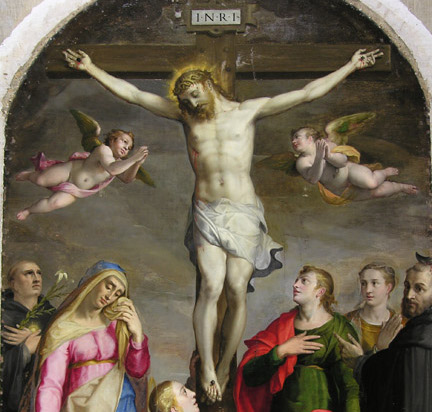
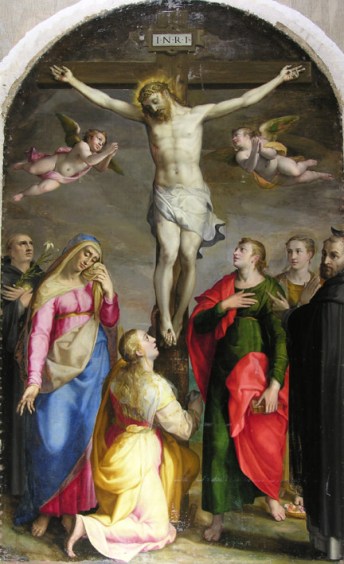
We speak often of the gift of redemption that Christ offers us via His death on the cross. But through His Passion and death, He gives us another gift as well. One that we often overlook. He offersSabatini_santi crucifixion us an opportunity to experience first-hand that “greater love” of which He speaks. Not through His sacrifice. But through our own.

Of all the imaginable plans for redemption that one could have conceived, it seems the one God chose is most peculiar. After all, His only Son didn’t come into the public realm until His 30th year, he surrounded Himself with devoted friends, walked with them, talked with them, and confided in them over the course of three years, only to allow leaders of the day to mock Him, scourge Him, strip Him of His dignity, nail Him to a cross in a most humiliating way and leave Him to hang for three hours until he breathed his last.

What about that makes sense? As a Protestant, I must admit I didn’t ask very many questions. I just accepted that He died, so I didn’t have to.

But after spending some time contemplating the cross, I began to think I wasn’t seeing the whole picture. I began asking. Thankfully, our Faith offers answers. And they are more profound and beautiful than I could have ever imagined.

My greatest question had to do with His manner of death. We understand that Christ redeemed us from the absolute misery and degradation of sin. But why in this way – through a humiliatingly public and  torturous death which reached its climax atop a mountain, upon a crude and rugged cross?

Why did Christ have to make redemption such a profound and gruesome process?

Most likely His goal was to give us an example to follow:

A new commandment I give to you, that you love one another; even as I have loved you, that you also love one another. By this all men will know you are my disciples, if you have love for one another (John 13:34-35).

With those six little words, “even as I have loved you,” Christ gives us everything.

By virtue of His cross, Christ re-opened the gates of heaven. Gates that had been closed for thousands of years as a consequence of the first sin. He demonstrated for us the power of that cross. And He calls us to follow his example:

“If any man would come after me, let him deny himself and take up his cross and follow me. For whoever would save his life will lose it, and whoever loses his life for my sake will find it” (Matthew 16:24-25),

This is that narrow gate about which we hear so often (Matthew 7:13).

Love is not a a pile of sentimental poems or a confetti of rose petals streaming from the heavens.

In reality, love looks a lot like suffering. It can be painful. It can be heart wrenching.

Indeed, love is a sacrifice.

A sacrifice first wrought by Christ, who came to show us The Way.

According to Pope Benedict XVI in Jesus of Nazareth: Holy Week,

He has truly gone right to the end, to the very limit and even beyond that limit. He has accomplished the utter fullness of love – he has given himself.

First Christ defined love.

And then He asked us to practice it.

You shall love the Lord your God with all your heart, and with all your soul, and with all your mind. This is the great and first commandment. And a second is like it, You shall love your neighbor as yourself” (Matthew 22: 36-39).

For God, love = sacrifice.

And what is a sacrifice, but suffering, wrapped in a beautiful package and offered as pure gift?

Through our participation in the Body of Christ, we have the opportunity to unite our suffering with His, as we truly are One Body – this is not mere concept and symbolism. Rather, the very gift of Self that Christ has given us is the grace that helps us to love as He has loved. As Paul explains, through our participation in The Body, we have the privilege of participating in redemption:

Now I rejoice in my sufferings for your sake, and in my flesh I complete what is lacking in Christ’s afflictions for the sake of his body, that is, the church….(Colossians 1:24)

Paul  bids us to offer ourselves as well, to worship God through our own participation in this new concept of sacrifice that Jesus has introduced by the cross:

I appeal to you therefore, brethren, by the mercies of God, to present you bodies as a living sacrifice, holy and acceptable to God, which is your spiritual worship.(Romans 12:1).

Benedict XVI expounds on this concept of sacrifice:

…it means the offering of one’s whole existence that must be penetrated by the word and must become a gift to God. Paul, who places so much emphasis on the impossibility of justification on the basis of one’s own morality, is doubtless presupposing that this new form of Christian worship, in which Christians themselves are the “living and holy sacrifice”, is possible only through sharing in the incarnate love of Jesus Christ, a love that conquers all our insufficiency through the power of his holiness…

…the greatness of Christ’s love is revealed precisely in the fact that he takes us up into himself in all our wretchedness, into his living and holy sacrifice, so that we truly become “his body.”

Later, he concludes,

In living out the Gospel and in suffering for it, the Church, under the guidance of the apostolic preaching has learned to understand the mystery of the Cross more and more, even though ultimately it is a mystery that defies analysis in terms of our rational formulae. The darkness and irrationality of sin and the holiness of God, too dazzling for our eyes, come together in the Cross, transcending our power of understanding. And yet in the message of the New Testament, and in the proof of that message in the lives of the saints, the great mystery has become radiant light.

This is God’s gift to us. The opportunity to unite our sufferings, our frustrations, our inconveniences, to His in Love. For the good of ourselves; for the good of the body of Christ, that is, the Church.

Throughout our lives as Children of God, we are offered an infinite number of “rungs” upon which to climb as we progress up the ladder of the Cross. When we ascend in love, the result is beautiful, both in Heaven and on earth.

When you look at a crucifix today, thank God for the gift of sacrifice.

And ask for the grace to answer His call.

Seven Words for Seven Days: Meditations and Sacrifices for Holy Week

Why not make this Holy Week the greatest one yet? Don’t worry. You needn’t drop everything and spend the week in a monastery (lovely thought, but not practical for most of us). Instead, spend some time meditating on the seven last words of Christ. Easter is seven days from now – just enough time to contemplate each. But if you read this later in the week, begin wherever you find yourself. In the interest of space, my words are few, meant only to inspire further contemplation on The Word.

We have come to the last stretch of Lent. Now we begin our journey through Holy Week, the most sacred week of the year, culminating in the magnificent celebration of the Resurrection on Easter Sunday.

it is finishedSo how fruitful has your Lent been thus far? Have you taken this time to repent of your sins and wring your soul of all its wretched ugliness? Have you purified your intentions, discarded your attachment to the material and focused your eyes on the goal of heaven? Have you taken additional time for prayer, fasting and almsgiving?  For some additional spiritual reading? Or do you sit on the cusp of Holy Week wishing you’d given just a bit more of yourself over the past several weeks?

Often we begin our Lenten journey with great intentions, full of courage regarding the road ahead. We are determined to tackle that narrow path. We seek God’s grace and we truly believe that we can do all things through Christ who strengthens us (Philippians 4:13). We set our sights far before us, planning to thrust off the world and claim our inheritance as children of God. But as the journey takes its toll, temptations stand tall and our view of heaven is obstructed once again. Earthly commitments tend to get in the way, and our resolve fades as the days grow long and the light at the end looms dim.

But Holy Week is a new beginning. Regardless of how we’ve faired in the desert, Christ asks us to walk with Him as He makes his way through Jerusalem and enters into His paschal mystery. What a privilege to solemnly unite ourselves to His Way for the final trek of his journey.

Why not make this Holy Week the greatest one yet? Don’t worry. You needn’t drop everything and spend the week in a monastery (lovely thought, but not practical for most of us). Instead, spend some time meditating on the seven last words of Christ. Easter is seven days from now – just enough time to contemplate each. But if you read this later in the week, begin wherever you find yourself. In the interest of space, my words are few, meant only to inspire further contemplation on The Word.

Sunday: “Father, Forgive them, for they know not what they do.” — Luke 23:24

Like Christ, who forgave the most evil of actions and actually prayed for His persecutors, take some time today to pray for someone who has persecuted you. Perhaps you don’t hold a grudge on the surface; but somewhere deep in your heart have you hardened yourself toward someone who just keeps on pushing – your spouse? Your teenager? Your best friend? Today is the day to release those who continue to sin toward you.

Action: Consider all the sins you’ve committed. Acknowledge that you would be lost without Christ’s grace. Go to Confession if at all possible; and regardless, pray an Act of Contrition. Then offer a penance today by denying yourself one of your favorite daily habits.

Monday: “Truly, I say to you, today you will be with me in Paradise.” —Luke 23:43

Remember that Christ showed mercy to even the most lost of souls. Extend yourself to someone who does not deserve it. And remember that before God, we are not more deserving than the lowest of the low who stands before us. We must love like Christ loves, that (like the good thief on the cross), we, too, might join Him in Paradise.

Action: Contemplate heaven. Think of your absolute favorite thing on this earth; and then consider it as nothing compared to the eternal joy of our Heavenly Father’s house. For others – pray for the poor souls in Purgatory. Consider adding the Saint Gertrude Prayer to your daily routine. For yourself or for a loved one – take the steps necessary today to obtain a plenary indulgence.

Tuesday: Jesus said to his mother: “Woman, behold your son.” Then he said to the disciple, “This is your mother.” — John 19:26-27

Mary is your mother. Just stop and inhale that thought for a moment. The Mother of God is your mother too! And just as your earthly mother desires only what’s best for you, your heavenly mother desires only to unite you to her Son, and will do whatever it takes to lead you to Him.

Action: Pray the rosary today. Contemplate the Sorrowful mysteries and spend time thinking both of Christ’s suffering for us, and also of the Sorrows of Mary that are part and parcel of her perfect motherhood.

Wednesday: “My God, my God, why have you forsaken me?” — Matthew 27:46 and Mark 15:34

Sometimes we feel completely abandoned by God. But even in your darkest hour, you can rest assured that “the Lord your God goes with you; he will never leave you nor forsake you” (Deuteronomy 31:6). There is no greater obedience than that which stems from trust. And we have God’s word that we can trust Him, “For I know the plans I have for you,” declares the Lord, “plans to prosper you and not to harm you, plans to give you hope and a future” (Jeremiah 29:11).

Action: Pray the Divine Mercy Chaplet today. If you haven’t already done so, consider making it part of your daily routine, . For a great discussion on God’s gift of Divine Mercy and how it is playing itself out in our world today, read The Second Greatest Story Ever Told by Father Michael Gaitley.

Thursday: I thirst. — John 19:28

As Blessed Mother Teresa often said, Christ’s greatest thirst is for souls. He doesn’t long for just any soul. He longs for your soul. He desires nothing more than to be united with you forever in His heavenly kingdom. And the most beautiful part? At your innermost core, you long to quench His thirst, for “As the heart longs for flowing streams, so longs my soul for thee, O God” (Psalms 42:1). Christ longs for us. We long for Him. A perfect match, disparaged only by the brokenness and obscurity of sin.

Action: When Mother Teresa was young, the very poor would knock on her family’s door asking for food. Her mother used to say, “Teresa, go and make a sandwich for Jesus.” Quench His thirst as did Blessed Mother Teresa. Today, offer your time, talent and or treasure to serve the poorest of the poor in your community. Also, deny yourself a meal today and offer your sacrifice for the poor among us. Do not simply give. Give with absolute joy and thanksgiving, recognizing those whom you serve for who they are – Christ, in your midst.

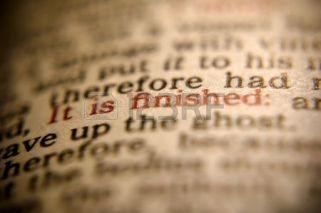
Friday: They put a sponge soaked in wine on a sprig of hyssop and put it up to his mouth. When Jesus had received the wine, he said, “It is finished;” and he bowed his head and handed over the spirit. Gospel of John 19:29-30

Oh, the thousands of pages that have been written to analyze these three words. Yes. It is finished. At the most simple level, His job is complete. We have been redeemed. Now, the question – as we force ourselves to contemplate his blood-soaked body, hanging helplessly upon the cross –  How are we going to respond to His gift?

Action: Attend The Stations of the Cross today, on this, the saddest and yet most beautiful day of the year. The Bible tells us that “greater love hath no man than this, that a man lay down his life for his friends” (John 15:13). Is there someone you would like to bring back to Christ? In addition to your Lenten fast, offer a particularly difficult sacrifice today for that person’s soul. Whether it be giving up coffee, complaining, or something else that reminds you of your sacrifice several times today, you will never regret offering such a loving gift. God hears your prayers and will not leave you alone. Elisabeth Leseur spent years offering prayers and sacrifices for the conversion of her atheist husband, even offering her life in the end. Her sacrifices were rewarded when her husband became a practicing Catholic, and then a Dominican priest.

Saturday: Jesus cried out in a loud voice,  “Father, into your hands I commend my spirit.” Gospel of Luke 23:46

At the end of your earthly life, we, too, will commend our spirits into God’s hands. It should be our greatest desire to do this with peace and joy, rather than fear and trepidation. Choosing daily to unite our wills to God’s, will bring great comfort, for we will never be unsure about what to expect when our time comes.

In handing your life over to God, you can be confident that upon your death, you will hear the words, “Well done, good and faithful servant; you have been faithful over a little, I will set you over much; enter into the joy of your Master” (Matthew 25:23). For you, Easter Sunday will be a reminder of the Hope that gives us the power to trust without fear.

Action: Spend an hour in adoration today. Contemplate His will. Know that in your sacrifice, you are uniting yourself to Him. Prepare yourself for the Resurrection that is to come, and think of the joy that will surpass all words when, upon leaving this earthly life, you find yourself in the arms of your Heavenly Father.

The root of all good works is the hope of the resurrection; for the expectation of the reward  [moves] the soul to good works. – Saint Cyril of Jerusalem


Note: If you like what you just read, please click the “follow” button to receive thought-provoking and action-oriented bi-weekly posts promoting the virtue of sacrifice. 

The BEST Thing You Can do For Your Children

As Christians, we are called to
be Christ to the world. Where is that calling more important than at the center of our own world, in our own home, with the person closest to us?

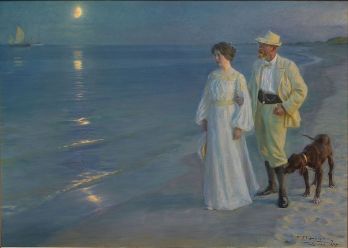
There are arguably a lot of things you can and should do for your children. You should teach them about God. You should teach them to be kind to others. You should make sure marriage paintingthey get a great education, teach them to be independent, endow them with a great work ethic, teach them how to manage money…and the list goes on and on.

But the absolute best thing you can do for your children?

Love your spouse.

And loving your spouse is not a nice, feel good phrase. It means sacrifice. Loving your spouse literally means laying down your life for your spouse day after day, for the rest of your life, as Christ laid down His life for you.

As Servant of God, Father Flanagan once said,

Isn’t sacrifice the real measure of love? Genuine love in married life comes only to two people who are mutually and supremely unselfish.

There is no greater gift you can give to your children.

That’s right. Love your husband even if he tends to be insensitive and careless. Love your wife, even if she can be controlling and a bit of a nag.

Love is a decision. It is an action. It is not merely an emotion.

Love is not about a bitter martyrdom. It’s not about actions that rest only on the surface while we allow our hearts to harden and rot on the inside. Love is about reframing our thoughts toward the good of another. If anything, it is a martyrdom of grace and generosity – of extreme care and consideration that pours forth from heart, mind and soul.

We must always assume the best, always give the benefit of the doubt, always go the extra mile. Not only to be kind, but to think kindly.

As Bishop Robert Barron has said many times,

“Love is to will the good of the other as other.”

Love is not about me. It is not about my feelings. It is about my spouse. God has ordained me as a wife for one purpose. That is, to help my husband get to heaven. And by virtue of that union, together it is our calling to lead our children there as well.

As Christians, we are called to be Christ to the world. Where is that calling more important than at the center of our own world, in our own home, with the person closest to us? The one with whom we are united as one until we reach the end of our earthly journey?

There is a great line in the movie The Sound of Music, shortly after Captain von Trapp and Maria are married, when Max, a close family relative, tries to get Maria to change the captain’s mind about allowing his children to sing in a festival. While Maria supports the idea, her husband has just made it clear to Max that he is absolutely against it. Her answer?

“Max, I can’t ask him to be less than he is.”

Consider the beauty in that simple statement. Her response is not, I will talk with him. It is not, Sometimes he can be so stubborn. It is not a roll of the eyes. Her simple statement implies a solemn belief that God rests in the soul of her husband and that he is good.

Words to keep in mind when we are tempted to question our spouse’s actions or opinions.

What does all this love, honor and respect do for your children? It teaches them that love is an act of the will, rather than a fleeting emotion. When they see you treat your husband, your wife (their father, their mother) with great kindness in all circumstances, with respect no matter your mood, with great deference regardless of the demands of others, they learn that love is an act of the will. This enables them to learn to pay little heed to their fleeting passions and be mindful of using their own wills to love.

When they witness the love of Christ through the unwavering devotion of their parents –  from their earliest days as they soak in the world, through adolescence, when they begin to question your decisions, and into adulthood when they begin to realize that life can present great challenges and complex choices – they will have built a foundation that will carry them through every storm. They will know their place in the world and will feel secure.

I know there are so many illustrations of this kind of love; but I’ll leave you with a personal example that has inspired me greatly over the years.

My husband was one of nine children. He grew up on a dairy farm in Northeast Nebraska, in a small farmhouse with four bedrooms, one bathroom and one corded telephone. There was a lot of work. And there was a lot of love. While they were growing up, a simple little plaque hung on a wall in the living room. It read,

The best thing a father can do for his children is to love their mother.

My husband’s father did just that.

And the nine children who witnessed their parents’ relationship?

They have tried to follow suit.

In a world where 50% of marriages end in divorce, by God’s grace, all nine of their children are still married – to their first and only spouse. The longest marriage has lasted over 30 years and the shortest just under 20.

The example of love witnessed by these nine children has given them more than all the riches in the world could have possibly provided them. And by extension, that example has flowed through to enrich 36 grandchildren and eight great-grandchildren as well.

Of course, I’m sure my in-laws would attest that they were not perfect. Even great relationships falter. As human beings, we will fall again and again. But through the grace of God we can seek forgiveness and begin anew. Marriage is about mercy. It is about perseverance.  It is about a commitment to the pursuit of the good.

Regardless of the missteps and the mistakes, loving your spouse is still undoubtedly the BEST thing you can do for your children.

When I converted to the Catholic Church, my husband went through RCIA (Rite of Christian Initiation of Adults) with me. In one of the early sessions, the priest asked each of us to tell him what picture came to mind when we thought of God. My husband immediately said, “My parents.” 

His answer gets to the heart of the matter. By loving our spouse through good times and bad, we become a picture of Christ they will carry in their hearts forever. We enable them to invite Him into their lives with open arms, because He is as familiar to them as the love they witnessed between their parents day in and day out. And when the thought of Christ becomes as warm and comfortable as coming home, how can they not want to spend the rest of eternity with Him?


Note: If you like what you just read, please click the “follow” button to receive thought-provoking and action-oriented bi-weekly posts promoting the virtue of sacrifice.