This Lent, Fill Yourself with Holy Thoughts Drawn from Good Books

This world is a battleground, and we, the Church Militant, are called to fight evil – whether on a societal level or in the deepest recesses of our own souls – that we might grow in union with God and join Him for all eternity in heaven.

What do you say? The reading of these good books does not concern you? But I find this duty more incumbent on you than on those living in the security of the cloister. For you who sail on the open sea, whether you will it or not, are beset by a thousand occasions of sin. Thus the aid of spiritual books is for you a necessity. A religious cannot be wounded, because she is far from the combat. But you who are in the midst of battle, must protect yourself with the buckler of holy thoughts drawn from good books. – St. John Chrysostom, Discourse 3

This world is a battleground, and we, the Church Militant, are called to fight evil – whether on a societal level or in the deepest recesses of our own souls – that we might grow in union with God and join Him for all eternity in heaven. But the battle is difficult. And weak as we are, it is easy to get get wounded, to grow soft in discipline or get distracted from our mission. Sometimes we succumb to the world and all its demands and then look up to find that we are not where we hoped we’d be. Somehow we need to ground ourselves before we head out into battle each day. To retreat from battle that we might arm ourselves with the Sword of the Spirit (Ephesians 6:17), cling to the Pillar of Truth (1 Timothy 3:15), and fill ourselves with the buckler of holy thoughts, in order to face the enemy each day.

Prepare for Battle

What would you say if I offered you the opportunity to go on retreat for 15-30 minutes five days per week, directed by some of the greatest minds in the Church? This retreat will offer rewards like you’ve never dreamed. After 15-30 minutes of quiet, prayerful meditation, you will be ready to face your day like never before. If you embark on this retreat, I guarantee you will be equipped with everything you need to make progress in your spiritual life – progress that will be witnessed by your family, friends, colleagues and fellow pilgrims you meet each day.

You’ll find this retreat in How to Read Your Way to Heaven: A Spiritual Reading Program for the Worst of Sinners, the Greatest of Saints and Everyone in Between.
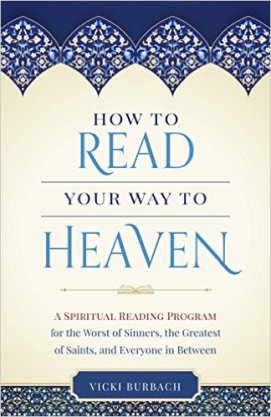
book-cover

Sound like a far-fetched sales pitch?

Absolutely not! In just 15-30 minutes per day, you will

  • Meditate on Sacred Scripture
  • Read 1-2 paragraphs from the Catechism of the Catholic Church
  • Read a few pages from some of the greatest minds in the history of the Church

Spiritual reading is organized around the Four Pillars of the Catechism:

  1. The Profession of Faith – What we Believe as Catholics
  2. The Celebration of the Christian Mystery – Liturgy and the Sacraments
  3. Life in Christ – Man’s Vocation as a Christian
  4. Christian Prayer 

For the person who hasn’t done much spiritual reading…

this program offers a no-fail plan, sans dates or pressure, so you can get started right away, and pace yourself – while reaping great rewards found through Sacred Scripture, the direction of the Saints and  wisdom of the Early Church Fathers.

For the avid reader…

this program provides rhyme and reason to your spiritual reading. It puts order into what is often a random process, allowing for accelerated progress in the spiritual life. Spending concentrated time in each pillar allows you to learn from various perspectives and to practice what you’ve learned in your daily life for an extended time, before moving on to the next topic.

The Time is Now

Lent will soon be upon us – do not delay. Make spiritual reading your Lenten resolution. How to Read Your Way to Heaven is a tool that will help you with all facets of the process. Make this your best Lent ever by uniting yourself to Our Lord like never before!

What’s Inside:

  • Why Spiritual Reading is critical to our lives as Christians
  • Important considerations when embarking on a Spiritual Reading Program
  • What is Syntopical Reading and how it can help you make great strides in your spiritual life
  • What kinds of works to read
  • How to read sacred scripture
  • How to structure your reading time
  • Specific assignments for a 1-Year, 3-Year or 5-Year Reading Program
  • Blank spaces each day so you can add or substitute books of your choice
  • Two Fabulous Book Lists: 99 of the favorite reads of notable Catholics; Fr. C. John McCloskey’s Lifetime Catholic Reading List
  • A lay-flat binding to ensure years of use


There isn’t enough space to extoll the benefits of spiritual reading – Rather than belabor the point, I’ll leave you with a final quote from Venerable Louis of Granada, favorite spiritual writer of St. Teresa of Avila, St. John of the Cross, St. Francis de Sales, St. Charles Borromeo, St. Vincent de Paul and St. Rose of Lima:

So great is the light and fruit of spiritual reading that we know from experience many person who have changed their entire lives by this means. When asked the root and cause of such a change, they responded that after reading such and such a book they resolved to amend their lives…

So sublime are the mysteries that the Christian religion proposes to man and so powerful for moving hearts that I would not be surprised if they effected a great change in anyone who attentively considers them. – Summa of the Christian Life, p. 7-8


What People are Saying about How to Read Your Way to Heaven:


Personal Message:

Just finished reading Rome Sweet Home and loved it. I’m also enjoying the Book of Matthew. I think it’s a great book to start with. I’m looking forward to my reading time early every morning. I thank God for giving me you…to show me the way to reading His Word. I love to read and this has been something I’ve wanted to do for a very long time.

Check out Amazon for Reader Reviews!


Editorial Reviews
McCloskey III profile photo

“If you want to develop a deep knowledge of our Faith, here is a reliable book that shows you how.” Fr. C. John McCloskey III


Aquilina profile photo

“We can read all day and read forever, and still feel as if we’re not making progress. Vicki Burbach gets us out of the rut and onto a track toward real spiritual — and cultural and intellectual — progress. This is the kind of book that can make life so much richer — by leading to many more books, and all in good order.” Mike Aquilina


Hendey profile photo

“Whether you’re a lifelong Catholic or a skeptical inquirer, you’ll find How to Read Your Way to Heaven by Vicki Burbach to be an indispensable gift for your intellectual and spiritual life. With this timeless treasure, Vicki has helped solve my so many books and so little time problem by providing a masterplan that’s both exciting and accomplishable.”
Lisa M. Hendey Founder of CatholicMom.com and author of The Grace of Yes


Burke profile photo

“Getting to heaven often requires that we rely on the wisdom of those who have gone before us. Vicki Burbach has done us a great service by providing an insightful reading plan and approach that, if absorbed and followed, will no doubt produce saints!”
Dan Burke, President of the Avila Institute


What Can I Give Him – Poor as I Am?

Lord, take my energies, fears and delights
Swaddled as gifts for this holiest night
Find in me merit to offer as well
May all my actions of You always tell

by Paula Zwenger


Infant of Bethlehem, born as a King,
hear my Hosanna, so lowly to bring.
Naught finds me worthy of gifts you acclaim,
cradled in manger of Bethlehem’s fame.

Wise men on bended knee knew of Your worth,
hidden in essence of lowliest birth.
Keep from my simple heart lure beyond love.
Shield me from lies, under wings of the dove.

Spirit my rescue, as advocate now.
Many, unknowing, continue to plow
furrows so worldly of death and decay,
burying freedoms You’ve planted this day.

~~~

Child, He says lovingly, all that you need
find there inside you as grace given seed.
Here, your compassion – for mercy to start;
here I’ve placed talents to serve broken hearts.

Here your humility, born of the Son,
showing how meekly the battle is won.
No need for distance to seek for a star.
Offer Me everything, right where you are.

Hold nothing back as if measuring worth;
I am Redeemer who called you at birth.
Lo, in your forming, no love has been spared;
trust in My power and never be scared.

~~~

Lord, take my energies, fears and delights,
swaddled as gifts for this holiest night.
Find in me merit to offer as well;
may all my actions of You always tell –

here is an offering of my next breath,
whether spent joyful or feeling bereft.
Here is my poverty, here is my pain,
here every gift You have poured in Your reign.

Yes Lord, I understand, all is from You,
bounty for offering, mercies so true.
All from my poverty; riches to place
here at Your manger, proclaiming Your grace.

~~~

Years from this instant, salvation spread far,
still we’ll be guided by Christ-naming star.
Bright for posterity, wonder-marked sign –
lighted for healing of your heart and mine.


——————————————————————————————

image1
Paula Zwenger
is a wife, mother, and grandmother who, upon finding herself an empty nester, tried on the hat of rhyme loving writer. It fit very well. Her joy manifests completely while taking the ups and downs of life and wrangling them into poetry. She also has a passion for creating rhymed treasure hunts with a Catholic flare to celebrate the faith and learn a thing or two along the way. You can find her musings at RhymeLovingWriter.com.

Painting a Thousand Words of Grace – An Advent Lesson

Expectancy of holy heart, in quiet moments set apart,
makes room for Him who came for all as tiny babe in manger stall.

by Paula Zwenger

Quantity does not equal quality. We were several years into family life before proof of this truth presented itself on our doorstep by way of participation in a children’s marigold_garden_pictures_and_rhymes_1910_14566514398Christmas pageant.

Too much of a good thing?

As a young family, opportunities abounded for holiday related preparation. Many were offered through our parish community (Advent family night, Posada, caroling, etc.), but some were part of school or extracurricular commitments. We attended everything.

Before long, our combined activities had us spending more time at practices, rehearsals and presentations than we were spending at home. We knew Christmas was coming, but we were busy, for goodness sake, with all these wonderful activities in which we’d committed to take part.

Captured for Posterity

One year, after dress rehearsal, someone captured a candid shot of my then five year old daughter. She is sitting on the altar step in her angel costume, wings akimbo, halo askew, chin firmly cupped in hands, legs arranged in less than ladylike fashion, appearing weary to the bone.

Likely I was busy somewhere intent on other details…too busy to notice the toll our hectic Advent activity schedule was taking on her.

I’ve pondered this shot annually for over twenty eight years as an examination as Advent begins. It helps answer the questions of how best to spend time in efforts to welcome Christ.

Will the beauty of a rich liturgical heritage be embraced or will we squander the grace of the season on weariness of a worldly kind? Will contemplation, meditation, and wonder be paramount or will a hectic schedule of activities bring our family to the brink of exhaustion?

I keep this precious reminder packed away with our Advent decorations. It finds prominent display space with wreath, candles, and empty crèche, from the first day of each new liturgical year, as a reminder to keep Advent well.

Symbols and signs of faith and family provide valuable encouragement as we enter again into a new liturgical year.  Mementos from seasons past provide a timely reminder that we don’t have to chase after the ‘right’ activities to experience God. He is here, waiting patiently, for us to welcome Him into our hearts and lives.

We find Him in music and pageants, surely; but also through quiet daily prayers at home and sacrifices offered in secret, softening our hearts to become anew His manger bed.


Waiting for Jesus like Mary

Expectancy of holy heart, in quiet moments set apart,
makes room for Him who came for all as tiny babe in manger stall.

In Advent days of waiting well we visit stories meant to tell
of God incarnate. Blend our gaze to Love beyond the present days.

No tinseled wrap could well adorn the gift received on Christmas morn;
our swaddled Savior, Mary’s face; a tableau of indwelling grace.

We pause, and offer daily tasks designed to help in what He asks:
to love Him first with all we are, then love each neighbor near or far.

Each waited day, in blest delight, we rush to serve with Mary’s sight;
to honor and uphold His will, remembering His coming, still.

From first to last, our Advent plan, we pray for heart of every man.
No rush to fall, no wearied way. Come quickly Lord, we pray. We pray.

——————————————————————————————

image1
Paula Zwenger
is a wife, mother, and grandmother who, upon finding herself an empty nester, tried on the hat of rhyme loving writer. It fit very well. Her joy manifests completely while taking the ups and downs of life and wrangling them into poetry. She also has a passion for creating rhymed treasure hunts with a Catholic flare to celebrate the faith and learn a thing or two along the way. You can find her musings at RhymeLovingWriter.com.

How I Played Footsie with Evil and How God Set Me Straight

With my hands still burning, and wanting only to erase that awful image from my mind, I turned and walked quickly back to Sarah, who had busied herself staring at some unremarkable section of books as she made the sign of the cross yet again. I know she would have given anything to have holy water in that moment.

On a day when so many are telling ghost stories and watching horror films, I thought you might appreciate a true story about why I steer away from anything of Hallowe'en_at_Merryvale_2the sort.

Oh, I used to love a good movie around Halloween. Especially about demonic possession or evil incarnate. Not anymore. Because now I’ve experienced the real thing. And I’d just as soon steer clear of any reminders.

A few years after converting to Catholicism, I had an experience that I will never forget. This was a dangerous moment where I actually played footsie with darkness. It is a moment I will never repeat. And for the rest of my life I will be thankful for God’s almost immediate but very loving rebuke.

There was nothing particularly notable about the day. A good friend and I were wandering through Barnes and Noble with our little ones strapped into their strollers. We’d just made our way from the train tables, where our boys had worn themselves out in “Thomas the Tank Engine heaven”, to the Religion section, where we hoped to browse a bit before they found their second wind.

Out of the blue, my friend – I’ll call her “Sarah”  – pointed across the way with her finger. Her eyes were fixed on the ground while her finger pointed straight ahead. In hushed tones, she said, “They have one here.”

“What?” I asked. I had no idea what she was talking about, but her odd behavior had me perplexed.

She was visibly nervous as she gestured frantically in the direction of a shelf positioned perpendicular to the aisle in which we were standing. Almost in a whisper, she said, “A Satanic Bible. They have one here.”

Recently she and I had had a discussion, wherein she told me that she had known someone with a Satanic Bible in high school. I was shocked. I never knew such a thing existed, much less could I imagine that anyone would actually OWN one. “Wow,” I said at the time. “Does it look like a regular book? Is it written in English? Who would write such a thing?!” I had more questions than she had answers, so she must have figured this was her chance to show  me in person that, yes, there was such a thing, and yes, it looked like a regular book.

While she did see fit to point toward the book, Sarah clearly had no intention of looking at it herself. Rather than even turn in the direction she had pointed, Sarah cowered in a corner making the sign of the cross.

I was not so easily flustered. Having no fear whatsoever, I marched right over to the bookshelf, scanning it for a so-called ‘Satanic Bible.’ It didn’t take long. Looking back, I’m embarrassed to admit there was something rebellious in me that wanted the opposite posture from what I had seen in my friend. I’ll admit it. I had an attitude. In my mind, this was a book. Nothing more. And I was going to show Sarah that, while I was curious to see what a Satanic Bible looked like, actually looking at one was no big deal.

Purposefully but casually, I slid the book from the shelf and flipped it over in order to read the back. What I saw can only be described as the most horrifically evil photo I’ve ever encountered. I cannot provide details. In fact, I’m thankful to share that Our Lord has placed a veil over my memory of that picture.  All I can recall is its evil nature. I have no distinguishing features to offer. And don’t imagine that I examined the back of the book or flipped through pages to learn more. As soon as I saw the face on the back cover, I nearly threw the book back onto the shelf, unable to remove my fingers from it fast enough.

With my hands still burning, and wanting only to erase that awful image from my mind, I turned and walked quickly back to Sarah, who had busied herself staring at some unremarkable section of books as she made the sign of the cross yet again. I know she would have given anything to have holy water in that moment.

As a fairly recent convert, I was practically rolling my eyes at my friend, the cradle Catholic. Yes, it was evil. No, I didn’t want anything to do with it. But it WAS only a book. I couldn’t imagine having such a reaction – and despite being disturbed by the image, making the sign of the cross at the time seemed almost silly to me. So I didn’t.

Once I ditched the book, my only thought was that Sarah seemed to be over-reacting just a bit. I didn’t like what I saw, but I felt she was taking things a little too far.

Apparently God disagreed. What happened next was purely Divine Providence. And it completely cured me of any curiosity at all related to the “dark” side of life.

We had been at Barnes and Noble on a Friday. The very next day, Saturday, I was scheduled to attend a Catholic homeschool conference just south of Chicago. Please keep in mind that I’ve homeschooled for 15 years. Every summer since my first year, I have attended a homeschool conference. Every year, the keynote speaker has something to do with parenting or teaching. But that day, as I entered the conference and received my schedule, I was shocked when I read about the keynote speaker. You’re not going to believe this.

He was an exorcist.

I am not kidding.

This priest gave one of the most rousing talks I’ve ever heard about Satan and his activities. He emphasized with every breath the need to avoid anything related to the occult and about the dangers that one risks if she allows herself to brush up against darkness. He shared personal experiences with demonic activity that were the result of innocent curiosity. I was stunned. This priest was speaking to ME.

There was no doubt in my mind that this good priest was actually a stand-in for God, Himself, who clearly wanted to send me a message in no uncertain terms. From all eternity, He had planned this moment to teach me a very important lesson. To remind me that the invisible world is full of creatures much stronger and smarter than I. And that some of them are out to destroy me.

As soon as the talk concluded, I hightailed it to the speaker and shared my experience from the day before. I was no longer blasé about those moments I spent in the vicinity of a Satanic Bible. Now I was scared.

After hearing my story, Father assured me that I was probably OK, provided I had learned my lesson. But to be safe, he directed me to head upstairs to the chapel, where there was a large holy water font, and to wash my hands in the holy water without drying them off. He told me to go deep – all the way to my elbows – and he urged me to wash lavishly, and to finish by making the sign of the cross.

I can assure you that I did. And never again have my hands felt as crisp and clean and cool as they did on that day, when, along with any semblance of evil, I washed away all fascination with darkness and any curiosity about the occult that might have remained.

Needless to say, if you and your kids come knocking on our door tonight, you’ll find some happy pumpkins and a welcoming scarecrow. No witches or goblins here. And if you wish to join us, you may find a happy owl and a mad scientist bobbing for apples with a few of their friends. But no gore. Nothing scary. We don’t play footsie with darkness around here. I’ve had my share. And believe me – my kids have heard all about it!

Can You Be “Spiritual but not Religious”?

In truth, the relationship between religion and spirituality is not unlike the relationship shared between body and soul.  To posit, then, that one could be spiritual without being religious would be like saying that one could possess a soul and yet have no need for a body.  

by Fr. Jeff Loseke

During a recent trip to a secular bookstore, I noticed that the section labeled “Religion” did not seem quite as expansive as I had remembered it once being. Exploring the 1280px-Basilica_di_San_Pietro,_Romesituation further, I discovered that some of the very shelves that once held the tomes of Christianity and Judaism had given way to an increasing repertoire of books organized in categories such as “Magical Studies,” “Inspiration,” and “Spirituality”.  This shift in the popular demand for these kind of books does not indicate necessarily that people are becoming less spiritual.  Rather, it seems that our society today is becoming far less Christian or, at least, less religious than it used to be.

Human beings are by their very nature spiritual beings.  Every one of us has probably encountered someone along the way who professes to be “spiritual but not religious.”  Not only should we regard a statement like this as utter absurdity, but also we should reject it and even denounce it as a violence committed against the soul.  In truth, the relationship between religion and spirituality is not unlike the relationship shared between body and soul.  To posit, then, that one could be spiritual without being religious would be like saying that one could possess a soul and yet have no need for a body.  The harsh reality, however, is that the separation of soul from body results always in death.  A body without a soul is a lifeless cadaver.  A soul without a body is a helpless ghost.  Similarly, religion without spirituality is lifeless; spirituality without religion is fruitless.  Rather than separate the two, we must strive to maintain their unity.

As Catholics, we embrace both religiosity and spirituality.  Our faith and good works must truly harmonize the interior movements of spirituality with the exterior movements of religion.  Religion is the body that gives expression to one’s spirituality, and spirituality is the soul that gives life to one’s religion. Certainly, just as we have met those who claim to be spiritual but not religious, so too have we have encountered those who are religious but possess no spirituality.  These folks are like the Pharisees, going through all the motions of religion but lacking the charity that ought to motivate them.  Saint Paul describes them as noisy gongs and clanging cymbals (cf. 1 Cor 13:1).  Both soulless religiosity and spirituality-without-religion are destructive to the life of faith. The faithful of the Church are called, then, to give witness to the true religion that fulfills Christ’s command of worshiping in spirit and in truth (cf. Jn 4:24).

The Reverend Jeffery S. Loseke is a Priest of the Archdiocese of Omaha and is currently the pastor of  St. Charlccn_father-les Borromeo Parish in Gretna, Nebraska.  Ordained in 2000, Fr. Loseke holds a Licentiate in Sacred Theology (S.T.L.) from the Pontifical Athenaeum of St. Anselm in Rome and is working to complete his doctoral degree (Ed.D.) in interdisciplinary leadership through Creighton University in Omaha.  In addition to parish ministry, Fr. Loseke has served as a chaplain in the U.S. Air Force, taught high school theology and college-level philosophy, and has been a presenter for various missions, retreats, and diocesan formation days across the country.

Art: Saint Peter’s Basilica at Night, 2007 (Wikimedia Commons)


A Symbolic Eucharist: “To Hell with It”

To undermine belief in the Holy Eucharist is nothing other than Satan’s attack against the very heart of the Church… the Sacred Heart of Jesus Christ Himself. 

by Fr. Jeff Loseke

Next Sunday, the Church celebrates Corpus Christi, the Solemnity of the Body and Blood of the Lord.  It is a feast that rejoices in the mystery of the Holy Eucharist: Christ’s Allegory_of_the_Eucharist_-_Google_Art_Projectsubstantial, real, and abiding presence in His Church.  We acknowledge and worship this sacramental mystery whereby ordinary bread and wine become the Body and Blood of Christ.  Neither is the Eucharist just a symbol of Christ’s Body and Blood nor does it reveal Christ to us only spiritually.  We know that Christ is really and truly present—body, blood, soul, and divinity—in the Eucharist.  This truth is so central and so important to our faith that the great Catholic American author Flannery O’Connor (d. 1964) once said in defense of the Eucharist: “Well, if it’s a symbol, to hell with it.  It is the center of existence for me; all the rest of life is expendable.”

We cannot help but echo O’Connor’s bold words today: To hell with the idea that the Eucharist is mere symbol without substance!  To hell with this idea because it is the lie of the Evil One!  To hell with it because it is a lie that has infected so much of Western Christianity since the Protestant Reformation!  To hell with it because it is a lie that has robbed so many of our Christian brothers and sisters of such a great gift from God—a necessary help to our salvation!  As Sacred Scripture reminds us: “Jesus said to them, ‘Amen, amen, I say to you, unless you eat the flesh of the Son of Man and drink his blood, you do not have life within you.  Whoever eats my flesh and drinks my blood has eternal life, and I will raise him on the last day’” (John 6:53-54).  To undermine belief in the Holy Eucharist is nothing other than Satan’s attack against the very heart of the Church… the Sacred Heart of Jesus Christ Himself.  The lance that was thrust into Christ’s side on the Cross continues to be hurled at the Savior every time His Real Presence is denied in the Eucharist.The Church dedicates the month of June to the Body of Christ and to His Most Sacred Heart.  In the Eucharist, we find the burning love of Christ made present for us upon our altar and abiding in silence in the tabernacle.  This month affords us the opportunity to examine how each of us can give better witness to the Lord’s Real Presence in the Eucharist and how we can enthrone Him in our own hearts and our homes.  Faith is always made visible in our works (cf. James 2:14-26).  Therefore, we do well to examine our outward signs of piety and reverence whenever we enter the church and then again to examine our outward signs of charity and mercy as we leave the church to go back to our homes and out into the world.  The Eucharist must be seen as the center of our existence, especially in today’s age of disbelief.


The Reverend Jeffery S. Loseke is a Priest of the Archdiocese of Omaha and is currently the pastor of  St. Charlccn_father-les Borromeo Parish in Gretna, Nebraska.  Ordained in 2000, Fr. Loseke holds a Licentiate in Sacred Theology (S.T.L.) from the Pontifical Athenaeum of St. Anselm in Rome and is working to complete his doctoral degree (Ed.D.) in interdisciplinary leadership through Creighton University in Omaha.  In addition to parish ministry, Fr. Loseke has served as a chaplain in the U.S. Air Force, taught high school theology and college-level philosophy, and has been a presenter for various missions, retreats, and diocesan formation days across the country.

Art: Allegory of the Eucharist by Artist Unknown, Ca. 1676-1725 (Wikimedia Commons)


Don’t Vacation From Your Vocation of Sharing the Good News!

The responsibility of giving witness and explaining the faith belongs not just to religious leaders, but it is fittingly situated in the lives of the baptized faithful.

by Fr. Jeff Loseke

A few years ago, I was on vacation with two classmates from my days in seminary.  The three of us now are Priests in different dioceses in the U.S. and get together every now 800px-Georges_Seurat_023and again for vacation to enjoy each other’s friendship while we travel.  To see us together, one would not immediately recognize us as Priests at first glance since we often do not travel in Roman collars or other such clerical garb while on vacation.  Nevertheless, our identity is sometimes uncovered… not by how we are dressed but by a faith that cannot be hidden.

While lounging at the pool and soaking up the sun, one of my friends was reading a book entitled, The Mass, whose title was clearly emblazoned on the front cover.  (Not your average, run-of-the-mill poolside reading, for sure!)  Another vacationer at the pool noticed this conspicuously Catholic book and asked my friend if he were indeed a Priest.  She, not being Catholic herself, then proceeded to ask him several questions about the Mass and the Catholic Church.  He happily answered her questions, and what could have been time wasted by the pool—albeit a well-deserved break—turned into an opportunity to share his faith.  What a great example of how one’s faith can be both recognizable and inviting without being ostentatious and standoffish.  When our faith is an integrated part of who we are, it becomes more than just a single part of us.  Instead, it permeates every other part of our very selves, and it cannot help but be seen.  For this reason, St. Peter reminds us that we must always be ready to give an explanation to anyone who asks us for a reason for our hope (see 1 Pt 3:15).

Almost 2,000 years prior to this poolside catechesis, St. Justin wrote to the pagan emperor Antoninus Pius and the Roman Senate around A.D. 155 also explaining the Mass and the Church’s beliefs.  The writings of St. Justin and other Apostolic Fathers from the first centuries of the Church’s history provide some of the best examples of Christians explaining and defending their faith to those who questioned it.  What is most interesting about St. Justin, however, is the fact that he was not a Bishop, Priest, or Deacon.  He was a layman, and he was the first as such to write extensively about the faith, especially to those who questioned it.  What an excellent example he is for the Christian faithful of today!  The responsibility of giving witness and explaining the faith belongs not just to religious leaders, but it is fittingly situated in the lives of the baptized faithful.  In all truth, the laity have more day-to-day contact with the world than do the clergy.  The Second Vatican Council rightly reminded us that it is the task of the clergy to evangelize the men and women of the Church, and that it is the task of the faithful to evangelize the world.  Truly, whether clergy or laity, there are no vacations from our vocation to announce the Good News!

The Reverend Jeffery S. Loseke is a Priest of the Archdiocese of Omaha and is currently the pastor of  St. Charlccn_father-les Borromeo Parish in Gretna, Nebraska.  Ordained in 2000, Fr. Loseke holds a Licentiate in Sacred Theology (S.T.L.) from the Pontifical Athenaeum of St. Anselm in Rome and is working to complete his doctoral degree (Ed.D.) in interdisciplinary leadership through Creighton University in Omaha.  In addition to parish ministry, Fr. Loseke has served as a chaplain in the U.S. Air Force, taught high school theology and college-level philosophy, and has been a presenter for various missions, retreats, and diocesan formation days across the country.

Art: A Sunday Afternoon on the Island of La Grande Jatte by George Seurat, 1884

Resting in the Lord

Should a vacation or a summer activity ever pull us away from Sunday Mass or daily prayer, we then would find ourselves worshipping the idol-gods of our own making.

by Fr. Jeff Loseke

Memorial Day weekend marks the unofficial start to the summer, and the rhythm of life tends to change for us all.  The days are longer, the weather warmer, and we find 800px-George_Goodwin_Kilburne_The_Picnicourselves outside a whole lot more.  We are enjoying picnics, reunions, vacations, games, gardening, and a whole host of summertime activities.  Not only might we find ourselves enjoying God’s marvelous creation more, but also we add to it by expressing our own gifts and talents within it.

The summer is a great time to reflect upon the inherent dignity of work and the necessity of leisure in the divine plan.  Created in the image and likeness of God, we have been given the ability to sub-create or co-create with God.  While you and I cannot create something out of nothing as can God, we can work with God’s initial creation and further develop it in a way that expresses God’s likeness within us.  By cultivating the ground and helping it to bear fruit; by honing our skills and sharpening our reflexes for a competitive sport; or by painting, writing, or sculpting a work of art into existence we give further meaning to the world around us and we participate in God’s own work.  Because of the effects of sin, we live in a broken world; therefore, not all work is pleasing.  Sometimes it takes sheer toil and willpower to persevere through it.  Nevertheless, by laboring through these difficulties in love, united with God and by His grace, we overcome the effects of sin and help to bring about God’s kingdom.

The Book of Genesis reminds us that God Himself “rested” after completing the work of Creation, not because He can be exhausted but to teach us the necessity of taking time away from our work to “recharge” and to enjoy what we have done.  Days off and vacations are necessary for us who are not infinite in our energies and abilities.  Simply taking a day off, going on vacation, or enjoying a leisure activity is not enough, however.  While those things may refresh our bodies and minds, our souls require time spent with God, especially in the Eucharist.  Should a vacation or a summer activity ever pull us away from Sunday Mass or daily prayer, we then would find ourselves worshipping the idol-gods of our own making.  (Recall the Israelites’ golden calf…)  So, as the summer may bring rest and leisure into our lives, so may it also bring a renewed sense of what it means to rest in the Lord, not only on Sunday but on every day.

The Reverend Jeffery S. Loseke is a Priest of the Archdiocese of Omaha and is currently the pastor of  St. Charlccn_father-les Borromeo Parish in Gretna, Nebraska.  Ordained in 2000, Fr. Loseke holds a Licentiate in Sacred Theology (S.T.L.) from the Pontifical Athenaeum of St. Anselm in Rome and is working to complete his doctoral degree (Ed.D.) in interdisciplinary leadership through Creighton University in Omaha.  In addition to parish ministry, Fr. Loseke has served as a chaplain in the U.S. Air Force, taught high school theology and college-level philosophy, and has been a presenter for various missions, retreats, and diocesan formation days across the country.

Art: The Picnic by George Goodwin Kilburne, circa 1900 (Wikimedia Commons)

Why Stand Looking Up At The Sky?

It never gets easier to see faces of love ones recede into the distance.

by Paula Zwenger

The wonder continues. Confounding to some, comforting to others, Catholics are still celebrating Easter! The past six weeks we daily listened to readings from the Acts of the Apostles. We heard of the growth and witness of the early Church.

Now, we celebrate the Solemnity of Our Lord’s Ascension.  As he left the apostles, He promised to be with them always. He promised to send an advocate to strengthen them. Imagine how they felt as they watched Him vanish. What depth of sadness touched their souls once He was out of sight? Still, they believed and rejoiced.

Men of Galilee, why are you standing there looking up at the sky? This Jesus who has been taken up from you into heaven will return in the same way as you have seen him going into heaven.

Acts 2:11

We can imagine on some small scale a bit of their sadness. We never grow used to saying goodbye. It never gets easier to see faces of love ones recede into the distance. Often subtle tears, added to sighs of resignation, make appearance unbidden. Yet we too, believe and rejoice.

Beyond Goodbye

Forty days since Easter morn, when the temple veil was torn
Jesus risen from the tomb, conquering all deathly gloom
As they watched, still some confused, He ascended in their view
on to Heaven’s watchful throne, King of Kings, our Lord alone.

Would you stare, if it was you, up and off into the blue
skies where He, who saved your soul, rose triumphant, body whole?
Still His promise fills the heart, telling why He must depart
sending One for all our days, Advocate to guide our ways.

Down to earth their gaze return, even while their hearts would burn
long with passion for His face. Soon the Spirit’s strong embrace
filled their hearts to fortify – bold inviting all nearby
“Do repent! Be baptized free. Claim as Savior – Risen HE!

Ours the graces. Ours the hope. Ours the thanks for help to cope
with our fallen nature when shriven, we arise again.
Sure our step, in world seemed lost, paying joyful any cost;
following apostles bold, bringing all to heaven’s hold.

The truth is no one knows the hour or day when he or she will be called to heaven. A relative diagnosed with cancer may well outlive a partner going to work the next day. An elderly grandparent may be scooting around long after the newest grandchild enters and exits the stage of life. What we have is this moment to live well. We also have an Advocate in the Holy Spirit. As a loving member of the Triune God, He consoles, challenges, and instructs.

Perhaps now, when smaller departures are at hand, we can simply say, “May God Bless and keep you. See you soon.” Then believe and rejoice until we are together again.

——————————————————————————————

image1
Paula Zwenger
is a wife, mother, and grandmother who, upon finding herself an empty nester, tried on the hat of rhyme loving writer. It fit very well. Her joy manifests completely while taking the ups and downs of life and wrangling them into poetry. She also has a passion for creating rhymed treasure hunts with a Catholic flare to celebrate the faith and learn a thing or two along the way. You can find her musings at RhymeLovingWriter.com.

The Original Novena: Ascension to Pentecost

by Fr. Jeff Loseke

Devotionally speaking, Pentecost marks the fulfillment of the original “novena” prayed by the early Church in anticipation of the promised Gift of the Holy Spirit.  After Jesus’
Jesus_ascending_to_heavenResurrection, He spoke repeatedly to His Apostles about how He would send the Holy Spirit to remain with them after He ascended into heavenly glory.  The Acts of the Apostles recounts how Mary, the Apostles, and other disciples returned to the upper room and remained there in prayer and supplication.  The total number of days between Ascension Thursday and Pentecost Sunday is nine.  This is the reason the Church’s devotional novenas follow a similar nine-day model.

The purpose of a novena prayer is to teach us patience and perseverance in prayer.  Too often we can be tempted to believe that God is not answering our prayers if we do not see “results” as expediently as we would like.  Our prayers can easily turn from being supplications, whereby we attempt to conform our wills to God’s will, to demands, whereby we attempt to conform God’s will to our own.  The discipline of the novena is more for us than it is for God: God hears and answers all our prayers, whether we pray for just one day or for 99 days.  We, however, are always in need of learning how to pray as we ought.  In a traditional novena, like the Apostles and Mary, we agree to wait for the working of the Spirit and to submit our desires to the will of God.

Unfortunately, the beautiful traditions of the Church are not free from human manipulation and error.  The Evil One wants us to forget that the purpose of the novena prayer is to wait patiently for God to work in His own time, and so he tempts us to approach novenas in superstition, believing that the prayer will be magically answered according to our will at the conclusion of the nine days.  Sadly, there are any number of unofficial prayers in print that are the result of such diabolical deception.  Perhaps you’ve seen them: “This prayer has never been known to fail,” or “Make nine copies of this prayer and leave them in church for nine consecutive days and your prayers will be answered.”  We can never forget that our repetition of prayers for any amount of time cannot force God’s hand.  Likewise, the failure to carry out a novena perfectly cannot invalidate the prayers and petitions of a humble and contrite heart.  When formulas become more important than our relationship with God and our trust in His mercy, then we find that we have turned from authentic devotion to empty superstition.  The upcoming “original novena” between Ascension Thursday and Pentecost teaches us once again that Jesus always keeps His promises and that God’s will is always done.  Come, Holy Spirit, and renew the face of the earth!

The Reverend Jeffery S. Loseke is a Priest of the Archdiocese of Omaha and is currently the pastor of  St. Charlccn_father-les Borromeo Parish in Gretna, Nebraska.  Ordained in 2000, Fr. Loseke holds a Licentiate in Sacred Theology (S.T.L.) from the Pontifical Athenaeum of St. Anselm in Rome and is working to complete his doctoral degree (Ed.D.) in interdisciplinary leadership through Creighton University in Omaha.  In addition to parish ministry, Fr. Loseke has served as a chaplain in the U.S. Air Force, taught high school theology and college-level philosophy, and has been a presenter for various missions, retreats, and diocesan formation days across the country.