The Real Value of Work

We learn through work that patience matters. That, eventually, given great effort day after day, year after year, we’ll see results. Through our experience in work, we can deduce that that progress in the spiritual life is slow, but that it will pay off. We learn that we don’t necessarily have to see the big picture in order to know it’s there.

Recently I heard some horrific statistics regarding young men and their participation in the work force. The host of a national radio program cited an article from The Washington Post 800px-gustave_courbet_-_the_stonebreakers_-_wga05457that referred to recent research demonstrating a growing tend in America. Apparently, not only are about 20% of young men between 21-30 years of age out of work, but they aren’t too upset about it. Instead, they are finding satisfaction in video games, computers and television, while living in their parents’ basements. Most in this group have not held a job of any kind in at least a year.  Staggering. As such, this is the first generation to feel no guilt about a virtual no-show in the work force, or about being dependent upon parents or the government dole.

While this news is shocking, the astute have been warning about this problem for the past several years. In Bill Bennet’s, The Book of Man, published in 2011, he quotes another author,

There is trouble with men today. For example, after studying today’s workforce data, author and commentator David Brooks observed that “in 1954, about 96 percent of American men between the ages of 25-54 worked. Today that number is around 80 percent. One-fifth of all men in their prime working ages are not getting up  and going to work.”

There are many reasons for this change in society. Bennet, himself, cites video games, single parenthood, corrosive entertainment and a lack of religion, among other things.

Whatever the cause, I want to discuss one particular concern among the many overwhelming consequences this lack of discipline and drive among our young men will reap on their souls. One young man profiled in the Washington Post article – who holds an Associates Degree, by the way – had some words that should give us great pause:

 “When I play a game, I know if I have a few hours I will be rewarded” he said. “With a job, it’s always been up in the air with the amount of work I put in and the reward.”

That quote got me thinking about the true value of work.

Of course, there are the obvious things. Work is necessary in a civil society, allowing us the ability to support ourselves and our families – as such it is often the conduit through which God provides our daily bread. Work is good for us both physically and intellectually. God called man to work, telling Adam, “in the sweat of your face you shall eat bread” (Genesis 3:19).

But what concerns me most is how much work provides for us spiritually, how perfectly our experience with work can reflect our spiritual journey, and how this disconnect with work is will result in an even greater disconnect with the spiritual in our young men.

Labor is a physical manifestation of the spiritual effort we must continue faithfully throughout our lives in order to obtain union with God.

Just as the carpenter must continue to hew the wood, patiently carving, hour upon hour, day by day, seeing the end product only in his mind’s eye, so too, we must continue to pursue heaven, trusting that, indeed, “no eye has seen, nor ear heard, nor the heart of man conceived, what God has prepared for the who love him” (1 Corinthians 2:9).

Just as the bricklayer lays brick after brick, taking care to place each and every one exactly to plan, not seeing the end of his work, but only trusting in the plan of the architect, so we, too, must continue to pursue excellence with every step, trusting the architect of our lives to create something magnificent from the application of our best efforts to some of the most mundane tasks, day after day after day.

If the carpenter quits before seeing the final product, it will be forever hidden within the confines of the wood. In that case no one will ever see the beauty hidden within. And the wood will never realize its intended end.

If the brick layer allows himself to get tired on the job, his work will be sloppy, and his building will not be up to par. The plan may have been correct, but the brick-layer’s carelessness will cause problems for him, for anyone who works beside him, or anyone who plans to use that building that he so carelessly built. We, too, must apply the utmost care every step of the way, for our work affects those around us in ways we may never witness.

In our vocations as fathers, mothers, husbands, wives, priests, consecrated singles and others, we must not simply plod along, but rather work with passion and purpose – and great care – from hour to hour, day to day. Never mind the monotony; never mind the challenges; never mind the tiresome little crosses we must bear.

We learn these things through a consistent experience with work. Not necessarily paid work. As a stay-at-home mom, I certainly see the connection between my work life and my spiritual life. I toil day after day, trusting in God’s plan for my children. I see glimpses here and there, but so often as a mother, I am tempted to throw my hands up at what appears to be the futility of the work. I’ll never be able to do this job right. This is too much. It is too thankless. It will never be finished. Too often I fail to see the fruits of my labor.

No matter. I am only called to lay the bricks according to God’s plan. I must trust that He will work everything out for the best. Day after day, I must rejoice even in the mundane. I must bring my all to the job that, frankly, doesn’t always offer positive feedback. But there is one way that my experience differs from that of the bricklayer. The architect may not be standing alongside the bricklayer, assuring him and encouraging his progress. In our case, Christ is with us. He helps us to lay that brick. He applies the mortar so all our efforts build toward the finished product, which is the eternal happiness of heaven for ourselves and our families.

If we ignore the architect, if we lose faith in the finished product, if we try to follow our own plans, we will look back and wish we would have paid closer attention, that we would not have trudged along with such half-baked effort. For our lives will be scarred reflections of our own sloppiness, our lack of patience, diligence and discipline.

We learn through work that patience matters. That, eventually, given great effort day after day, year after year, we’ll see results. Through our experience in work, we can deduce that that progress in the spiritual life is slow, but that it will pay off. We learn that we don’t necessarily have to see the big picture in order to know it’s there.

Ultimately, work gives us evidence in the physical realm of what religion can do for us in the spiritual realm. According to Saint John Paul II,

(9) Work is a good thing for man-a good thing for his humanity-because through work man not only transforms nature, adapting it to his own needs, but he also achieves fulfilment as a human being and indeed, in a sense, becomes “more a human being”. – Laborem Exercens

To the extent that our young men are not “achieving fulfillment” as human beings, we cannot possibly achieve fulfillment as a society.

Even more importantly, if we do not teach our young men to have patience to perform a good job in pursuit of long-term satisfaction on earth, how will they ever be able to pursue the long-term satisfaction of heaven? If the immediate feedback from a video game trumps the long-term satisfaction of a job well-done, how will they ever be willing to do the work necessary on earth now, that one day they might hear these glorious words from heaven:

Well done, my good and faithful servant…enter into the joy of your master.”


The Unholy Family

Most of us were born into an unholy family. Actually, that family – unholy as it may be – is the best way for each of us to make our way in this world, the greatest vehicle known to man for our sanctification.

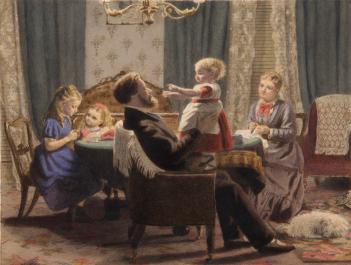
What do you get when two fallen people fall in love and commit to spending the rest of their lives together, struggling through this thing called life, climbing, stumbling, and familyclimbing again; pulling each other up when we fall, sometimes tripping over each other along the way?

You get the precious seed of a holy family.

Your marriage may not be perfect. No worries. So long as you remain committed through the ups and downs and ins and outs of your relationship. Because the commitment itself will provide you both with the room you need for that seed to take root and germinate.

Marriage gives love the structure, the shelteredness, the climate in which alone it can grow. Marriage teaches spouses humility and makes them realize that the human person is a very poor lover. Much as we long to love and be loved, we repeatedly fall short and desperately need help. We must bind ourselves through sacred vows so that the bond will grant our love the strength necessary to face the tempest-tossed sea of our human condition. – Dietrich von Hildebrand, Marriage: The Mystery of Faithful Love

And what do you get when those two people give themselves completely -at least to the extent that two fallen human beings can give themselves – to one another in love?

This is when love can produce life, and through this act that delicate greenery breaks the surface of the ground, growing more beautiful by the day through the waters of baptism, the nutrients of love and sacrifice provided daily by the parents, with the light of Christ shining down from above in grace and mercy.

This is when you get a family.

You may be thinking, My family doesn’t come close to that image. When you look at your family, you may be discouraged by what you consider to be an infestation of individualism and idiosyncrasies. No one seems on the same page at the same time and polar opposites can be found in every corner. You may be worried that your family may never blossom.

Yours may not be a holy family.

In fact, yours may be an unholy family.

That’s OK.

Most of us were born into an unholy family. Actually, that family – unholy as it may be – is the best way for each of us to make our way in this world, the greatest vehicle known to man for our sanctification.

The modern writers who have suggested, in a more or less open manner, that the family is a bad institution, have generally confined themselves to suggesting, with much sharpness, bitterness, or pathos, that perhaps the family is not always very congenial. Of course the family is a good institution because it is uncongenial…

…The best way that a man could test his readiness to encounter the common variety of mankind would be to climb down the chimney into any house at random, and get on as well as possible with the people inside. And that is essentially what each one of us did on the day he was born.

This is, indeed, the sublime and special romance of the family. It is romantic because it is a toss-up…

…When we step into the family, by the act of being born, we do step into a world which is incalculable, into a world which has its own laws, into a world which could do without us, into a world that we have not made. In other words, when we step into the family, we step into a fairytale. – G.K. Chesterton, On Certain Modern Writers and the Institution of the Family

But how, given the widely varied personalities involved in a family, the different values and goals, the wild adventures and the unknown outcomes, do we grow holy in that environment? How can we begin to turn in the same direction, linking arms as we walk through this vale of tears, climbing together to the summit of heaven?

We sacrifice.

We serve.

We let go.

We love.

(15) The human family, disunited by sin, is reconstituted in its unity by the redemptive power of the death and Resurrection of Christ.[37] Christian marriage, by participating in the salvific efficacy of this event, constitutes the natural setting in which the human person is introduced into the great family of the Church.

(21) Family communion can only be preserved and perfected through a great spirit of sacrifice. It requires, in fact, a ready and generous openness of each and all to understanding, to forbearance, to pardon, to reconciliation. There is no family that does not know how selfishness, discord, tension and conflict violently attack and at times mortally wound its own communion: hence there arise the many and varied forms of division in family life. But, at the same time, every family is called by the God of peace to have the joyous and renewing experience of “reconciliation,” that is, communion reestablished, unity restored. In particular, participation in the sacrament of Reconciliation and in the banquet of the one Body of Christ offers to the Christian family the grace and the responsibility of overcoming every division and of moving towards the fullness of communion willed by God, responding in this way to the ardent desire of the Lord: “that they may be one.” -Saint John Paul II, Familiaris Consortio 

So we keep working. In our roles as parents, and in our roles as children, we sacrifice. We serve. We let go. We love.

And when we fall, we get back up and we begin again. Through reconciliation.

Through the life-giving love of the sacraments, the nutrients of our daily sacrifice, and by the grace-filled rays of Christ’s mercy, little by little, our families can become holy. That is when that tiny seed, planted in marriage, germinated in love to become a family, will begin to bloom. And the fragrance will intoxicate the world with its beauty.

But for now…

Face it. Your unholy family is the most amazing adventure you’ll ever find in this life. And the more wild the adventure and the higher the mountain you must climb together, the sweeter the victory when you reach the top.

Let us be grateful for our unholy families, and let us pray that we can unite ourselves to His Cross; that the Blood of Christ will wash away our sins, our pain and our tears along the way. Ultimately, may our families experience the joy of a love that is absolutely and completely self-giving, and together may we find the fruit of salvation through the embrace of the cross.


5 Things I Wish Someone Had Told Me About Raising Catholic Children

Like all parents, there are several things I wish someone had told me when I began parenting. I’m learning little by little; but perhaps some of my experiences might help those who are just getting started with little ones before they, too, look up and realize their time and influence may be fleeting.

Our oldest son is a senior year in high school this year. This is an exciting time for him. But as parents, we count the days we have left with him before he leaves for

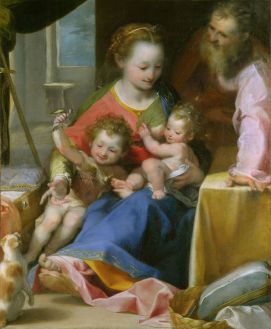
Holy Family - United Kingdomcollege. The next two kids won’t be far behind – in less than five years, half our children will have graduated from high school.

This time in our lives has been the impetus to much reminiscing on my part.

Like all parents, there are several things I wish someone had told me when I began parenting.  Particularly about how to raise kids who leave our home with a desire and will to follow Christ in their thoughts, words and deeds. I’m learning little by little; but perhaps some of my ups and downs might help those who are just getting started with little ones before they, too, look up and realize their time and influence may be fleeting.

The advice may be worth what you pay for it; but here are my top five tips to parents with little ones:

1. Don’t be so paranoid.

We kept our kids from things like Pokemon and from Harry Potter, etc. because I’d seen all the questionable articles. I wanted to play it safe. (I say “I” because my husband would have been a little more laid back about these things.) A few months ago, our family went out for ice cream, and the shop we were in was showing Harry Potter on TV (why there was a TV in an ice cream joint is a discussion for another time:)). My teens joked at the time about how I never let them read or watch anything when they were young; shortly thereafter, my 17-year-old read all the Harry Potter books. He said they were pretty good. Not worth all the hype, but enjoyable. I don’t remember what all the fuss was about years ago, but I’ve seen no repercussions thus far. And he’s already moved on to other things.

Shortly thereafter, Pokemon Go became all the rage. My boys were right in the middle of it all (I’ve lightened up in my “old” age). But their interest faded within a week and they’ve both moved on in this area as well.

When my kids were little, I drove myself crazy trying to make sure they weren’t involved in anything that might make them stray from the Faith or might lead to other dangers.  BUT… I knew other moms who let their kids do plenty of things that I restricted (within reason) and their kids grew out of them almost as soon as they tried them.  Now those kids are well-adjusted and seem to make good decisions where they count.

Not only have I noticed that a little bit of gentle “openness” on the part of moms doesn’t seem to have harmed their kids, I’ve also learned that a more anxious approach to the world can have damaging effects that I hadn’t anticipated.

Case in point, I think my oldest especially (17), but to a certain extent my second too (15), have sort of written me off as “paranoid” and not particularly the voice of reason about things related to the culture. They haven’t been disrespectful about it, but I’m definitely getting that vibe.

Not only am I not their “go-to” person regarding cultural issues, but I don’t know whether I’ve really prepared my older kids to confront the “big” issues they will face in the world.  Are they capable of discerning right from wrong on their own? Of saying “no” themselves when all their friends are saying “yes”? I hope they’re ready, but I am beginning to second-guess my original strategy.

While second-guessing myself does me no good, I have to say that I wish I had been relaxed about more things when my kids were younger. Even when I didn’t let them do things, I wish I would have been more “sneaky” about it – redirecting instead of saying “no.”   (Lest you think that “no” is the problem – I did substitute the things I wouldn’t let them do with positive things.  But they remember the “no”s.)

If we do our best to completely control their environment for them when they are young, when are we teaching our children to use their own judgement?  In my case, I taught my kids right from wrong, but when kids are young and mom controls the environment – with a penchant for the word “NO”-  is she helping them to check things out and discern for themselves when the stakes are low so that they can make good decisions when they are high?  But the stakes are high, you might say.  Yes, I always thought they were high, too. In my mind, they were high for everything from books to movies to shows to video games to friends to school to (insert issue here).

However, now they really are high. Driving, alcohol, drugs, sex, pornography, etc.  And while my kids have yet to fall in those areas (at least to my knowledge), if they do come across challenges, I don’t know that I’ll be the first one they turn to for advice, frankly because they may be worried about my reaction. Additionally, I sometimes wonder if by making everything a big deal, I’ve made nothing a big deal – in other words, is it possible that my dependability for insight has been watered down? Am I the mom who cried “wolf” one too many times?

Bottom line – if my eight-year-old brought home a Pokemon card (or some other questionable toy or game) from a neighbor today, I would treat it no differently than any other toy  (granted, there are exceptions to this rule; e.g. Ouija Board.)  And I’m sure it would disappear within a day or two.  If it didn’t, I would probably use the same technique they recommend for toddlers – get rid of the card when he wasn’t looking and then redirect his attention to something fun and good, without using the word “no”.

2. Help more; require less.

Let me preface this commentary by saying that my parents are both retired military, with over 20 years of service each.  That should give you some understanding of my own upbringing.  Needless to say, when my older kids were little, I had chore charts, responsibilities and expectations. I wanted to raise independent children who could do for themselves.  When I dropped them off with a babysitter, they waved goodbye and ran to play. (I was put off by those little kids in play groups who wouldn’t let go of their mothers’ legs.  I thought MY kids would never do that.)  The first three could all read at age three – no lie.  They were capable and very independent. When they asked for help, if I had taught them the task in the past and I knew they could do it, I would explain that they needed to do it themselves.

Perhaps you can already see the problem with that angle.

While I may have taught my older kids a great sense of independence and a strong work ethic, did I model a sense of compassion or a helpful spirit?  Thankfully, some of my kids are naturally helpful.  But in some cases they do not bend over backwards to help siblings, and frankly, with my expectation that they do for themselves, I may have failed to teach by example in that area.  They all help if I ask.  And they’ll do any chores required of them.  But ideally, they would all help when not asked. They would look for places to serve (whether at home or in the world). And they would be joyfully willing to help when asked by a sibling  (I’m treading on thin ice here, because there are times when they all serve and some of them always serve).  But I have a feeling I could have better cultivated a sense of service and cooperation, and am trying to make up for it now. By the way – on a selfish note –  all those kids I knew who were so attached and needy of their mothers when they were young? They are still attached, if not needy. That concept is awfully attractive to a mother with a senior who can’t wait to become an independent entity. He is capable of taking care of himself and more than excited about demonstrating his ability. We are definitely proud of his accomplishments. But right now, I’d give anything for a little attachment🙂.

3. Make family time FUN.

When my kids were younger, we celebrated what we called “Family Fun Night” every Friday.  I planned various activities, whether a craft, bike ride, board game, or what our family calls “Tickle Monster.” Those nights are some of the best memories our family share together.  But as the family grew and the age gap from top to bottom widened, I took my foot off the gas. Partly because I was busy and tired. The last thing I wanted to do every Friday was plan family entertainment on top of an over-scheduled week. Family Fun Night morphed into movie night – easy and low stress – which in the grand scheme of things, has not produced many memories. Movies run together in our minds and there is little family interaction when everyone hangs out with their eyes glued to the television.

My advice? Keep the FUN in Family Fun Night. You’ll never regret it. If necessary, let something else go. If you don’t, you’ll have teens who find friends more important than movies and going out more important than staying in. Movies don’t strengthen relationships. Laying out blankets in the grass and counting the stars – does. Serving finger food in various shapes for dinner and having everyone make pictures with their food – does. Hanging out around a campfire and roasting marshmallows – does. And even if you argue that those things still won’t entice the teens – they may and they may not. It depends on the teen. But even if they don’t, the older kids will be able to reminisce on great memories when they walk in on the fun, and they may just surprise you and join in.

And what does family fun time have to do with Faith? As a Domestic Church, the family is a child’s first and most important contact with God and with Godliness. Is there anything more attractive and inspiring than joy?

4. Place God at the center in action – not just word. He is a Person, not a belief system.

I remember listening to an atheist professor in college. He told us some crazy things. Among them, he said that Christianity was created to suppress the poor, and that the rich pooled the New Testament to encourage sacrifice as a “virtue” among the downtrodden.

Having very little foundation in Christianity, what that professor said seemed reasonable to me. I hadn’t been to church much growing up. So I was tempted to take him at his word. After all, he had the PhD.  But I thank God nearly every day for the two students in our class who questioned his theories. They were certain and confident that what he was saying was wrong. They weren’t argumentative. They weren’t disrespectful. But they asked questions that pointed out the irrational nature of his conclusions. I was amazed. I remember thinking as I sat there, “I wish I had their faith. Even if believing in God is only a crutch, I want that crutch.”

Years later when I converted to Catholicism, I was determined that my children would not only know what to believe, but they would know why they believed, like those college students years before. Whatever happened, I did not want them to doubt. I wanted them to KNOW, as I finally know, that Christ is The Way. So I talked to them early and often. I read to them. I catechized them.

But now that our influence over our older kids wanes and our days together dwindle, I often wonder – have I shown them?

Have I been joyful?

Have I been at peace?

Have I been generous?

Have I loved?

I taught my kids plenty of prayers; and I taught them frequent participation in the sacraments; but did I teach them to know Jesus as their best friend? Have I demonstrated that He is mine?

My oldest knows all the right words to say. He knows what we believe and why we believe it. (And that’s one thing I wouldn’t change – so if you are leaving the catechesis of your children to Mass attendance or to their religious education class, then I’d add an additional tip — make sure your children know their Faith. You are their first educator; their faith is too important to leave to chance.) But when my son gets out in the world and is tempted to turn away, the choice to remain faithful will be easier to make if he feels that he is being faithful to a Person, a Friend.  Have I properly introduced him to that Friend; and have I helped to cultivate a lifelong friendship? Or have I been so focused on the What and the Why, that I neglected the Who?

DO teach your kids to KNOW. But make sure you imbue them with a knowledge of the heart, not merely a knowledge of the head.

5. Remember that No family is perfect but YOU are Perfect for Your family.

I know this is an obvious point in theory; but often our emotions don’t follow the obvious. I spent years thinking that everyone else knew more than I did about how to be a good parent. There are times I’ve actually asked God, “Why did you give Child X to me instead of to that person over there?” Not because I was frustrated with my child, but because I felt the virtue I saw in another person would lead my child to holiness a lot faster than my vices would.  But the truth is that we all see the challenges and the sin in our own home and wonder what we are doing wrong.

The older I get, the more I realize that we are all learning how to be parents. Your weakness may be another parent’s strength. But other parents are watching your family and wishing for the strengths they see in you. We are all fallen creatures. There is no perfect family. (For more thoughts on that subject, read here.) God has a plan for your family. There is no home in the world that will contribute to the sanctity of your children like yours. God wants them in heaven; but He has entrusted their souls to you. That is no mistake. Our Lord has great faith in your ability to seek His grace daily and to turn to Him when you fall. Thank goodness for that, because there is nothing like parenthood to bring you to your knees.

Parents’ Prayer for Their Children

O God the Father of mankind, who hast given unto me these my children, and committed them to my charge to bring them up for Thee, and to prepare them for eternal life: help me with Thy heavenly grace, that I may be able to fulfil this most sacred duty and stewardship. Teach me both what to give and what to withhold; when to reprove and when to forbear; make me to be gentle, yet firm; considerate and watchful; and deliver me equally from the weakness of indulgence, and the excess of severity; and grant that, both by word and example, I may be careful to lead them in the ways of wisdom and true piety, so that at last I may, with them, be admitted to the unspeakable joys of our true home in heaven, in the company of the blessed Angels and Saints. Amen.

O Heavenly Father, I commend my children to Thy care. Be Thou their God and Father; and mercifully supply whatever is lacking in me through frailty or negligence. Strengthen them to overcome the corruptions of the world, whether from within or without; and deliver them from the secret snares of the enemy. Pour Thy grace into their hearts, and strengthen and multiply in them the gifts of Thy Holy Spirit, that they may daily grow in grace and in knowledge of our Lord Jesus Christ; and so, faithfully serving Thee here, may come to rejoice in Thy presence hereafter. Amen.

(Prayer borrowed from Catholic Online)

Greatest Predictor of Success: Science and the Bible Agree

You might be surprised to know that God and science agree on the key to success. Read more to find out how you can be successful in this life and the next.

Ever wonder just what might be the greatest predictor of success? And when I say success, I mean the whole enchilada – happiness, financial security, relationships – everything. Well, Science has found the answer.

Go ahead and guess.

prosperityRich parents?

Intelligence?

Hard work?

Good Looks?

None of the above. It turns out the greatest predictor of success in this life is….

The Ability to Delay Gratification.

That’s right. And it’s been tested. Several times.

In a recent Stossel in the Classroom segment, John Stossel talked about a study done with marshmallows that demonstrated the value of self-denial. There’s a TED talk about it too.

Apparently, for the study, originally done in the 60s, social scientists took four-year-old children and placed them each in a room. The moderator would say, “I have a marshmallow for you. You may eat it right now. OR, if you can wait until I return in 15 minutes, I will give you a SECOND marshmallow. In the original study and in every reproduction to date, only one third of the kids were able to avoid eating their marshmallow. (Videos on the TED Talk of kids trying to wait are priceless).

Researchers followed up on the kids. 15 years later, 100% of those children that had not eaten the marshmallow were successful. According to Stossel, the kids who did not eat their marshmallow within the 15 minute time period scored an average of 213 points higher on their SATs. They were happier and healthier. Years later, “they make more money, they are happier, they have better relationships, and they are less likely to get into trouble” than those kids who had not been able to resist the treat.

Research showed that kids who did eat the marshmallow were more likely to struggle in life. On average, they had more relationship troubles, didn’t do as well financially and tended to be more unhappy.

The truth is, as much as the ME-culture of instant gratification and self-indulgence would like us to believe that it is guiding us to the greener pastures of personal fulfillment and joy, no one is brought to greater happiness through self-indulgence. Like sin, the ME-culture sucks us into a cavern of darkness which leads us deeper and deeper into the blackness until we are so lost we cannot find the light.

For those of you who were doubtful, it turns out – according to the omnipotent and all-knowing halls of science –

Self-Denial is Good for Us.

Self-denial is not  – contrary to popular belief – about shackling ourselves to an earthly life of misery and unhappiness. It doesn’t mean torturing ourselves to lead lives of drudgery and self-imposed sacrifice.

Maybe self-denial – even in this world – is about opening doors and widening our options. Because apparently, self-denial begets success. Self-denial begets happiness.

Which brings us to our Faith.

What is the great command of discipleship – as symbolized by the very Cross upon which our Salvation hung?

From the mouth of Christ,

If any man would come after me, let him DENY HIMSELF and take up his cross and follow me.” (emphasis mine) (Matthew 16:24) (Mark 8:34) (Luke 9:23)

In the words of Saint Paul,

I appeal to you therefore, brethren, by the mercies of God, to present your bodies as a living sacrifice, holy and acceptable to God, which is your spiritual worship. (Romans 12:1)

We are called to deny ourselves in this world, that we might enjoy eternal happiness in the next. What is that denial but the ultimate in delayed gratification?

Most interesting about this scientific finding is that in virtually all circles, we hear that this world and the next do not value the same things. Either you can live for this world, or you can live for heaven. But you cannot do both. In Scripture, we are warned about the temptations of this world. But while there is a culture out there promoting the opposite of self-denial — self-indulgence, instant gratification, gluttony — that culture is contrary to the truth that is engraved on the heart of every one of us. How could the laws of this world ever truly contradict the laws of Him Who made this world?

They couldn’t. Happiness in this world and happiness in the next must be consistent. Because happiness can only be found in Good.

So the next time you hear the above verses, don’t moan and complain as you drag that cross along behind you or slump sulkily up onto that altar. Remember that when you wail about self-denial you are as amusing to God as a small child at nap time who denies with his whole being that sleep is good for his peace and contentment.

Your happiness in the next world is contingent upon your denying yourself in love. For God. But here’s the amazing thing. Your goal is not merely greater financial gain. But research shows that you’ll probably have it. Your goal is not merely better relationships. But research demonstrates that you’ll probably have them. Your goal is not ultimately happiness in this world. But the science shows that you’ll probably have it.

I know what you are thinking. As Christians, we know there is no guarantee that if we deny ourselves we will reap worldly rewards. True. But could it be that we have been so frustrated by the wrong-spiritedness of the “Prosperity” Gospel (Just have faith and you can have whatever you want) that we make following Christ out to be just the opposite? A joyless duty? Could it be that in effort to avoid the silliness of the that false teaching, we’ve pushed back too far?

Apparently, it just isn’t true that you must be miserable here in order to be happy in eternal life. Apparently, if you live for God in this life, you need not wait for eternity. You will most likely enjoy greater success and happiness here on earth as well.

Bottom line, on this subject Science and God are preaching the same message:

Self-Denial will reap great rewards.

Pick up your cross. You’ll be glad you did – maybe sooner than you think.

When Your Family Doesn’t Measure Up

Sometimes I wonder whether God laughs or cries as He watches us taking notes on other families. Does He roll His eyes as He watches us hold onto every off-handed remark that offers any clue about their daily routine, and then shake His head as we rush home to regroup?

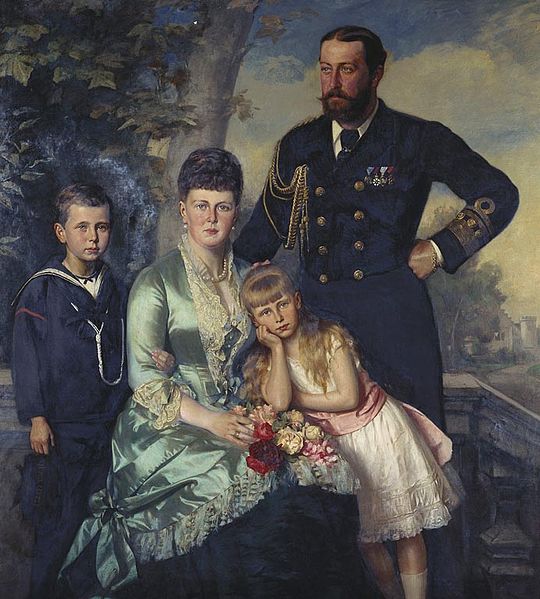
Do you spend an inordinate amount of time looking around at other families and trying desperately to figure out how they do it? Do you openly admire your friends, while secretly sad familytrying to get a handle on that green-eyed monster that lurks just below the surface?

Are you beside yourself as you try to figure out how it is that other families bear each other’s burdens and have each other’s backs while your kids bicker over the meaning of the word of and would gouge each other’s eyes out rather than build each other up? Does the love and respect other kids show their parents have you in tears as you think about your sassy high schooler with the Jeckyll/Hyde personality?  Are you bewildered by the fact that your friends’ children always seem to choose the right path while yours aren’t even on a path?

Sometimes I wonder whether God laughs or cries as He watches us taking notes on other families. Does He roll His eyes as we hold onto every off-handed remark that offers any clue about their daily routine, and then shake His head when we rush home to regroup?

What a great family – What do they do that we don’t do? Ooh – they attend daily Mass. Better add that to our schedule – Check! This family prays the rosary as a family every day – ooh – gotta figure out whether that’s a decade or the whole rosary. Whole rosary – OK! Better add that too – Check! And this other family reads the Bible together every night. (Are there enough hours in a night?) Well, if it will help our family to be more holy, I’m all in – Check! That family is amazing – a seminarian in the family- they have no cell phones and no television. Oooh. Check? Nope – this other family is great too – seminarian and a couple of national merit scholars – and they have both cell phones and television. Good deal! Check!

Sadly, you could emulate every single activity of every family to whom you look for wisdom and insight regarding that amorphous concept of holiness, without ever being able to secure the same results. In fact, you are more likely to wreak greater havoc in your own home by trying to follow the routines of this family or that family, rather than discerning exactly what it is that God asks of your family.

God loves you.

And He loves your children.

He loves your children so much that He loaned them to you – not to that family over there. He placed your children in your care because He knew that you would be the best parent to help your individual children make their way through this life equipped to spend forever with Him in the next. He has great faith in your ability to turn to Him as your guide, and He trusts that by His grace, you are more than capable of preparing your children for the Kingdom of Heaven.

Your children do not need the perfect routine. More than anything, they need you. They need your love. They need your patience. And they need you to live your Faith in a way that best reflects the light of Christ.

Sure there will be tension in the family. Sure there will be difficulties.  Just as there are difficulties in each individual human soul. But just as your relationship with God is unique to you, the relationship between God and your family will be unique as well. So don’t look around to see what your neighbors are doing. While it seems like a great idea to seek guidance and example, more often than not it leads to depression and a sense of failure.

How Faith manifests itself in our families will be unique to each and every family, depending on an infinite number of particularities. More than anything else, the soul of the family must be animated by God. Just as He must be at the center of each individual’s  life, He must also reign at the core of the family.

Recently, I found a great book about family life, published in 1921. Believe it or not, although it was nearly a century ago, at their core, families back then faced problems not so foreign to the ones we face today. The author offers great insight:

In the home where God is rightly honored, it is realized that children cannot honor God without honoring their parents, and parents will understand that they cannot honor God without respecting each other and living mainly for the children. It is easy to see that with such a spirit animating children and parents, the family circle will truly be “Home, Sweet Home.” 

The most beautiful families, like the most beautiful individuals, are too busy living their Faith to look around and measure themselves against their neighbors. They are busy measuring themselves against the only measuring stick there is – Christ Himself. And to the extent that they don’t measure up, they ask for His grace to help them improve:

Of course, every family will have its misunderstandings and annoyances. That is life. There is no escape from it. But the home wherein God is supreme will be able to meet these vicissitudes in a way that will make them a blessing. Some of the homes that I have known were those where affliction had abounded; for the peace and comfort which God knows how to bestow on His own, also abounded there. If you would save the home, therefore, and have it the dearest place on earth, begin by putting it on the foundation of Faith. If after you have done this, the home is not what it should be, it will be exceptional. (emphasis mine)

And for those of us that worry about friction in the home,

We must not forget that we have not here a lasting city, but that we seek one which is to come. A certain worldly man has said that our home is our heaven. Our home may be very dear to us, but the best home will have many annoyances and afflictions to remind us that our true home is not here, but hereafter. – You and Yours: Practical Talks on Home Life, by Martin Jerome Scott, cir. 1921, p. 8-9


Mother Angelica and the Power of Old Age

If you ever wanted to illustrate the beauty and gift of suffering for a friend or family member – or even witness it for yourself in living color – I highly recommend this book. Written in a casual voice that is easy and enjoyable, Arroyo hits home when it comes to relaying, through Mother’s experiences, our close connection with the spiritual world.

On the eve of the Solemnity of the Most Sacred Heart of Jesus (that would be last night), I finished reading Raymond Arroyo’s Mother Angelica:Her Grand Silence, his final chapter sacred heart paintingon the last years of Mother Angelica‘s amazing life. I could have read no better book as a “novena” of sorts leading up to the day of one of my favorite feasts.

Particularly for those who do not “get” the concept of redemptive suffering, this book illustrates the beauty and value of suffering and sacrifice in Mother Angelica’s straightforward and no frills way.

Mother’s story is compelling in its simplicity. The words do not merely relay church teaching, but rather provide an intimate recording of the profound and powerful nature of sacrifice made in the August of life.

Mother Angelica’s personal story will resonate with another mother very close to my heart. My own. She has had some medical issues lately. Nothing life-threatening. But we have been talking a little more about end-of-life-stuff. Of course, there has been a recurring theme throughout our conversations, and she wouldn’t mind if I shared it with you:

My mother does not want to suffer.

Of course, I don’t want to suffer either. And – I’m willing to bet – neither do you. So what’s the big deal, you ask?

Well, my mother has the attitude that she would not want to live if she couldn’t take care of herself (not an uncommon sentiment these days). Extremely independent, she would consider it the worst of all fates if her children or a caregiver had to care for her in her later years. Or if she couldn’t walk or drive or see (she has macular degeneration) or worse.

But Arroyo illustrates, through Mother Angelica’s example, the spiritual power that one can have, particularly because of her physical weakness:

Mother was – spiritually speaking – stronger than iron, and yet she couldn’t stand or feed herself during the last few years of her life. Her final bittersweet act was in some ways a conscious oblation of self. In 2000, following a near-death experience, she shared with me a prayer she had been offering to God: “Lord, I want you to use me in any way you want. I don’t care what it is. Just don’t let me see the fruit.”

For the most part, she wouldn’t see the fruit. But having always considered redemptive suffering a gift, she embraced this last drawn-out trial as she had all those that preceded it. “Whether I am suffering in a physical, mental, or spiritual manner, I resemble Jesus at those moments – and the Father looks at us in our pain and He sees His son in the most beautiful way. That’s what makes you holy. Don’t rebel,” Mother taught. “Our pain only has meaning when we unite it, out of love, to the suffering of Christ. -p. 219

For some people – my mother, for instance – stuffy language and beautiful doctrine crash like a clanging cymbal on deaf ears. But you’ll find none of that here. Only a little lady who, through great faith and hope, united herself completely to the cross of Christ, and took whatever He offered with great grace and humility.

If there’s anyone who could show my mother the value of suffering and the sheer beauty of uniting one’s cross to Christ’s, it’s Mother Angelica. Rather than pour on the schmaltz, Mother told it like it is:

“One of the lessons I’ve learned is that suffering and old age are most precious. You know why? Because at that point in our lives we’re powerful.” p. 185

Arroyo extrapolates:

Mother meant that the elderly and infirm enjoy long hours with God alone, hours to pray and intercede for others. It is a mysterious power, but it is a power nonetheless. Just as their bodies weaken, their spirits are emboldened. As death draws near, fears diminish. So does interest in the material world.

If you ever wanted to illustrate the beauty and gift of suffering for a friend or family member – or even witness it for yourself in living color – I highly recommend this book. Written in a casual voice that is easy and enjoyable, Arroyo hits home when it comes to relaying, through Mother’s experiences, our close connection with the spiritual world.

As it happens, this morning while getting ready, I decided for the first time ever to pull up a YouTube video of an old Mother Angelica Live Classics show  – this after reading several letters people have written about her impact on their lives, even in her later years when they found re-runs of this nun speaking in her animated and joyful way. Sadly, I’d never watched Mother Angelica when her show was on live. But that will change now that I’ve found the “Classics.”

Surprisingly, I found a video on the Sacred Heart of Jesus. Mother mentions in the video His words to St. Gertrude:

“Whenever you willingly offer yourselves to me, you truly glorify me.”

If anyone ever truly glorified Our Lord, it was Mother Angelica, through her complete offering of self – particularly in the last years of her life. This paradox of power and strength resonating in humility and weakness will convince even the most stubborn skeptic that suffering, when offered in love, can have great merit.

I thought you might enjoy her talk about the Sacred Heart on this special day:

An Open Letter to Engaged Couples

You’ve been dreaming of this day for so long, and now it’s only a heartbeat away. No doubt at least one of you has spent countless hours working out every microscopic detail to ensure that your amazing day is everything you’ve imagined it to be. But while all the particulars have their place, your special day will be gone in the blink of an eye. After that, you will stand hand in hand, looking down the winding road that is your future, ready to travel every step of the way together. “If true love and the unselfish spirit of perfect sacrifice guide your every action, you can expect the greatest measure of earthly happiness that may be allotted to man in this vale of tears.”

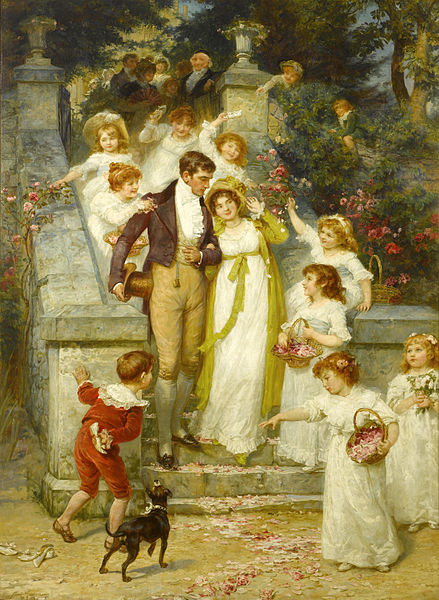
June will soon be upon us. That means wedding planners are working overtime, brides are getting overwhelmed as they count the days and grooms are looking forward to the honeymoonhoneymoon. Or at least that’s how it was 21 years ago when I got married. Could be that these days grooms are getting overwhelmed and brides are looking forward to the honeymoon (I did hear the term “groomzilla” for the first time this year).  Most likely it’s a little of both.

Whatever the case, this letter is for you – the bride and groom. You’ve been dreaming of this day for so long, and now it’s only a heartbeat away. No doubt at least one of you has spent countless hours working out every microscopic detail to ensure that your amazing day is everything you’ve imagined it to be. Perhaps you have Say Yes to the Dress and Four Weddings DVR’d and your reception hall on speed dial. And if the days leading up to your wedding are anything like ours, you must be up to your veils and bowties in flowers, programs, music and invitations.

But while all the particulars have their place, your special day will be gone in the blink of an eye. After that, you will stand hand in hand, looking down the winding road that is your future, ready to travel every step of the way together.

Your final destination? Heaven.

Whoever said life is about the journey is wrong. Life is about the end game. Your mission in marriage is to lead each other to heaven. And along the way, that winding road may lead you in directions yet foreseen.

Twenty-one years ago when I married my husband, we were excited, joyful and madly in love. Could we have imagined what our lives would bring over the next two decades? Surely I could never have guessed the joys and wonders that would more fully unite us as we were blessed with six amazing children to raise. But intermixed with the joy came job loss, financial strain, the grief of five miscarriages, the death of friends and family members, our crazy spur-of-the-moment decision to homeschool in a world of two incomes (to date we’ve persevered for 14 years), living in four different states, and hanging our hats in seven homes thus far.

But much to my surprise, every challenge has produced increased joy and a stronger commitment to one another. I was surprised because, you see, unlike my husband, I did not grow up with two parents who were married for the entirety of this earthly life. While I had the best of intentions,  I had no idea what marriage was supposed to look like. Chances are, at least half of you are in the same spot. It is for you that, in all humility and openness, I’d like to share an experience I had with my husband many years ago, before we were married.

Shortly after our engagement, I was concerned because my then fiancé was not overly affectionate with me. We rarely held hands and we behaved more like close friends than the adoring lovers I’d seen in the movies. I raised the issue with him. Almost pouting, I asked (in all sincerity), “If this is how affectionate we are now, imagine what things are going to be like in twenty years?  I mean, this is supposed to be the most romantic and wonderful time of our relationship – when it’s new and exciting!  Love only goes downhill from here.”

I can still see the expression he gave me.  One of puzzled amusement.  His eyes sparkled and his mouth turned up slightly as he took my hand.  “Vicki,” he said.  “My parents have been married for nearly forty years.  They are probably more affectionate now than they have ever been.  Now that the kids are grown and they are each other’s sole companion through life.  I absolutely guarantee you that they love each other now a thousand times more than they did when they were first engaged.”

He must have seen the doubt in my eyes, because he took my other hand too, before he continued.  “Think about it.  My parents have raised children together.  They’ve watched neighbors experience the tragedy of losing everything they had through the eighties when farming was at its low. They have been through good times and terrible times.  They have gotten to know each other’s families in an intimate way so that it’s not just the two of them, but a web of relationships that solidifies their own.  They have seen each other at their worst. They have seen each other at their best. They have forty years of memories together, both good and bad.  They buried a baby together.  They can honestly say that they know each other better than anyone else in the world.  That in itself ties them together.  I can assure you that my parents are absolutely one hundred percent in love, and they would take their relationship today over their little flirtations forty years ago any day of the week.

I knew, listening to my future husband in that moment, that I was learning something new.  Something I’d never heard before, but that was absolutely true.  I had been raised to believe that love was about emotion, not experience.  That love was about affection and not comfort.  But I knew that he was right.  I knew that when he married me, his love would only increase over the next forty years.  That, in itself, was a lesson I have carried with me through more than twenty years of good times and bad. Through moments where we were so annoyed with each other that I looked forward to his going to work, and I’m sure he looked forward to going. But despite the space we needed to work out our frustrations, we both knew that the tension was only temporary. (Very Important Note: That realization in itself is enough to dissolve most issues before they have a chance to dig in.)

You will love your spouse more over time, not in spite of your problems, but because of them.  Because you, too will each know going into this mystery that is Christ’s love, that your commitment is for life. And it is by sharing this life’s struggles that you will help each other to the next.

The greatest means of accomplishing your goal? Without a doubt, remember always that this relationship must find it’s security in the Love of God, Himself. For without God’s grace, the selfishness bubbling within our hearts from the sin of our first parents leaves us helpless to offer ourselves as a perfect sacrifice.

And sacrifice is the key to a happy and long-lasting marriage.

Recently I heard a speaker mention the following exhortation, so I looked it up. Before Vatican II,  this exhortation was read at every Catholic wedding. In those days, the priest did not take time in the Mass to offer a homily about the time he’d spent with the bride and groom, or make jokes about marriage preparation. Instead, he read the following. It is straightforward. It is a little scary (note how many times the word sacrifice is used). And it is A LOT beautiful.

Most importantly, it is true.

Exhortation Before Marriage
(All italics mine)

My dear friends: You are about to enter upon a union which is most sacred and most serious. It is most sacred, because established by God himself. By it, he gave to man a share in the greatest work of creation, the work of the continuation of the human race. And in this way he sanctified human love and enabled man and woman to help each other live as children of God, by sharing a common life under his fatherly care. Because God himself is thus its author, marriage is of its very nature a holy institution, requiring of those who enter into it a complete and unreserved giving of self. [But Christ our Lord added to the holiness of marriage an even deeper meaning and a higher beauty. He referred to the love of marriage to describe his own love for his Church, that is, for the people of God whom he redeemed by his own blood. And so he gave to Christians a new vision of what married life ought to be, a life of self- sacrificing love like his own. It is for this reason that his apostle, St. Paul, clearly states that marriage is now and for all time to be considered a great mystery, intimately bound up with the supernatural union of Christ and the Church, which union is also to be its pattern.]

This union, then, is most serious, because it will bind you together for life in a relationship so close and so intimate, that it will profoundly influence your whole future, That future, with its hopes and disappointments, its successes and its failures, its pleasures and its pains, its joys and its sorrows, is hidden from your eyes. You know that these elements are mingled in every life, and are to be expected in your own. And so not knowing what is before you, you take each other for better or for worse, for richer or for poorer, in sickness and in health, until death.

Truly, then, these words are most serious. It is a beautiful tribute to your undoubted faith in each other, that recognizing their full import, you are, nevertheless, so willing and ready to pronounce them. And because these words involve such solemn obligations, it is most fitting that you rest the security of your wedded life upon the great principle of self-sacrifice. And so you begin your married life by the voluntary and complete surrender of your individual lives in the interest of that deeper and wider life which you are to have in common. Henceforth you will belong entirely to each other; you will be one in mind, one in heart, and one in affections. And whatever sacrifices you may hereafter be required to make to preserve this mutual life, always make them generously. Sacrifice is usually difficult and irksome. Only love can make it easy, and perfect love can make it a joy. We are willing to give in proportion as we love. And when love is perfect, the sacrifice is complete. God so loved the world that he gave his only-begotten Son, and the Son so loved us that he gave himself for our salvation. ” Greater love than this no man hath, that a man lay down his life for his friends.”

No greater blessing can come to your married life than pure conjugal love, loyal and true to the end. May, then, this love with which you join your hands and hearts today never fail, but grow deeper and stronger as the years go on. And if true love and the unselfish spirit of perfect sacrifice guide your every action, you can expect the greatest measure of earthly happiness that may be allotted to man in this vale of tears.

The rest is in the hands of God. Nor will God be wanting to your needs, he will pledge you the life-long support of his graces [in the Holy Sacrament which you are now going to receive].

God’s blessings upon you as you embark on this exciting journey together. Decades from now, may you look back on this time in your life and smile at the love you shared today, knowing that it has grown exponentially every day since. I can promise you that life will not always be easy. But in the profound words we just read, if true love and the unselfish spirit of perfect sacrifice guide your every action, you can expect the greatest measure of earthly happiness that may be allotted to man in this vale of tears.

In Christ,
A Fellow Traveler


Squatter’s Rights and LGBT Movements: How We Allowed Adverse Possession and What We Can do About it

When it comes to our relationship with the LGBT community, our efforts to refrain from making waves and avoid being labeled bigots have wrought (or at the very least contributed to) unimaginable cultural losses that may effect the world for generations to come.

Americans are livid. The Obama administration has taken the transgender bathroom issue by storm, issuing a 600px-Bathroom-gender-sign
directive  via the Departments of Justice and Education to all public school districts across the country, warning officials that transgender students should be allowed to use the restroom or locker room of the gender with which they identify, as opposed to their “sex assigned at birth” (their language, not mine) – or risk having the federal government withhold school funding. And by the way, making separate facilities available doesn’t count.

This is what happens, ladies and gentlemen, when we fail to stand up and declare the truth. When we sit back in fear of confrontation and refuse to speak the truth in love, we risk being violently overtaken in the public square.

In the world of pubic opinion, the faithful have completely lost the argument. But worse, when it counted, few of us showed up. Do you know what we have done? We have allowed something that in the real estate business is called adverse possession, otherwise known by the somewhat crass if visually descriptive term, squatter’s rights.

Let me explain. Say your neighbor lets you know he’s going to build a six foot fence around his property. In an act of good will, you give him your blessing and compliment his choice of building materials. A few days after he begins building, you notice that he has crossed the property line by a few feet. You know this because when you moved in several years ago, the lots were staked out, and you measured ten feet from the lot line so you could plant your garden. It’s not terrible, but you measure, and sure enough, your garden fence is only seven feet from your neighbor’s new construct. You’re in a tough spot. You don’t want to cause any friction or offend your neighbor, who has already begun building. In the end, rather than risk stirring up bad feelings, you let it go.

The problem is that you have not simply allowed your neighbor to build on your property. Five years later, when he moves, he will lay claim to that additional three feet. He will be hard pressed to believe he stepped out of bounds at that point, and the courts will agree. Unbeknownst to you, by your silence, you have ceded part of your property to your neighbor.

When it comes to our relationship with the LGBT community, our efforts to refrain from making waves and avoid being labeled bigots have wrought (or at the very least contributed to) unimaginable cultural losses that may effect the world for generations to come.

As Christians, we tend to be compassionate (contrary to the image we’ve been given in recent years). We know we are called to love. So rather than risk offending anyone, we let things go. After all, the entire LGBT community was comprised of a mere 2-3% of the population. There was a time when many of us didn’t even know someone who was gay or transgender, so we stayed out of the conversation. And if we did know someone, we knew they were good people and meant no harm to anyone – so we stayed silent.

In fact, if we did speak up, many of us (correctly) supported individuals who were mistreated in the name of sexual orientation, advocating love of neighbor as one of the greatest commandments. We thought, correctly, all human beings are deserving of respect (CCC 1700). But we held our tongues regarding the teaching of the Church on human sexuality. After all, we thought, who am I to tell others how to liveWhat they do in their own homes is between them and God. 

And that’s where we went wrong.

The fact is, average Americans have never wanted to address the moral argument. Because – hey – that would be judging. But by keeping the argument on purely legal terms – definition of marriage, a child’s right to two parents, and now, discomfort in the restroom – we have subtlety communicated that we didn’t believe the lifestyles of the LGBT community were immoral; we just didn’t want them to affect our way of life. (Because, after all, everyone knows the “greatest” commandment has become, “thou shalt not impose your morality on your neighbor.“)

Having failed to reasonably discuss the possibility that these individuals who are seeking equal status should actually be seeking help (it took me forever to type those words – I have been avoiding the discussion too), we have allowed enough time to pass that we have unwittingly allowed the LGBT community to advocate its position to the point that now, anyone who argues that there may be “disorder” involved with being gay or transgender is a bigot. Uneducated. A hater.

Cultural Shift

While we were hemming and hawing over how to avoid giving offense, the LGBT community has been busy making great inroads in the public square. In as little as 15 years, public opinion has done a complete 180. For example, in 2001, 57% of people in the general public opposed gay marriage. Today, even 58% of Catholics support it.

My goodness, the left has been completely indoctrinating the young right under our noses – using our tax dollars, no less! They have even convinced them that there is no such thing as truth (moral or even physical – watch this and this), while all this time we have been pussyfooting around, trying to find the courage to declare it.

Transgender rights are just the latest in a stream of efforts to overturn any semblance of traditional values. Pressure has been mounting at a steep rate. An issue that was little known six months ago has suddenly become a matter of civil rights. To say the trend is disturbing is an understatement. Just a couple of weeks ago (as mentioned in a previous post), an employee of a Catholic university was under investigation for a hate crime after stating that there are two genders.

When the state of North Carolina took a preemptive step in declaring by law that one must use the restroom of his biological gender (something that used to be common sense), the transgender bathroom issue came to a head. Outrage against the state has been palpable.

Then the federal government dove into the controversy, invoking Title 9 and involving the courts. North Carolina fought back. Livid, Obama, sensing a changing tide in public opinion, has thrown down the gauntlet, not only against North Carolina, but daring any state in the country to initiate similar legislation. In a massive overstep of intimidation, the administration has now drawn the big guns, using the power of the purse to threaten schools across the country.

So what now?

I read a quote recently that captures the current pulse of America today:

“Evil preaches tolerance until it is dominant, then it tries to silence good.” — Archbishop Charles J. Chaput

So what can we do about it?

After we collectively pick our jaws off the floor, having been stunned by the sheer audacity of the federal government telling us that our daughters must share locker rooms with boys of the opposite sex, we must go back to the beginning.

The Church is first and foremost a mother and a teacher. A loving mother has compassion for her children. But it is out of that compassion that she teaches them the truth. We must, as Christ’s body, the Church, teach the truth about human sexuality.

In order to teach, we must be informed. It is not enough to know that God has a plan for marriage. For the family. As Catholics, we must know that plan. We must be able to articulate that plan.

We must live out that plan.

Truth is undeniable when light shines upon it.

There is nothing better to display the truth in an excellent light, than a clear and simple statement of facts. – Saint Benedict

Get Educated

Here are some resources that I plan to learn inside and out. Study them and see if they help you to better articulate a simple statement of facts:

  1. The Catechism
  2. Love and Responsibility by Karol Wojtyla (now Saint John Paul II) – what is truly meant by human sexuality
  3. Familiaris Consortio by Saint John Paul II – because what is most at stake in this discussion is the human family, which is the foundation of all of society
  4. Man, Woman, and the Meaning of Love: God’s Plan for Love, Marriage, Intimacy, and the Family by Dietrich von Hildebrand
  5. Men, Women and the Mystery of Love: Practical Insights from John Paul II’s Love and Responsibility by Edward Sri
  6. Address to Roman Curia by Pope Benedict XVI, specifically addressing the dangers of the gender identity movement (and also commentary on it)
  7. Catholic Answers Resources:
    – Video: How do We Relate to People who Struggle with Sexual Identity
    – Article: Five Questions for Supporters of Gender Transitioning
    – Article: Bathroom Bill is Not Hateful Bigotry

7.  Popes and Catechism on Gender Theory

[Note: If you have other recommendations that are in line with the Magisterium, please offer them in the Comments section.]

What You Can Do Today

In the meantime, now is the time to take civil action. Force yourself to leave your comfort zone, step off the sidelines and get involved. Write your governorssenatorsrepresentatives, school boards, and anyone else of consequence, encouraging them to stand up to the administration. Texas and Arkansas have already said they refuse to comply. In a profound statement, Lt. Governor Dan Patrick of Texas asserted, “We will not be blackmailed by the president’s 30 pieces of silver.”

There is hope that a groundswell of public opinion summarily rejecting the administration’s reach will prove fruitful. Encourage your state not to give into political correctness.

[Note: If you have other ideas for civic action, please recommend them in the Comments section.] 

Mother: The Most Beautiful Word

Is there anyone who can look forward to the Last Judgement with more confidence than a mother? The crown of eternal glory is awaiting her.

Inspiration from Cardinal Mindszenty’s beautiful work, The Mother:

The Most Beautiful Word

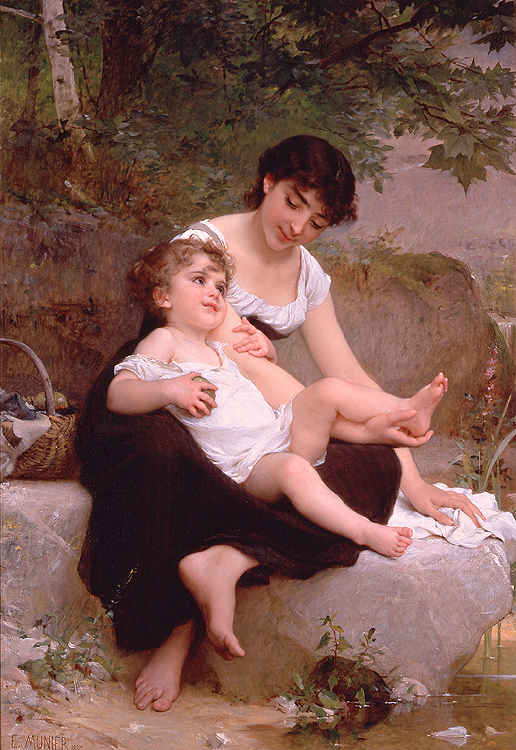
A number of children are tired of their game. They want to learn a new game. So they decide on this. “Everyone must try to find the most beautiful word in the Émile_Munier,_1892_-_Mother_and_childworld,” one suggests and continues: “When father comes home he will decide who has found it.” All agree.


Both boys and girls take pencil to paper, look for a quiet corner where no one can see what they write. They think and ponder and finally put down the chosen word. After the evening meal, father is to make the final decision. After a pause he says: “The most beautiful word is mother.” The little seven-year-old boy has won.

Tell me can you find a word,
replete with music and sound,
adorned with legend and song,
full of smiles and tear drops,
wrought of treasures and fine pearls,
bright with sun rays and moonbeams,
that reflects the sea, with the scent of roses,
yet full of tearful yearning and longing,
search the world, ne’er will you find another
word, as precious, fine and pure as, “mother.”
(Vitnyedi Nemeth Istvan)

This word has its own special sound in every language. It weeps and laments like a distant magic trumpet, it rejoices like the small golden bells in the chimes, and when we pronounce this word our heart is on our lips. There is in it the laughter of childhood, even when spoken by an old man. Is there a creature to whom we are bound more intimately, heart and soul, than mother? Is there another word that can move us more deeply? The longer we live, the more the world unfolds before us, the more we are overcome with the wonder of motherhood. The more we learn about life, the more beautiful and more replete with meaning is the word “Mother.” What is mother?

Thou art the source from which I sprang
Thou art the root from which I grew.
Thou, O mother, art the threshold
Over which I passed into life.
(Bisztray Gyula)

The mother – so I read – is the fire, the children are the light. By the brightness of the light, we know how great is the fire.

The mother is the vine, the children the branches. By the branches we judge the value of the vine.

The mother is the tree of life, the children the fruit. The Savior said: “By their fruits you shall know them.”

The mother is the clock, the children the hands. They point out the time.

The mother is the pen, the children the script. By the writing you recognize the writer.

The mother is the rudder, the children the boat. The boat goes wherever the rudder directs.

The mother is the queen, the children the subjects. Under the scepter of a wise mother, the children are satisfied and happy.

The mother is the great enigma and mystery. the happiness of mankind, the sufferings of mankind vibrate and tremble in that one word, Mother.

[Blessed is the Merciful Mother]

…Is there anyone who can look forward to the Last Judgement with more confidence than a mother? The crown of eternal glory is awaiting her. St. Paul, speaking of woman, says: “She shall be saved through childbearing.” 1 Tim. II, 15. Motherhood is not limited only to giving life of the body to the child; the mother also gives her child the life of the soul, by leading it to God and to Christ. She again becomes its mother by unfolding before her child’s mind the wonders of existence.

In the blessedness promised by St. Paul, we seem to hear the blessedness promised by Our Lord in his sermon on the mount when He said: “Blessed are the merciful, for they shall find mercy.” The hands of mother have brought music as from the registers of an organ, by all the spiritual and corporal works of mercy. She fed the hungry, gave drink to the thirsty, clothed the poor, housed the stranger, visited and tended the sick. She admonished the sinner, counseled the doubtful, instructed the ignorant, consoled the sorrowful, was patient with the foolish and was incessant in prayer for the living and the dead.

The mother is God’s co-worker, the first and the best apostle of the Church. She is a ray of light from the Mother of Mercy.

“Mama’s beauty never dies”…and life on earth will be beautiful as long as there beats a mother’s heart.

– Passages above were borrowed from  The Mother, by Cardinal Mindszenty.

Three Books and a Revelation: What Ayn Rand Got Wrong

There is no love without sacrifice. And in a political system, sacrifice without love becomes a distorted perversion of the sacred, used by the few to control the many. 

Book Number One

Not too long ago, I read Atlas Shrugged by Ayn Rand for the first time. A heroin of many conservatives, Rand wrote Atlas Shrugged specifically to demonstrate the foolishness of any political system where the Atlas_Shrugged_4887943033means of production are managed by the state. As a freedom-loving, American capitalist, I have to say that through most of it I was riveted and cheering Rand on as she masterfully illustrated that capitalism is by far the best economic and political system around. It’s not that I thought her book was perfect, but she definitely made her point.

A staunch advocate for capitalism, Rand, herself, escaped communism as a young adult and was determined never to return. Her mission as a writer was to decry the evils of government control and to extol the virtues of capitalism as well as the importance of individual freedom. Having experienced the former in the early 1900’s – she was a high school student in Russia during the Bolshevik Revolution of 1917 – Rand considered the resulting state power to be absolute evil.

Lately it seems the political climate in the United States is not completely alien from that of Russia in the early twentieth century. Governmental corruption is rampant, as is the inefficiency of the huge bureaucracy which is the federal government. Like the Russians on the cusp of 1917, Americans are war weary and there has been great unrest regarding a lack of opportunity, low wages and disparate conditions.

Over the last eight years these problems seem to have intensified and multiplied or, if nothing else, have been magnified to the nth degree. Issues of race, creed and economic disparity are more paramount today than at any time since the Civil Rights Movement reached its height in the 50’s and 60’s. Daily demonstrations receive massive media attention. Just this week over 400 protesters were arrested at the capital building – civil disobedience is on the rise and tensions are high.

Needless to say, in this climate a shout-out for capitalism in the form of a novel was for me a light in the darkness. A herald to a truth that has been rabidly twisted and distorted over the past generation. Particularly in our country, as concerned citizens seek answers to the problems they witness all around them. Many, especially the young, are willing to try an alternative to the capitalism they’ve long been taught is the source of our deepest cultural and economic problems.

So roughly 800 pages into it, I was all-in for a book illustrating the virtues of capitalism. And then I reached the last, roughly 70 pages. This was where things got crazy, as Rand presents the reader with a complete diatribe of her belief system through a speech given by one of the main characters of the book. During that speech, Rand (through the voice of John Galt) throws religion out with big government.

“Selfishness – say both – is man’s evil. Man’s good – say both – is to give up his personal desires, to deny himself, renounce himself, surrender; man’s good is to negate the life he lives. Sacrifice – cry both – is the essence of morality, the highest virtue within man’s reach…

…”It is your mind that they want you to surrender – all those who preach the creed of sacrifice, whatever their tags or their motives, whether they promise you another life in heaven or a full stomach on this earth.”

Whoa!! So this is why I’d vaguely remembered hearing that Rand’s views are not compatible with the Catholic church. Religion is nothing like communism or socialism. While those systems strive to serve the lowest common denominator by denouncing individual aspirations and self-determination, our Faith asks that we take advantage of our God-given freedom to serve all with love – through our own will, not by mandate. Being asked to serve by our Heavenly Father is not at all comparable to being obligated by law. When I reached the end of the book, I was deeply disturbed that after 800 pages of getting it (for the most part) right, Rand could end on such a horribly depraved note.

But shortly after reading Atlas Shrugged, I realized that Rand’s distorted view of religion had germinated through seeds of deception planted in the poisonous soil of her youth. A riveting book about the lives of citizens in North Korea both helped me to understand Rand’s confusion, and spurred some of my own.

Book Number Two

The book was Nothing to Envy: Ordinary Lives in North Korea. Written by a journalist who captured in minute detail the day to day lives of six North Korean citizens who eventually escaped to freedom in South Korea, the book illustrates the horrid conditions of many in a country that strains to present itself as a utopian society. Ordinary citizens watched loved ones tortured and killed. They ate rats in order to stay alive. Daily lives were nightmares from which citizens could find no escape.  Oppressed and desperate, each of these individuals risked life and limb just to get out from under the incredible burden of communism.

The most disturbing and discomforting part of this book was the sacrifice lauded by the government. The talk from their leaders sounded startlingly familiar. These were the themes I hear in Mass every Sunday. That I read in Sacred Scripture every day. They were the profound ideals offered by the saints that have gone before us. Here’s just one small example of the themes saturating North Korean culture through the hand of their omnipotent leader:

Every town in North Korea, no matter how small, has a movie theater, thanks to Kim Jong-il’s conviction that film is an indispensable tool for instilling loyalty in the masses…The films were mostly dramas with the same themes: The path to happiness was self-sacrifice and suppression of the individual for the good of the collective. (emphasis mine)

Sacrifice? Suppression of self? These are things I’d read for years in the great classics of our Faith. This is what we teach our children. And yet, these sentiments came from an evil, communist dictator. As someone who escaped the USSR, no wonder Ayn Rand did not believe in God. If USSR was anything like North Korea, the government presented itself as a god-like figure. Trusting in THE God would become a an almost insurmountable hurdle once a counterfeit had been exposed for the corrupt, self-serving charlatan that he is. There could be no greater impediment to faith in the One True God than the fraudulent benevolence claimed by the powers that be in those godforsaken countries.

I must admit. When I finished Nothing to Envy, I was perplexed. I was confused. While I didn’t doubt the existence of God, I did wonder how something so good and something so terribly evil could sound so similar? What was I missing?

Book Number Three

Enter Life of Christ by Fulton Sheen (which we just began reading in our book club at spiritual direction.com – check it out). In the first couple of pages, Sheen addresses this very subject. In a few sentences he brings clarity to my confusion. His comments illustrate the error inherent in Rand’s philosophy:

“Communism has chosen the Cross in the sense that it has brought back to an egotistic world a sense of discipline, self-abnegation, surrender, hard work, study, and dedication to supra individual goals. But the Cross without Christ is sacrifice without love. Hence, Communism has produced a society that is authoritarian, cruel, oppressive of human freedom, filled with concentration camps, firing squads, and brain-washings.” – Fulton Sheen, Life of Christ (p. xxv)

There is no love without sacrifice. But in a political system, sacrifice without love becomes a distorted perversion of the sacred, used by the few to control the many. No version of this is the solution to our nation’s problems. True love offered as true sacrifice is the only real solution to what ails us. And it cannot be found in any law, mandate or government system.